


What Should You Look for in a Bread Knife?
Most people grab whatever serrated blade came with their knife set and never think about it again. But a quality bread knife makes a real difference, and not just for bread. The difference between a good bread knife and a cheap one is the difference between clean slices and a pile of crumbs with some bread attached.
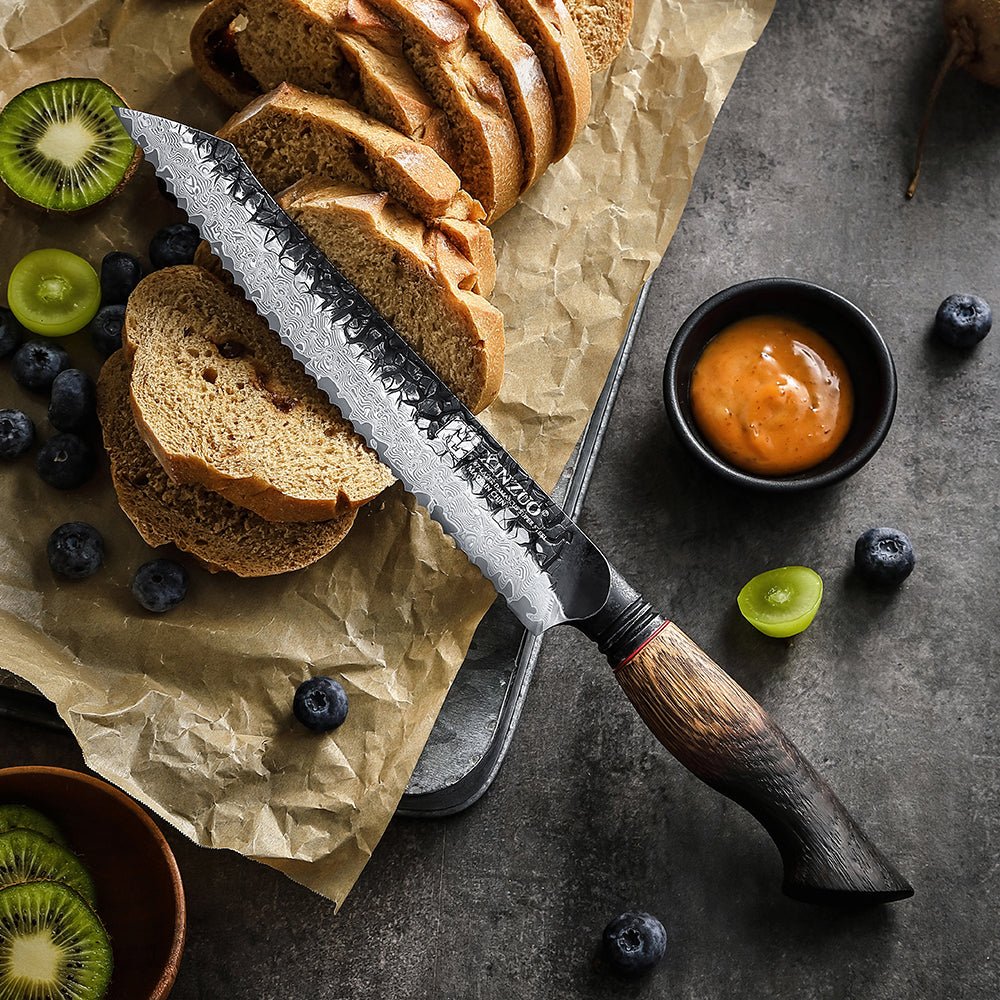
Why Do Serrated Blades Work So Well on Bread?
Think about what happens when you press a straight-edge knife down onto the crust of a sourdough boule. The entire edge contacts the crust simultaneously. All that force gets distributed evenly across the full length of the blade. The crust, which is essentially a thin shell of hardened starch and protein, doesn't fracture. It compresses. And when the crust compresses, so does the soft crumb underneath.
Now think about a serrated blade. Each tooth tip is a tiny point of contact. When you draw the blade across the crust, only those points touch the surface. The same amount of downward force gets concentrated into a few dozen tiny areas instead of spread across 9 inches of continuous edge. Pressure equals force divided by area. Reduce the contact area, and the pressure at each point skyrockets.
There's a second thing happening that matters just as much. Behind each serration tooth, there's a scalloped valley. A recessed area that doesn't contact the bread at all. Those valleys give the soft crumb somewhere to exist without being compressed. The teeth fracture the crust, the scallops preserve the crumb. The result is a clean slice instead of a smashed one.
What Else Can You Use a Bread Knife For?
The persistent idea that bread knives are single-purpose tools is wrong. A bread knife is the most versatile backup knife in the kitchen, precisely because its operating principle (teeth grip hard surfaces, scallops protect soft interiors) applies to far more foods than just bread.
Tomatoes. A ripe tomato has tight, slippery skin over soft flesh. A straight-edge knife, unless it's razor sharp, skids across the surface and then crushes the tomato when it finally breaks through. A serrated blade grips the skin immediately. No skidding, no crushing.
Cake levelling. If you bake layer cakes, a long bread knife is the standard tool for trimming domed tops flat. The long blade spans the full width of the cake, and the gentle sawing motion cuts horizontally without dragging or tearing.
Large melons and pineapples. The serrations bite through tough rind the same way they bite through bread crust. The long blade means you can make single-pass cuts through a full watermelon half.
Chocolate. Breaking down a large block of chocolate for baking is awkward with a chef knife (the block slides around) but straightforward with a bread knife. The teeth grip and fracture the chocolate without it skating across the board.
The pattern: anything with a resistant exterior and a softer interior is bread knife territory.
What Size Bread Knife Should You Choose?
One rule: the blade should be longer than whatever you're cutting. If you have to saw back and forth through a loaf that's wider than your blade, you'll tear the crumb instead of slicing it. If you're buying one bread knife, go with 9 inches. If you bake large artisan loaves, go with 10.
What Is the Difference Between Scalloped and Pointed Serrations?
Pointed serrations look like a wood saw. Sharp teeth with V-shaped valleys. These are aggressive on hard crusts but can tear softer breads like brioche or milk bread.
Scalloped (wavy) serrations have broader, rounded valleys. The transition from tooth to valley is gentler. These produce cleaner cuts across a wider range of bread textures.
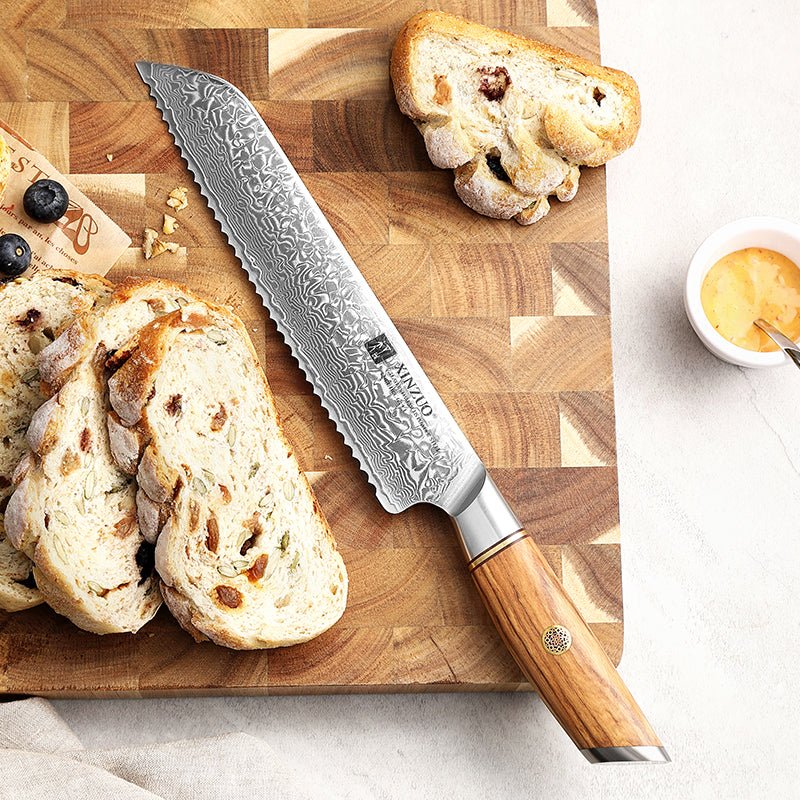
Why Does Steel Matter in a Bread Knife?
Edge retention matters more on a serrated knife than on any other knife in your kitchen.
With a chef knife, when the edge dulls, you take it to a whetstone for five minutes. You can restore a straight edge at home, quickly, as many times as you need to. The sharpness of the steel on the day you bought it is almost irrelevant because you'll be maintaining it yourself.
Serrated edges are different. You cannot easily sharpen them at home. The recessed scallops are inaccessible to a flat whetstone. Professional re-serrating services exist, but they cost enough to make you question whether it's worth it on a budget knife.
What this means: the sharpness your bread knife came with is roughly the sharpness it will have for its entire working life.
The difference between 54 HRC and 60 HRC on a knife you can't resharpen is the difference between replacing it every year and keeping it for a decade. For more on how hardness affects performance, see our knife steel hardness guide.
How Do You Use a Bread Knife Properly?
Let the serrations do the work. Apply almost no downward force. Use long, smooth, horizontal sawing strokes that engage the full length of the blade. The teeth will grip and fracture the crust on their own.
Use the full blade length. Short, stabbing strokes compress the bread at the point of contact instead of slicing cleanly. Draw the knife back and forth through as much of its length as you can. Think cello bow, not jackhammer.
For very crusty sourdough: score the crust first. Use the tip of the bread knife to scratch a line where you want to cut. This gives the serrations an entry point, preventing the blade from skating across the crust on the first stroke.
Let bread cool before cutting. Freshly baked bread is still setting its internal structure. Cutting it hot releases steam that was helping hold the crumb together, and the soft, gummy interior will tear rather than slice. Wait at least 30 minutes for a standard loaf, an hour for a dense sourdough.
How Do You Care for a Bread Knife to Make It Last?
Can you sharpen a serrated knife? Each individual scallop can be honed with a tapered round ceramic rod, working from the bevelled side only. In practice, this is tedious work that most people will never do.
What you can do is maintain the flat (non-bevelled) side of the blade. A few light passes on a fine ceramic rod or a leather strop removes the burr that forms on the flat side as the serrations wear. This won't restore truly dull serrations, but it extends useful life.
The honest recommendation: invest in quality steel up front. A bread knife at 60+ HRC will serve a home kitchen for years. A budget knife at 52-54 HRC will need replacing in months of regular use.
Storage. Serrated edges are more vulnerable to drawer damage than straight edges. Each tooth is a small point that can bend or chip from contact with other knives. Use a blade guard, magnetic strip, or knife block.
Never put a bread knife in the dishwasher.
What Are the Biggest Bread Knife Myths?
"Bread knives never need sharpening." They do dull. They just dull more slowly because the serration tips are recessed, protected by the scallop geometry. Eventually the tips round over and lose their ability to fracture hard crusts.
"Any serrated knife works for bread." Scallop pattern, spacing, and depth vary significantly between knives. A steak knife's fine serrations will compress a loaf. Cheap bread knives with shallow, inconsistent serrations will tear rather than slice.
"Bread knives are one-trick tools." They're actually the most versatile backup knife in the kitchen. Tomatoes, cakes, melons, chocolate, hard cheeses, roasts.
Related Reading
- How to Choose a Chef Knife: The Complete Buying Guide
- Japanese-style Knife Types Explained
- Knife Care: Daily Maintenance Guide
- Knife Steel Hardness Guide
Frequently Asked Questions
Can you sharpen a serrated bread knife?
Yes, but not with a flat whetstone. You need a ceramic sharpening rod that fits inside the scallops, and you sharpen each serration individually from the bevelled side only. Most home cooks find this tedious and impractical. The better strategy is to buy a bread knife with decent steel (58+ HRC) that holds its edge for years, since serrated edges stay sharp far longer than straight edges because the recessed teeth rarely contact the cutting board.
What size bread knife should I buy?
A 9 to 10 inch (230 to 250mm) blade suits most home bakers. The blade should be longer than your widest loaf so you can slice in a single smooth stroke without sawing back and forth. An 8-inch blade works for sandwich loaves and baguettes, but falls short on large sourdough boules or round country loaves.
What is the difference between scalloped and pointed serrations?
Pointed serrations have sharp, aggressive teeth that bite into hard crusts quickly but tend to tear soft interiors and produce more crumbs. Scalloped serrations have rounded, wave-like teeth that cut more gently, producing cleaner slices through soft bread and cake. For home use, scalloped serrations are the better choice because they handle both crusty sourdough and soft sandwich bread without shredding.
Can you use a bread knife for anything other than bread?
A bread knife is one of the most versatile backup knives in the kitchen. The serrated edge grips slippery tomato skin without crushing the flesh, levels domed cake layers cleanly, and cuts through hard-rind produce like pineapple and watermelon. It also works well on soft cheese, roasted capsicums, and anything with a firm exterior and delicate interior.