Carving Forks
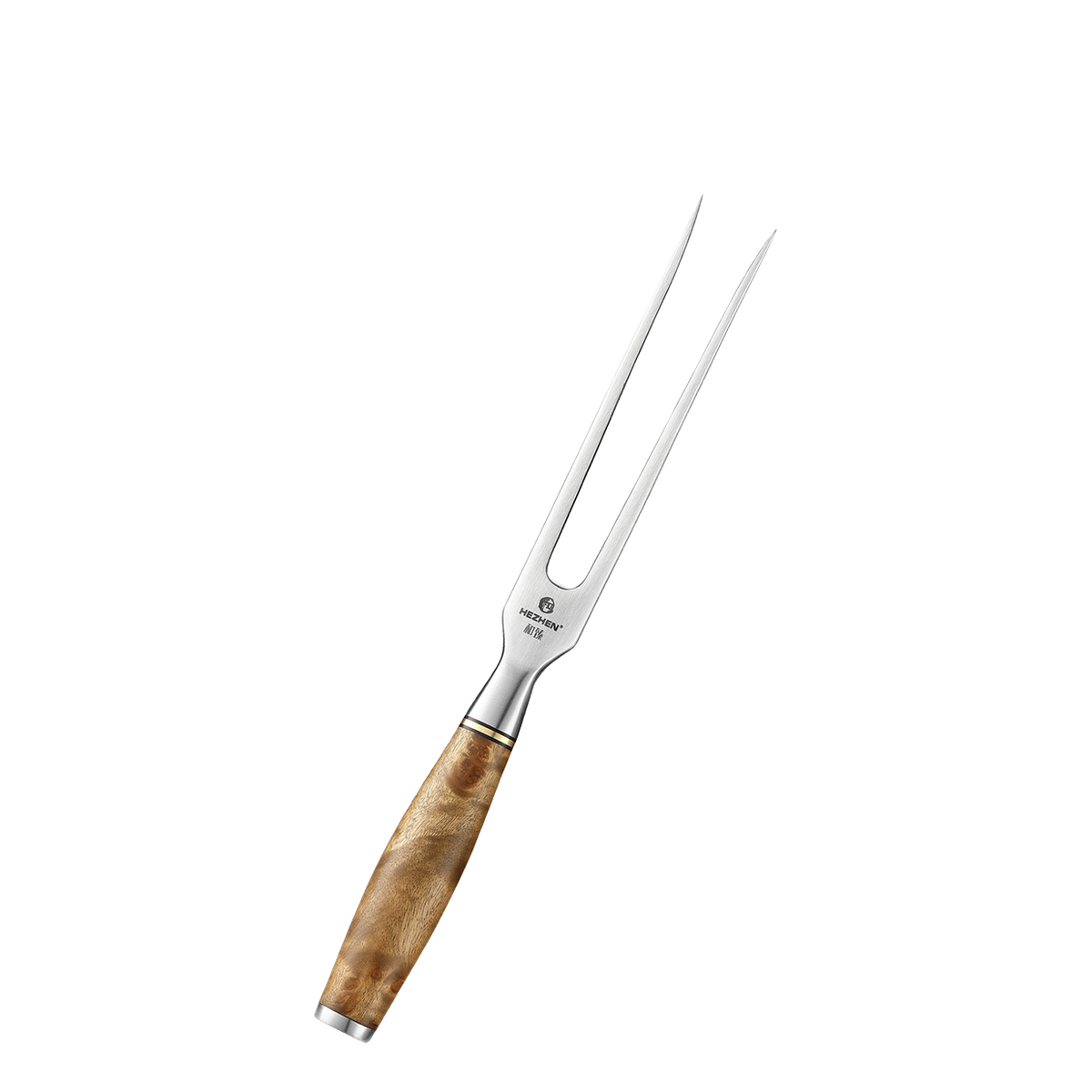
A carving fork holds roasts steady for safe, clean slicing that looks as good as it tastes.
Without a proper fork to anchor the meat, you are fighting the roast while trying to cut even slices, risking uneven portions and potential injury. Xinzuo carving forks are forged in Yangjiang with long tines that grip deep into roasts, briskets, and whole birds without tearing the surface. The curved design lets you hold meat at the optimal angle while your slicing knife does the work. Pair a carving fork with a long slicing knife and you have the complete setup for Sunday roasts, Christmas ham, and backyard BBQ. Every kitchen knife collection deserves a proper carving set.
-
20% OFF
-
20% OFF
-
20% OFF
-
20% OFF
-
20% OFF
-
20% OFF
-
20% OFF



Choosing Carving Forks
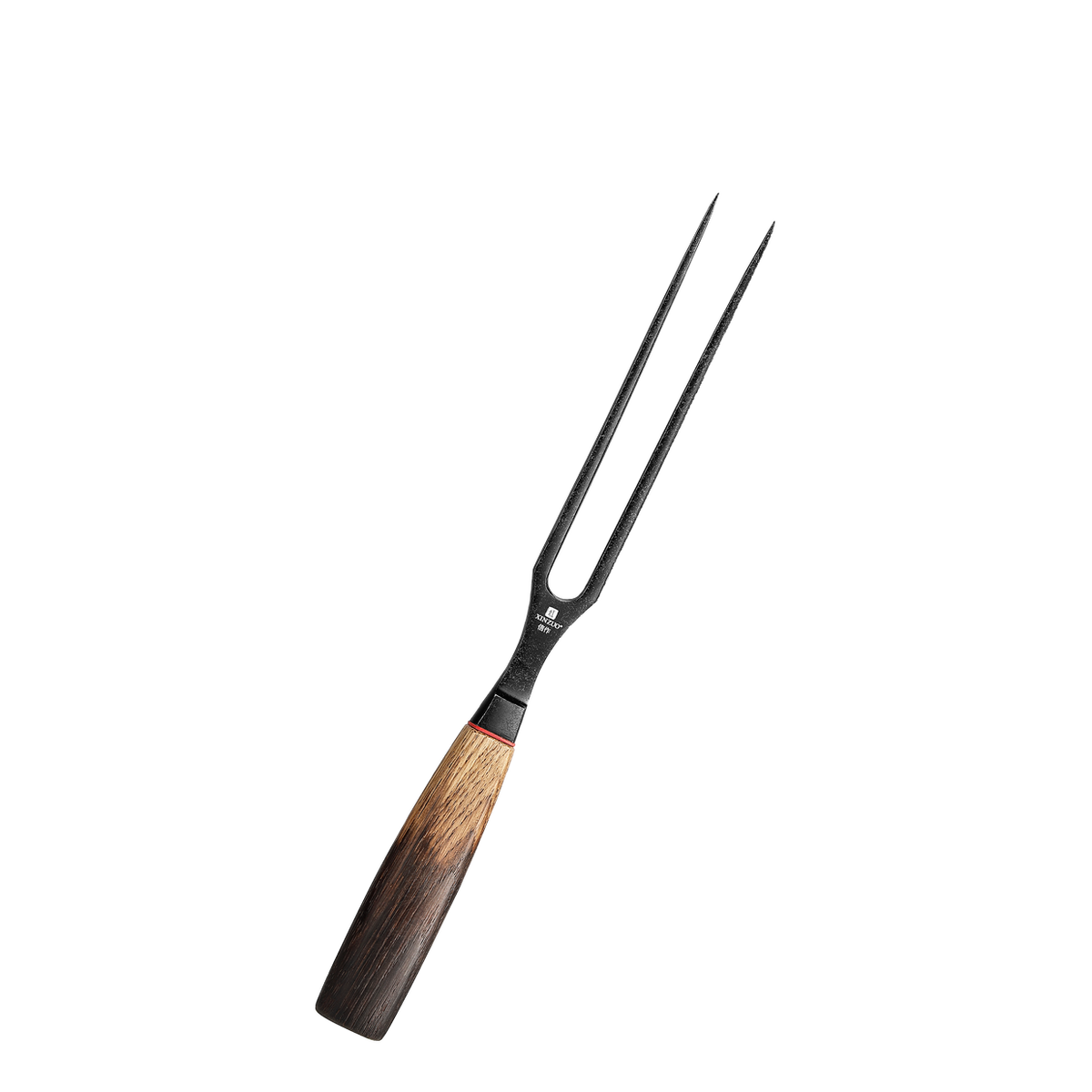
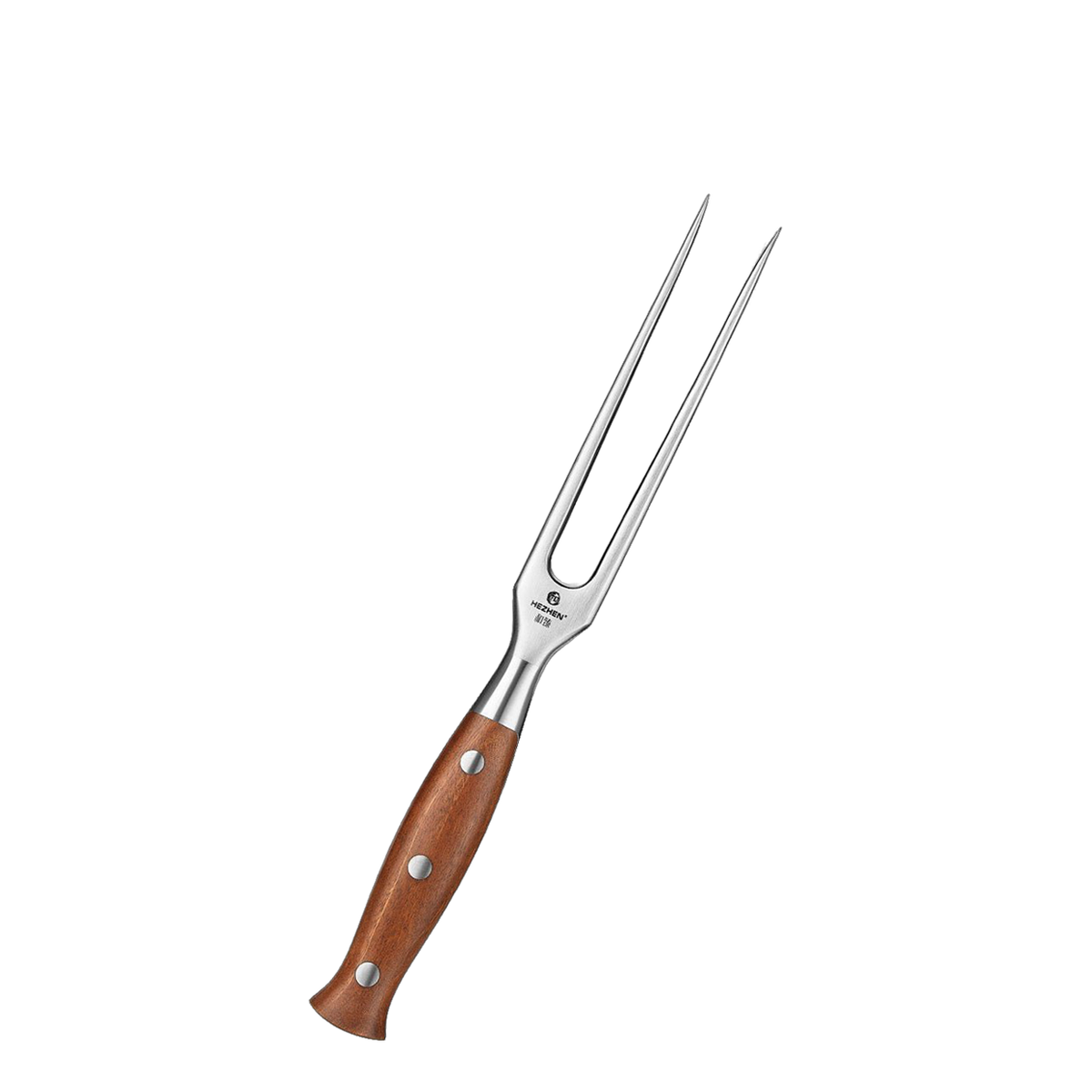
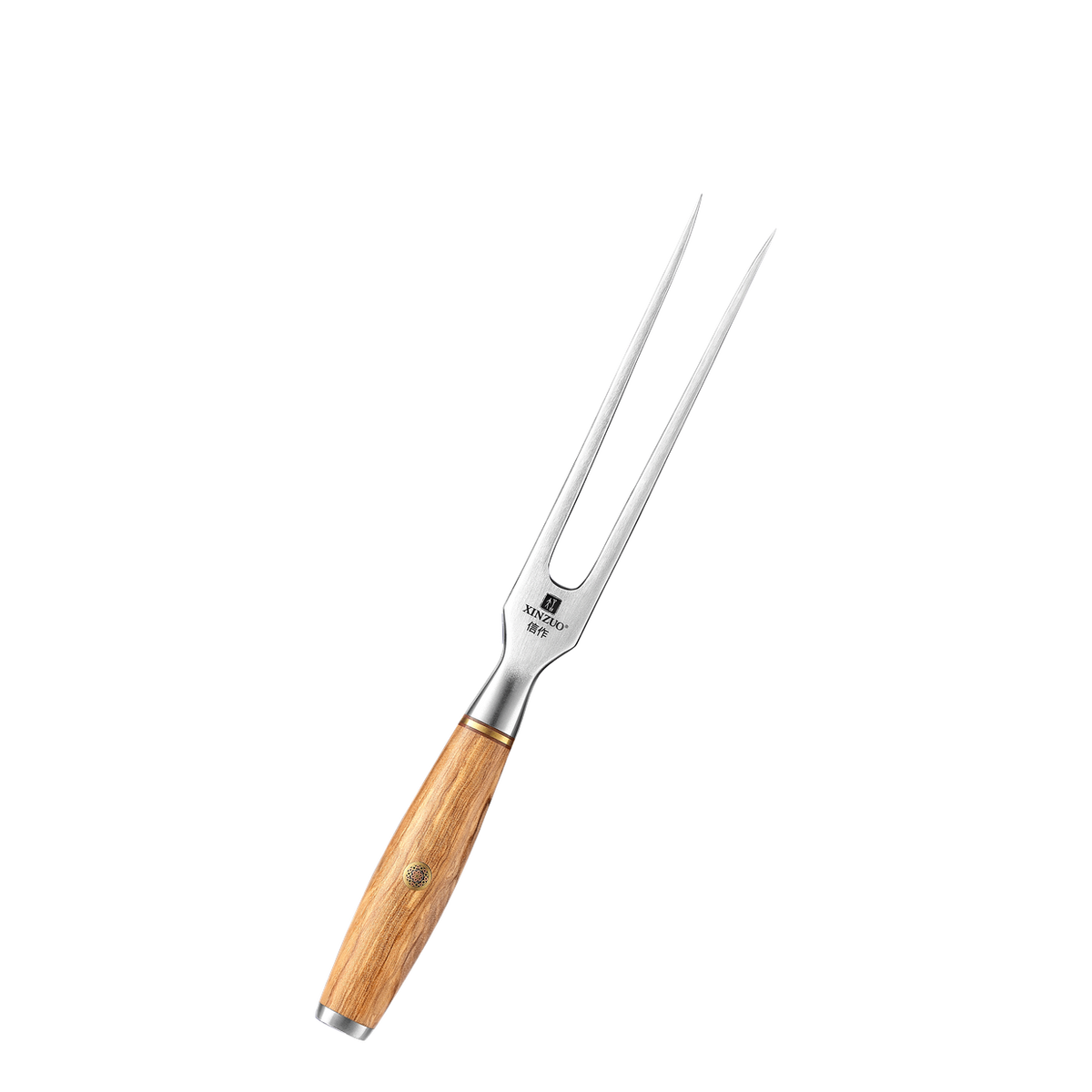
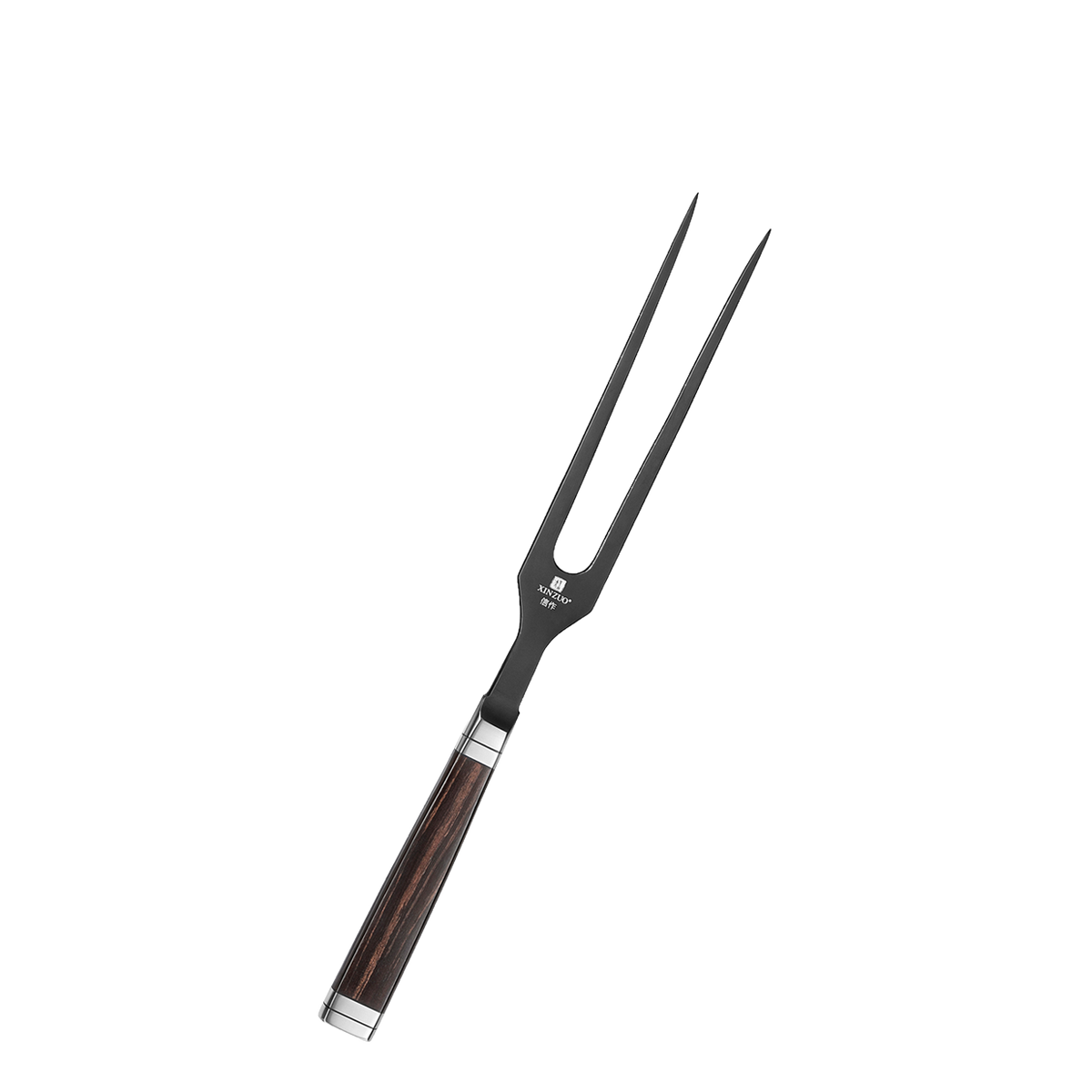
A carving fork is the two-tine partner to a carving or slicing knife: you spear the roast, hold it dead still, and slice clean even portions without the meat sliding or tearing. Xinzuo carving forks feature long, sturdy tines and balanced handles that match our carving knives across the same series, so your fork and blade look and feel like a set at the table. The range runs from a compact 5 inch fork up to full 6 inch forks, in plain stainless right through to 67-layer Damascus.
Which fork you choose comes down to two things: how it looks next to your knives, and how much you want it to hold an edge on the tines. The Supreme Series (X02) fork uses German 1.4116 stainless steel on a red wood handle, and the Lan Series (B37) fork uses 430 stainless steel on an olive wood handle. Both are the easy-care, everyday option. Step up to Damascus and you get a 67-layer forge-welded pattern that matches the Damascus carving knife in the same series. The Mo Series (X06) pairs a 10Cr15CoMoV core with a burnt-oak handle at 60±2 HRC; the Ji Series (X08) runs a 12Cr18MoV core with an ebony-wood handle at 58-62 HRC; and the Elegant (B38L) and Master (B30) forks share a 10Cr15CoMoV core at 60±2 HRC, on Linen Micarta and sycamore handles. The Pin Series (X020) 5 inch fork uses a 3-layer 10Cr15CoMoV composite blade with an olive-wood handle at 60±2 HRC. All are made in our Yangjiang workshop.
What is a carving fork used for?
A carving fork secures large cuts while you slice. The two long tines sink into a roast, ham, turkey or leg of lamb and lock it in place, so your carving knife can pass through cleanly without you steadying hot meat with your hand. It keeps portions even, keeps your fingers well clear of the blade, and doubles as a serving tool to lift and plate each slice. For any roast bigger than a chicken, a proper two-tine fork does a job no ordinary table fork can.
Which carving fork matches my knife?
Buy the fork from the same series as your carving or slicing knife and the two are made to match. Our Mo (X06), Ji (X08), Elegant (B38L), Master (B30) and Pin (X020) forks each sit alongside a carving knife in the identical series, so the Damascus pattern, bolster and handle wood line up. If you run a Xinzuo carving knife already, note its series code and pick the matching fork; if you are starting fresh, choose the handle wood and steel you like and pair the fork and knife together.
Stainless or Damascus carving fork?
Both spear a roast just as well, so this is about finish and match. A plain stainless fork like the Supreme (X02) or Lan (B37) is the low-fuss, wipe-and-go choice and pairs happily with any knife. A 67-layer Damascus fork is the one to buy when you want it to match a Damascus carving knife on the board and at the table, with the same layered blade and premium handle wood. There is no performance gap on the tines; pick on looks and on what your knife already is.
Carving fork FAQ
What size carving fork do I need? A 6 inch fork suits most roasts, hams and poultry and is the size of most forks here. The 5 inch Pin Series (X020) fork is a slightly more compact option for smaller cuts and easier storage. Both give you enough tine to hold a roast securely.
Do I need a carving fork if I already have a carving knife? Yes, if you carve roasts. The knife slices, but without a fork holding the meat still you end up steadying hot joints by hand, which is unsafe and gives you ragged, uneven slices. The fork is what makes carving clean and controlled.
How do I look after a carving fork? Hand wash and dry it straight after use, never the dishwasher, the same as your knives. The Damascus and carbon-alloy forks especially should be dried promptly. Stored dry, a Xinzuo fork lasts decades.
What is the warranty? Every Xinzuo piece carries a lifetime warranty against manufacturing defects, you are covered by Australian Consumer Law, and Australian shipping is free over $100.
Pair your fork with a matching blade from our slicing and carving knives for clean, even portions, set the table with our steak knives, or kit out the grill with BBQ knives. Buying the lot at once? A matched knife set is the simplest way to a cohesive kitchen.
More on Carving Forks
- Complete your carving set: how to choose the right slicing knife to pair with your carving fork. Carving knife guide
- BBQ carving essentials: why a carving fork and long slicing knife make brisket cutting safer and cleaner. Brisket knife guide
- Pair your carving fork with a long slicing knife for clean, even cuts through roasts and brisket. Shop Slicing Knives
- See our full BBQ knife collection for the complete outdoor cooking setup. Shop BBQ Knives