Chinese Cleavers
The Chinese cleaver, or cai dao, is widely misunderstood in Western kitchens.
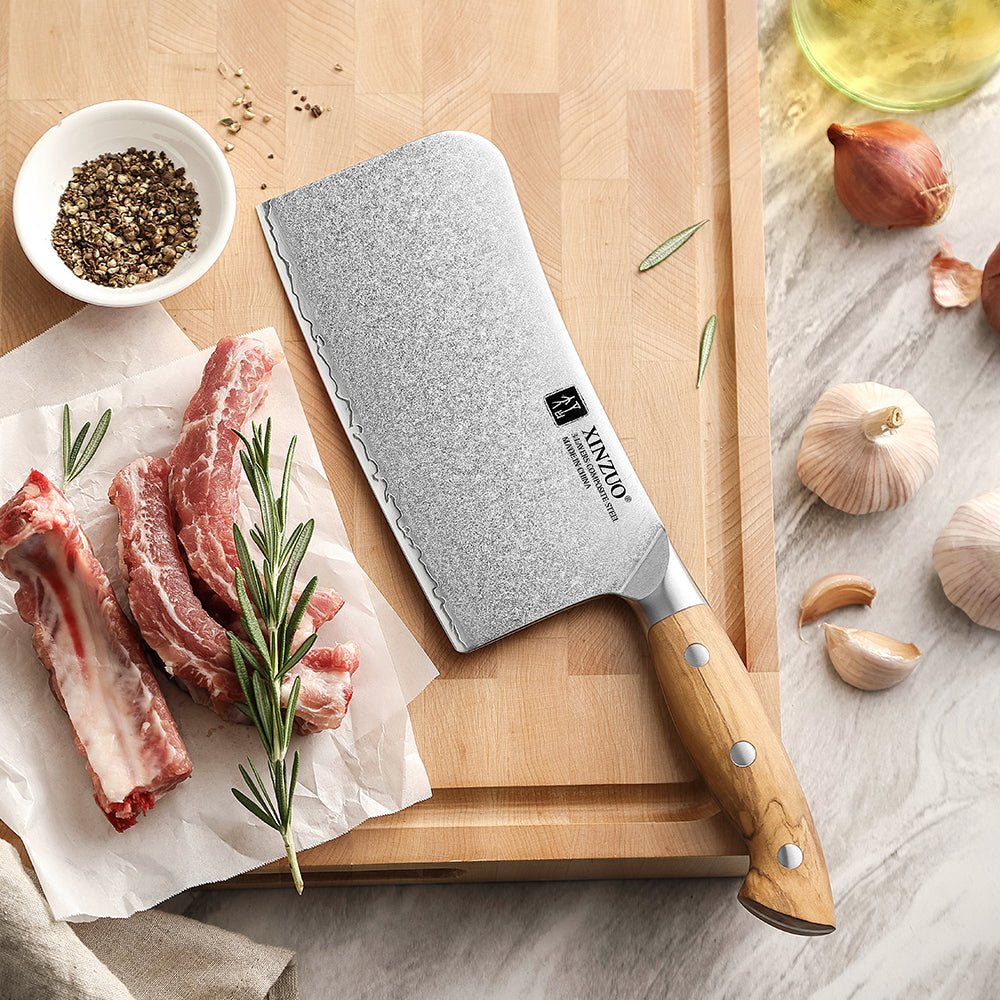
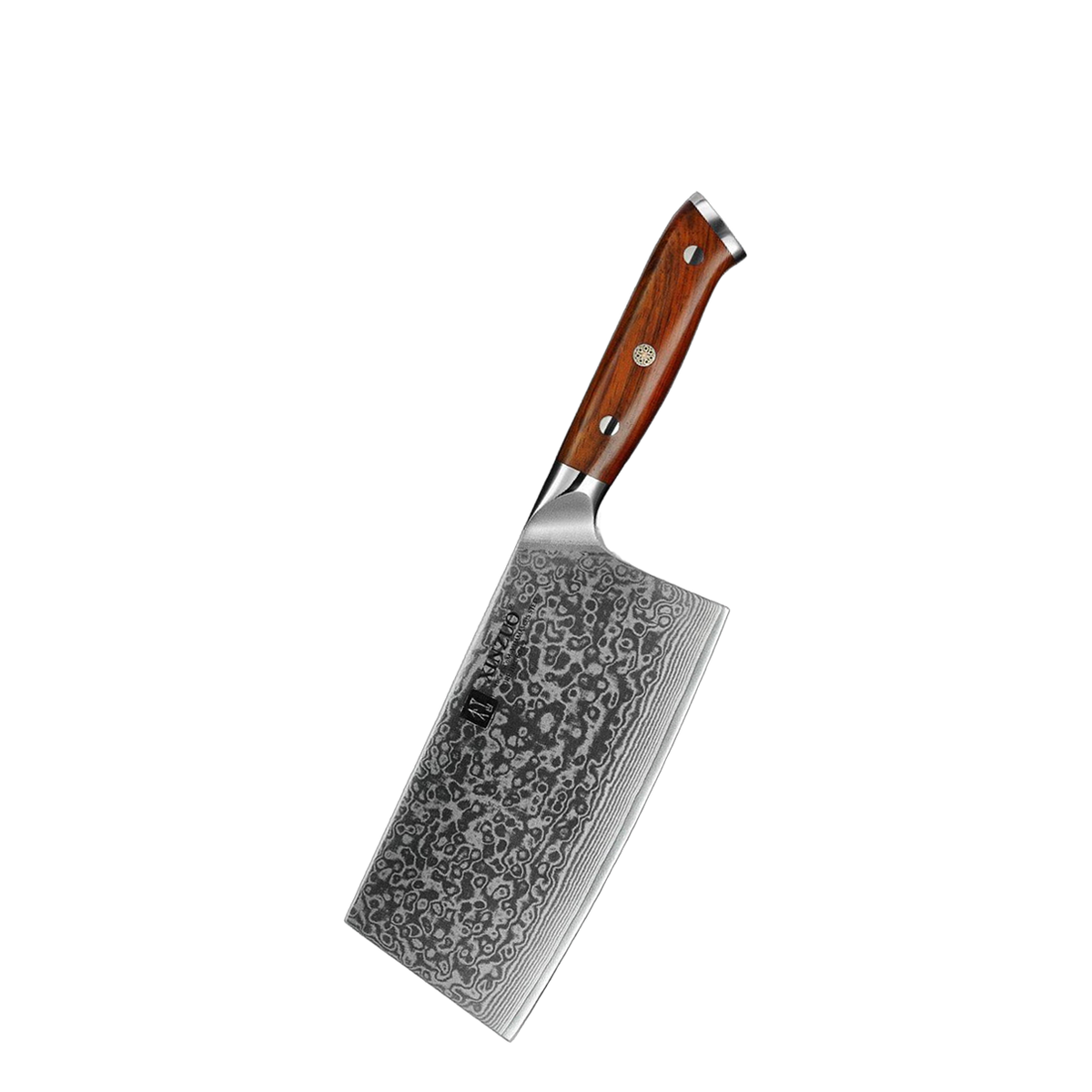
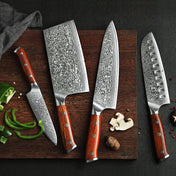
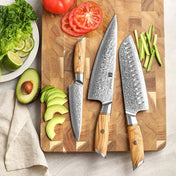
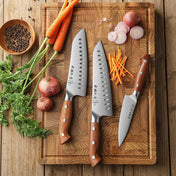
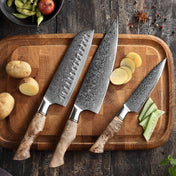
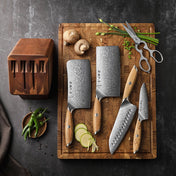
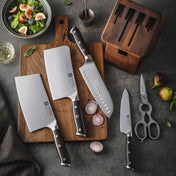
Despite looking like a meat cleaver, this thin, lightweight blade is NOT for bones. It is the all-purpose kitchen knife that handles 90% of Chinese cooking: slicing, dicing, mincing, crushing garlic, and scooping ingredients from board to wok. Xinzuo Chinese cleavers are forged in Yangjiang with thin, sharp edges designed for vegetables and boneless proteins. The tall blade provides knuckle clearance and doubles as a bench scraper. Once you master the push-cut technique, you will understand why Chinese home cooks have used just one knife for centuries. For bone work, use a Western cleaver instead.
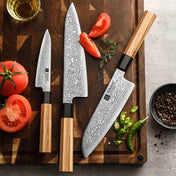
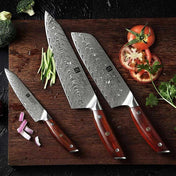
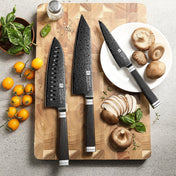
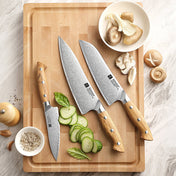
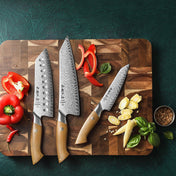
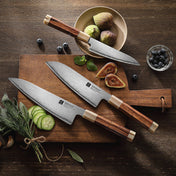
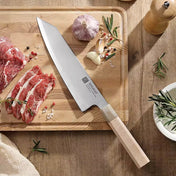
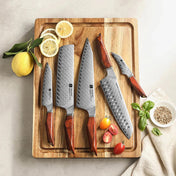
-
20% OFF
-
20% OFF
-
20% OFF
-
20% OFF
-
20% OFF
-
20% OFF
-
20% OFF
-
20% OFF

Choosing Chinese Cleavers
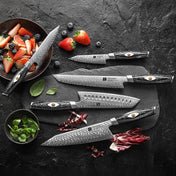
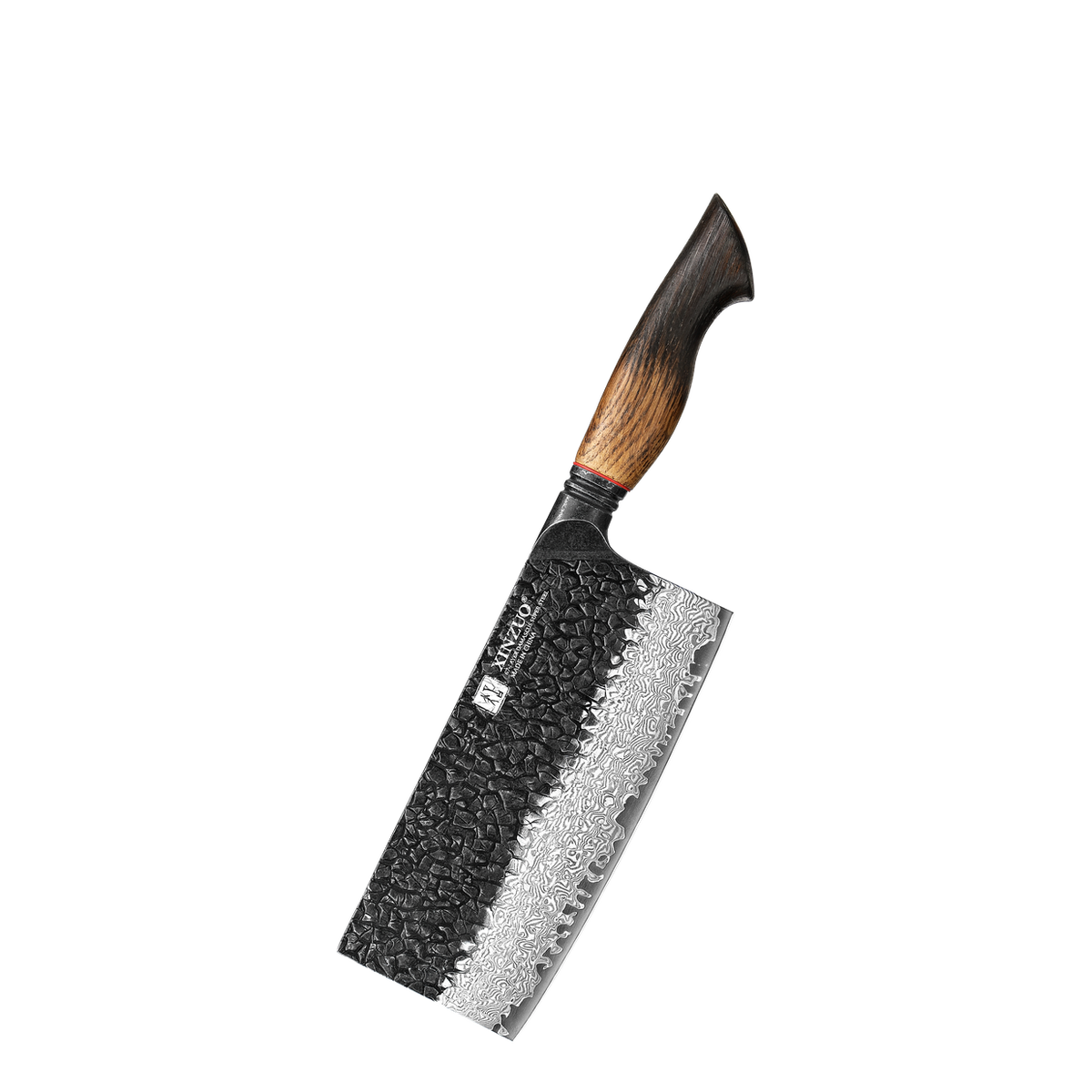
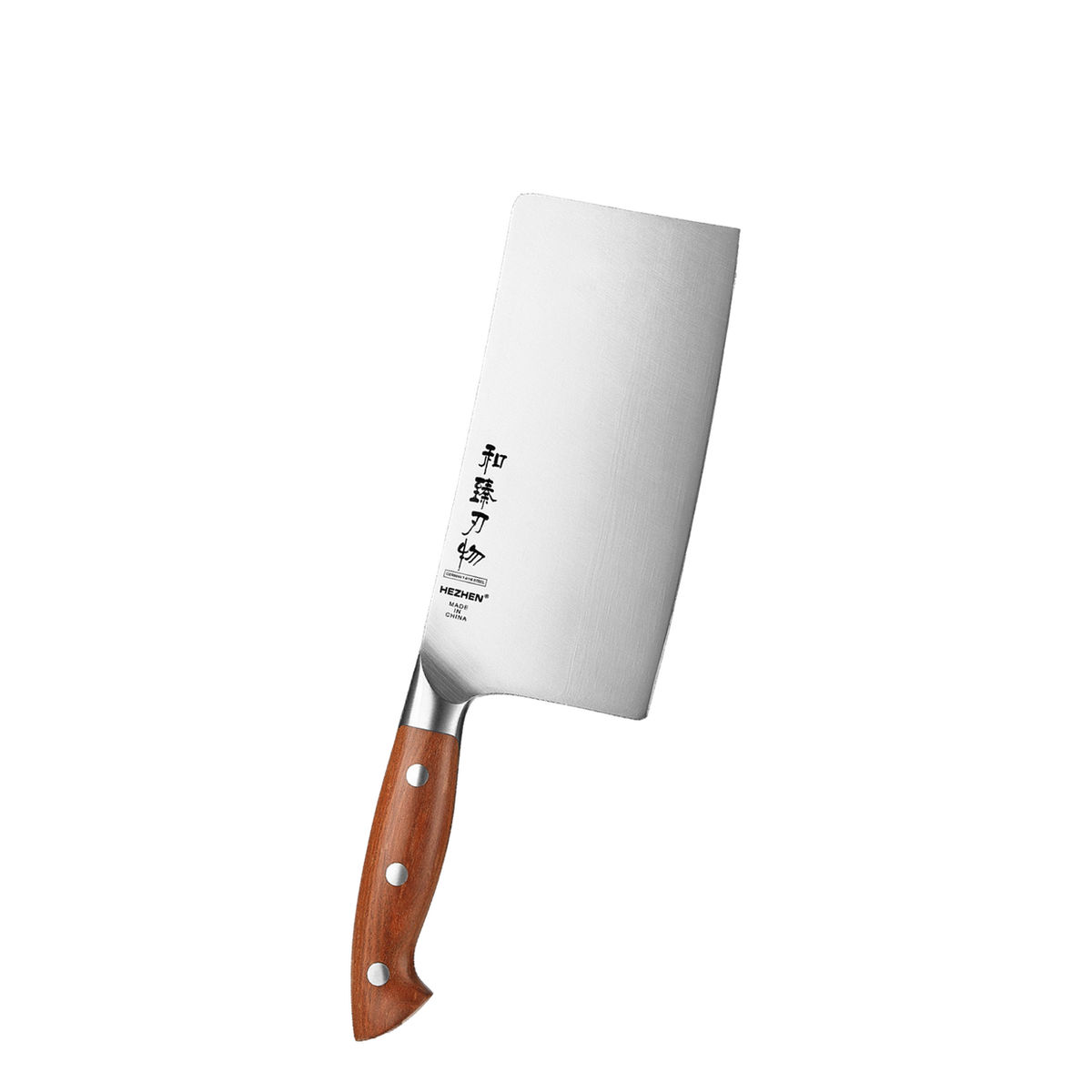
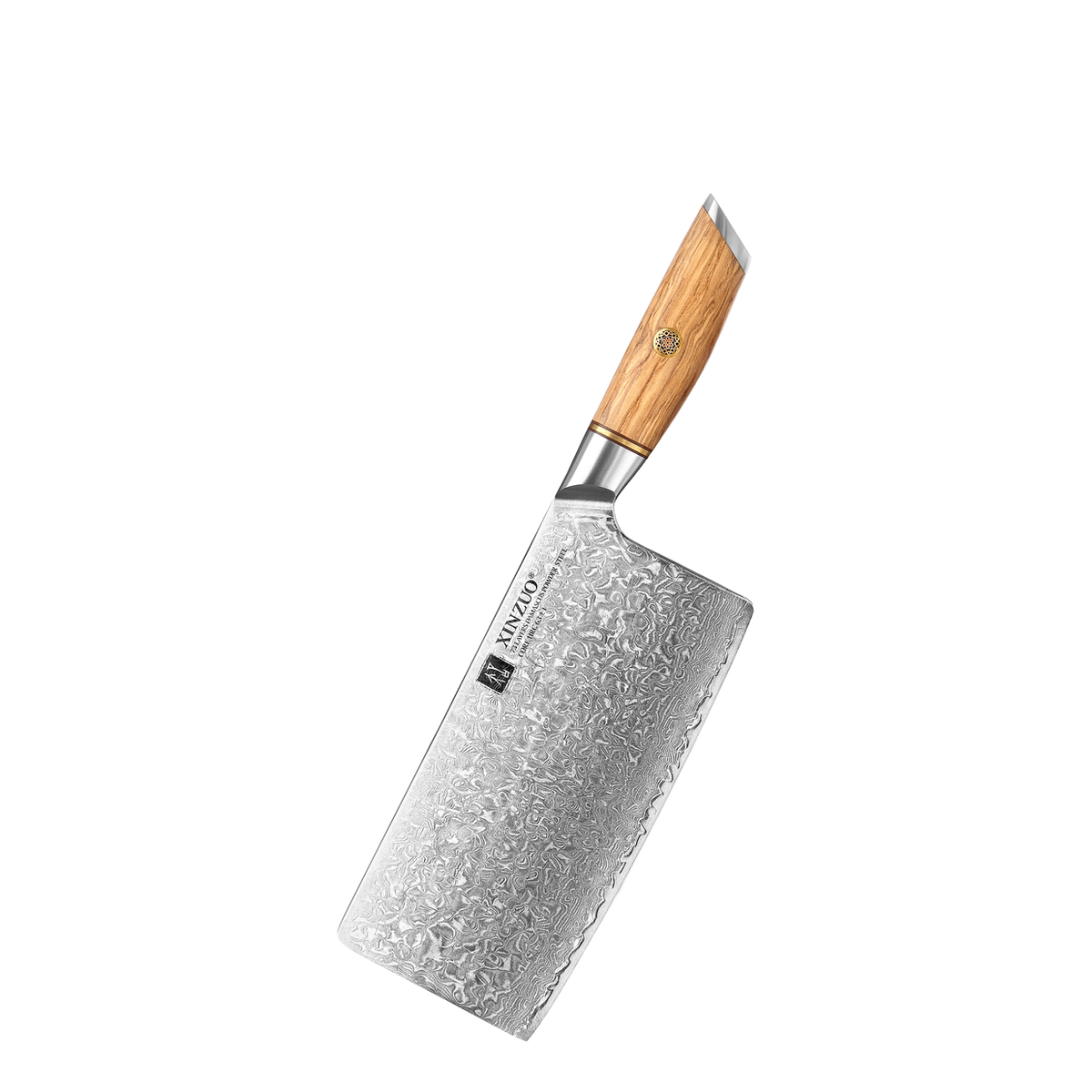
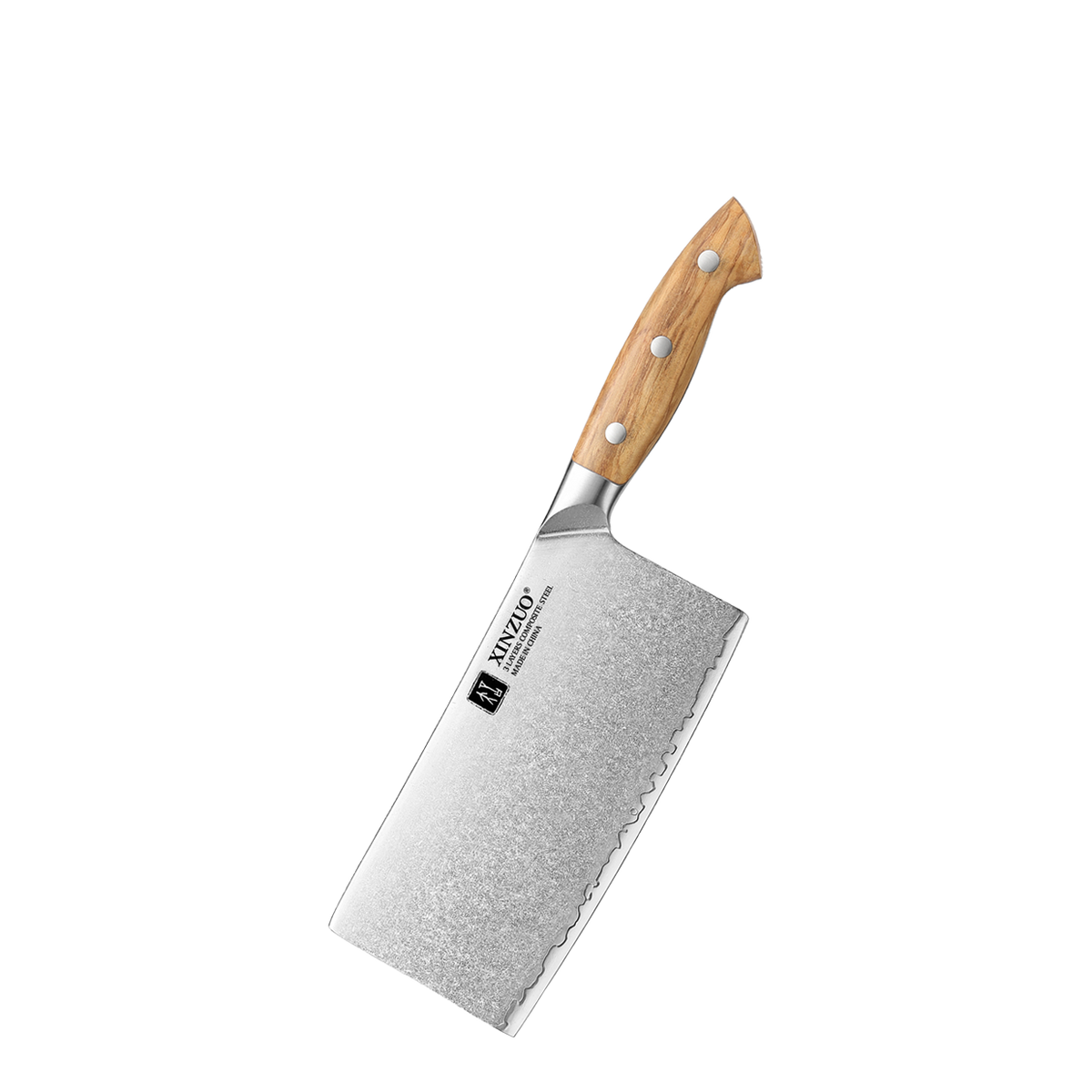
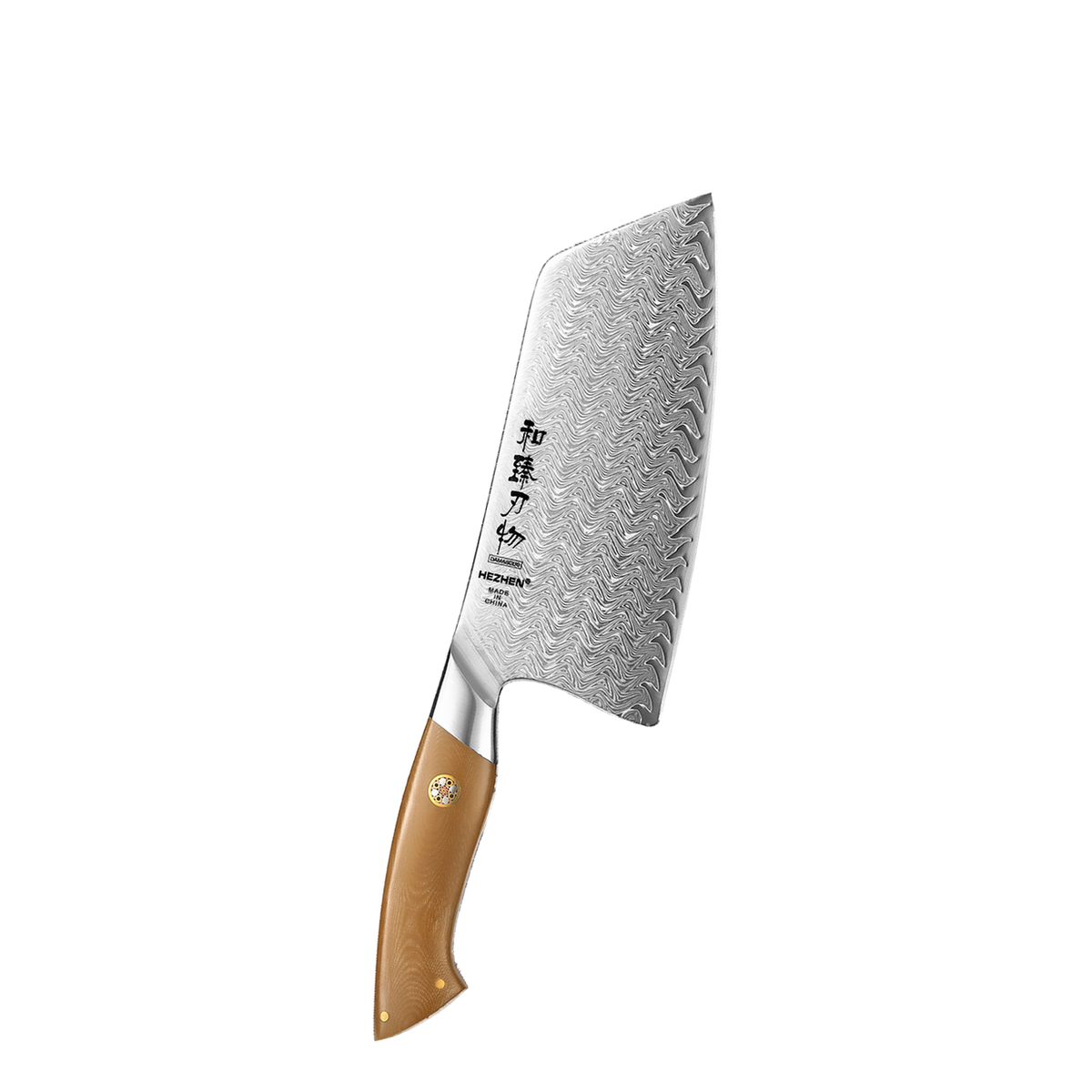
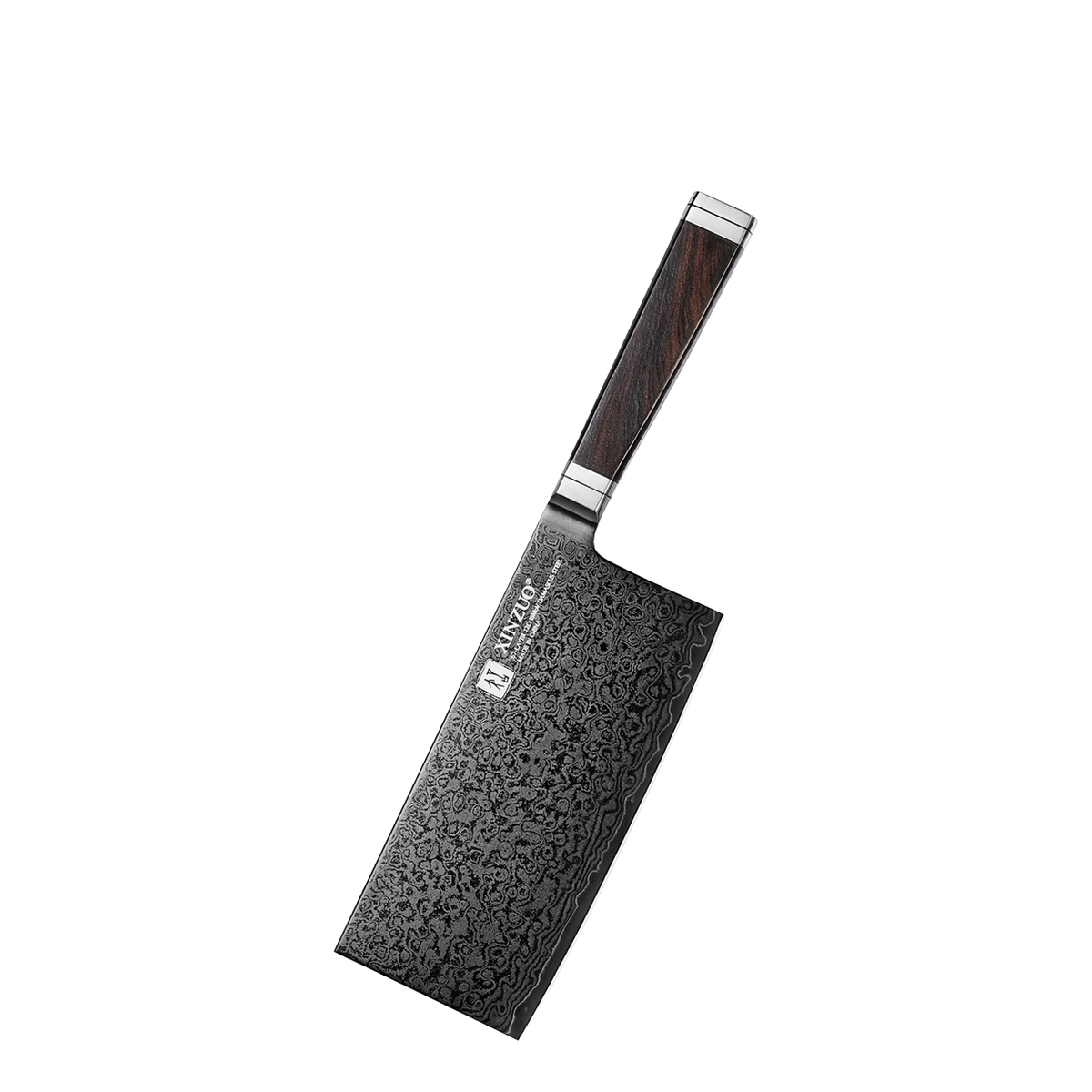
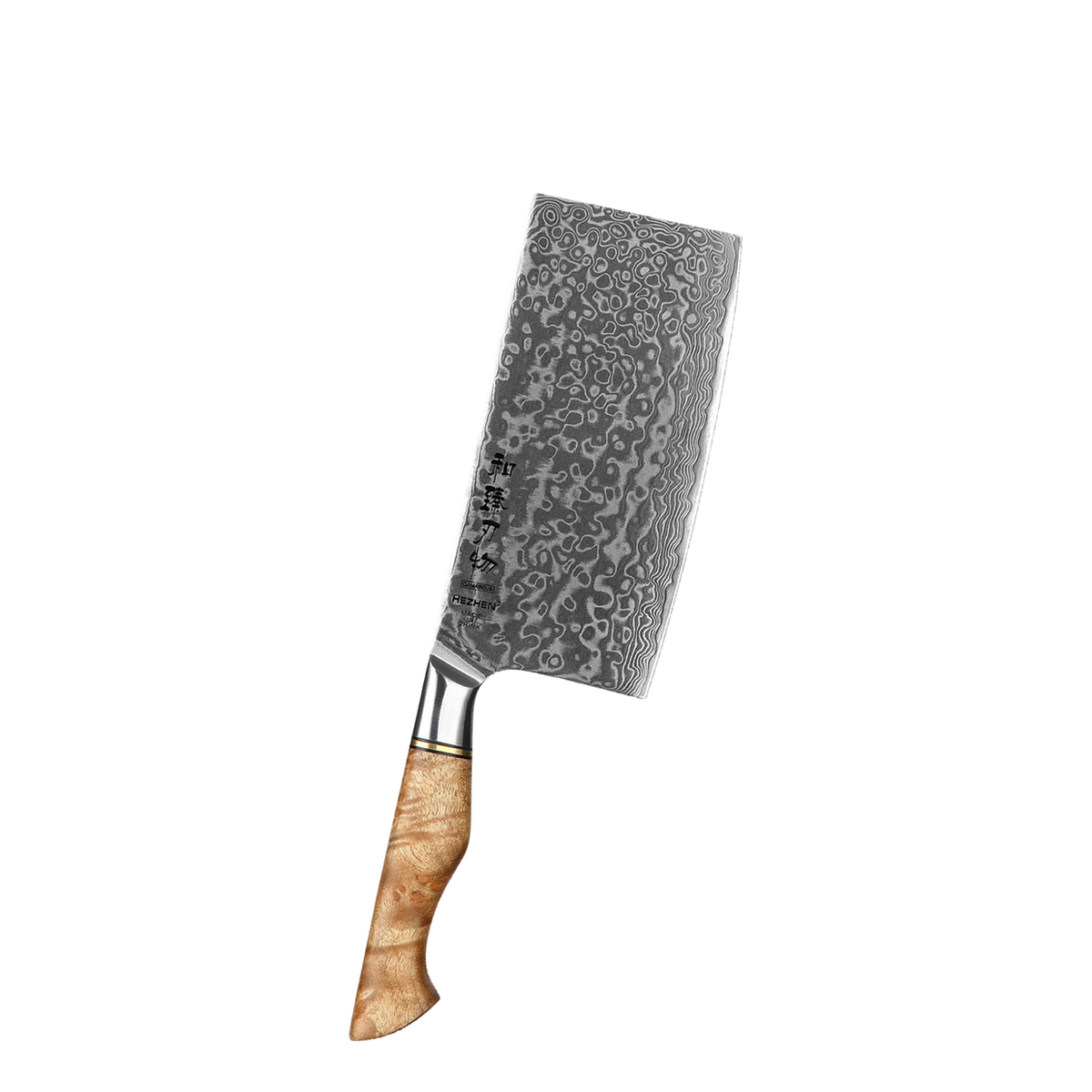
A Chinese cleaver, or cai dao, is the one knife that does almost everything on a Chinese cutting board: slicing, dicing, mincing, smashing garlic with the flat of the blade, then scooping the lot up to carry it to the wok. Despite the broad, rectangular blade, these are not heavy-duty bone choppers. They are precision vegetable-and-meat slicers built around a thin, keen edge, and this collection covers eight of them across the Xinzuo range, all made in our own Yangjiang workshop.
Every cleaver here is a 7 or 7.5 inch blade sized for a home or professional kitchen, and every one but the Supreme pairs a hardened cutting core with either genuine 67-layer or 73-layer Damascus cladding, or a clean composite-steel finish; the Supreme is solid German 1.4116 stainless. Core steels run from a tough 10Cr15CoMoV stainless through a harder 12Cr18MoV to a fine-grained 14Cr14MoVNb powder steel, with hardness from 56-58 HRC on the everyday Supreme up to 62±2 HRC on the powder-steel Lan. Handles include olive wood, rosewood, ebony, burnt oak, sycamore, Linen Micarta and traditional red wood, so you can match the blade to your bench.
What is a Chinese cleaver used for?
A Chinese cleaver is used for everyday cutting, not butchery. The tall, flat blade excels at slicing vegetables and boneless meat, mincing herbs and aromatics, julienning, and cutting through the occasional soft joint or small bone, but it is not built to hack through hard bone the way a Western bone cleaver is. Think of it as a very wide chef knife: the long straight edge lets you push-cut and chop with a rocking or up-and-down motion, and the broad face doubles as a scoop and a garlic-smasher. For anything heavier than light bone, reach for a dedicated bone cleaver instead.
Why is the blade so tall?
The height is the whole point of the design. A tall blade gives you knuckle clearance so your hand never catches the board, and it turns the flat side into a built-in bench scraper: sweep a pile of diced onion onto the blade, lift, and tip it straight into the pan without a second tool. The extra face also adds mass over the edge for effortless push-cutting through dense vegetables like pumpkin or daikon, and gives you a large, flat surface for crushing ginger and garlic. It is the feature that separates a real cai dao from a narrow Western knife.
Cai dao vs a Western chef knife: which should you buy?
Choose a cai dao if most of your prep is vegetables and boneless protein and you want one blade that slices, chops, minces and scoops. The straight edge and tall face suit a chop-and-scoop workflow better than a curved Western blade. Choose a Western chef knife if you rock-chop, break down larger cuts of meat, and want a curved belly for that motion. Many cooks keep both: the cleaver for volume vegetable prep and the chef knife for everything else. If you are weighing it up, compare this range against our chef knives and professional chef knives.
Which steel and construction should you choose?
It comes down to how you cook and how often you want to sharpen. The blades in this collection split into three groups, from an easy-living everyday cleaver to a powder-steel piece that holds its edge the longest.
| Series | Blade construction | Core steel | Hardness | Handle |
|---|---|---|---|---|
| Supreme (X02) | Mono steel | German 1.4116 stainless | 56-58 HRC | Red wood |
| Pin (X020) | 3-layer composite | 10Cr15CoMoV | 60±2 HRC | Olive wood |
| Ji (X08) | 67-layer Damascus | 12Cr18MoV | 58-62 HRC | Ebony wood |
| Yu (B13R) | 67-layer Damascus | 10Cr15CoMoV | 60±2 HRC | Rosewood |
| Mo (X06) | 67-layer Damascus | 10Cr15CoMoV | 60±2 HRC | Burnt oak |
| Master (B30) | 67-layer Damascus | 10Cr15CoMoV | 60±2 HRC | Sycamore |
| Elegant (B38L) | 67-layer Damascus | 10Cr15CoMoV | 60±2 HRC | Linen Micarta |
| Lan (B37) | 73-layer Damascus | 14Cr14MoVNb powder steel | 62±2 HRC | Olive wood |
The Supreme (X02) and Pin (X020) are the practical starting points: a solid German 1.4116 stainless blade and a 3-layer composite, both quick to bring back to a keen edge on a stone. The 67-layer Damascus pieces, the Yu, Mo, Master and Elegant series, all run a 10Cr15CoMoV core at 60±2 HRC and differ mainly in the handle, so pick the one that suits your kitchen. The Ji (X08) wraps a harder 12Cr18MoV core in 67-layer Damascus with an ebony handle. At the top, the Lan (B37) steps up to a 14Cr14MoVNb powder-steel core under 73-layer Damascus: powder steel is finer-grained, so it holds its edge longer between sharpenings, which suits cooks who would rather cook than sharpen.
Are these Japanese cleavers?
No. These are Chinese cleavers, made in our own workshop in Yangjiang, China. Most use 10Cr15CoMoV, a Chinese stainless steel, and the others use 12Cr18MoV, 14Cr14MoVNb powder steel or German 1.4116. We are upfront about origin rather than implying a Japanese make we do not have. If you want a Japanese-style flat vegetable knife instead, the nakiri is the closest cousin: a lighter, narrower blade built purely for produce.
Common questions
Can a Chinese cleaver cut through bone? Only soft or light bone, like a chicken joint. These are slicing cleavers with a thin, hard edge, so chopping through hard bone risks chipping it. For heavy bone work you want a dedicated, thicker bone cleaver, not a cai dao.
What size Chinese cleaver should I get? Every cleaver in this collection is a 7 or 7.5 inch blade, which is the versatile all-round size for a home kitchen: big enough to scoop and push-cut through volume prep, still nimble enough for detailed slicing.
How do I look after a Damascus cleaver? Hand wash and dry it straight after use, never the dishwasher, and hone before heavy prep. Kept dry, stored safely and sharpened occasionally on a whetstone, a Damascus cleaver lasts decades. The wooden handles like a wipe of food-safe oil now and then.
What is the warranty? Every Xinzuo knife carries a lifetime warranty against manufacturing defects, you are covered by Australian Consumer Law, and Australian shipping is free over $100.
Not sure a cleaver is the right shape for you? Browse the wider cleavers range, compare the flat-profile Japanese-style option in our nakiri knives, or step across to our all-round chef knives. If it is the layered steel you are after, see the full Damascus kitchen knives collection.
More on Chinese Cleavers
- Chinese cleaver vs Western cleaver: completely different tools for completely different jobs. Chinese vs Western cleaver guide
- Vegetable cleaver vs chef knife: when the Chinese cleaver outperforms a Western blade. Vegetable cleaver vs chef knife
- Master the push cut and scoop technique that Chinese cleavers are built for. Essential knife techniques
- Looking for a heavy-duty bone cleaver instead? Browse our Western-style cleavers. Shop Cleavers
- The nakiri shares the tall blade profile of a Chinese cleaver but with a lighter, thinner Japanese design. Shop Nakiri Knives