
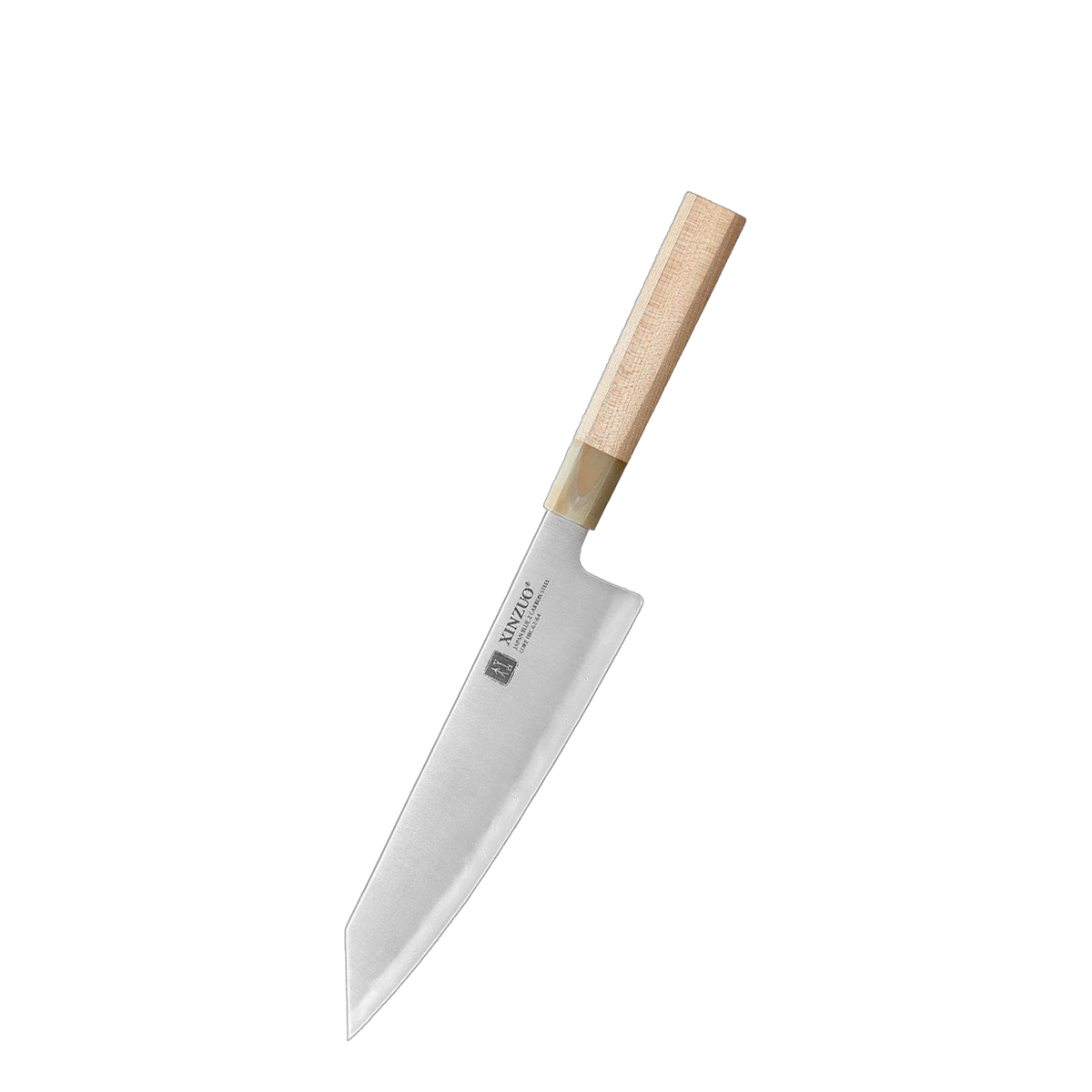
Bunka Knives
The bunka knife is a versatile Japanese kitchen knife with a distinctive k-tip (reverse tanto point) that excels at precision work.
Less common in Australia than the santoku or gyuto, the bunka knife offers the same all-purpose functionality with added control for detail cuts. The angular tip pierces ingredients cleanly and handles tasks that round-tipped knives struggle with. Xinzuo bunka knives feature 67-layer Damascus steel forged in Yangjiang, combining traditional Japanese blade geometry with modern metallurgy. If you want one knife that handles vegetables, proteins, and precision work equally well, the bunka is a serious contender.
Choosing Bunka Knives
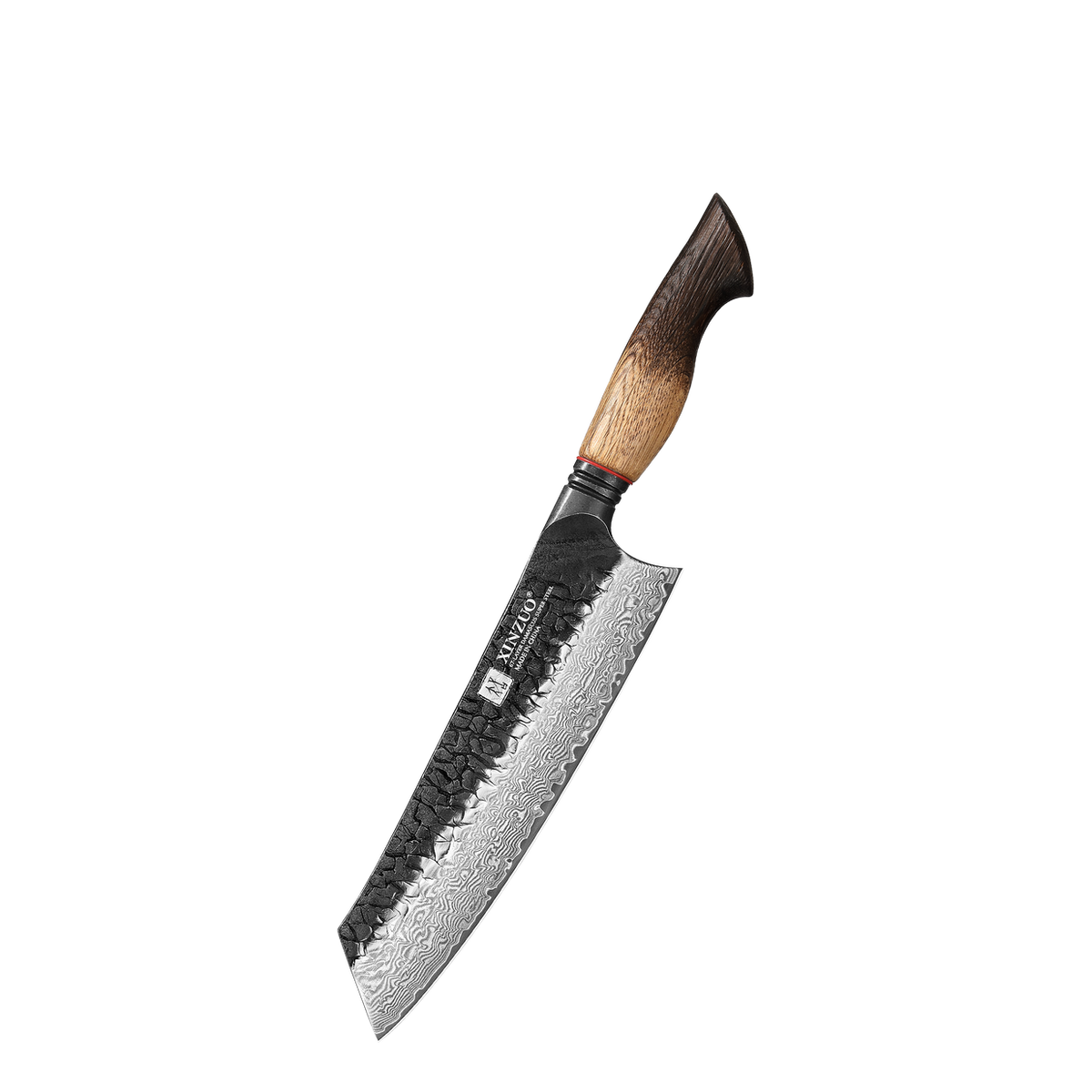
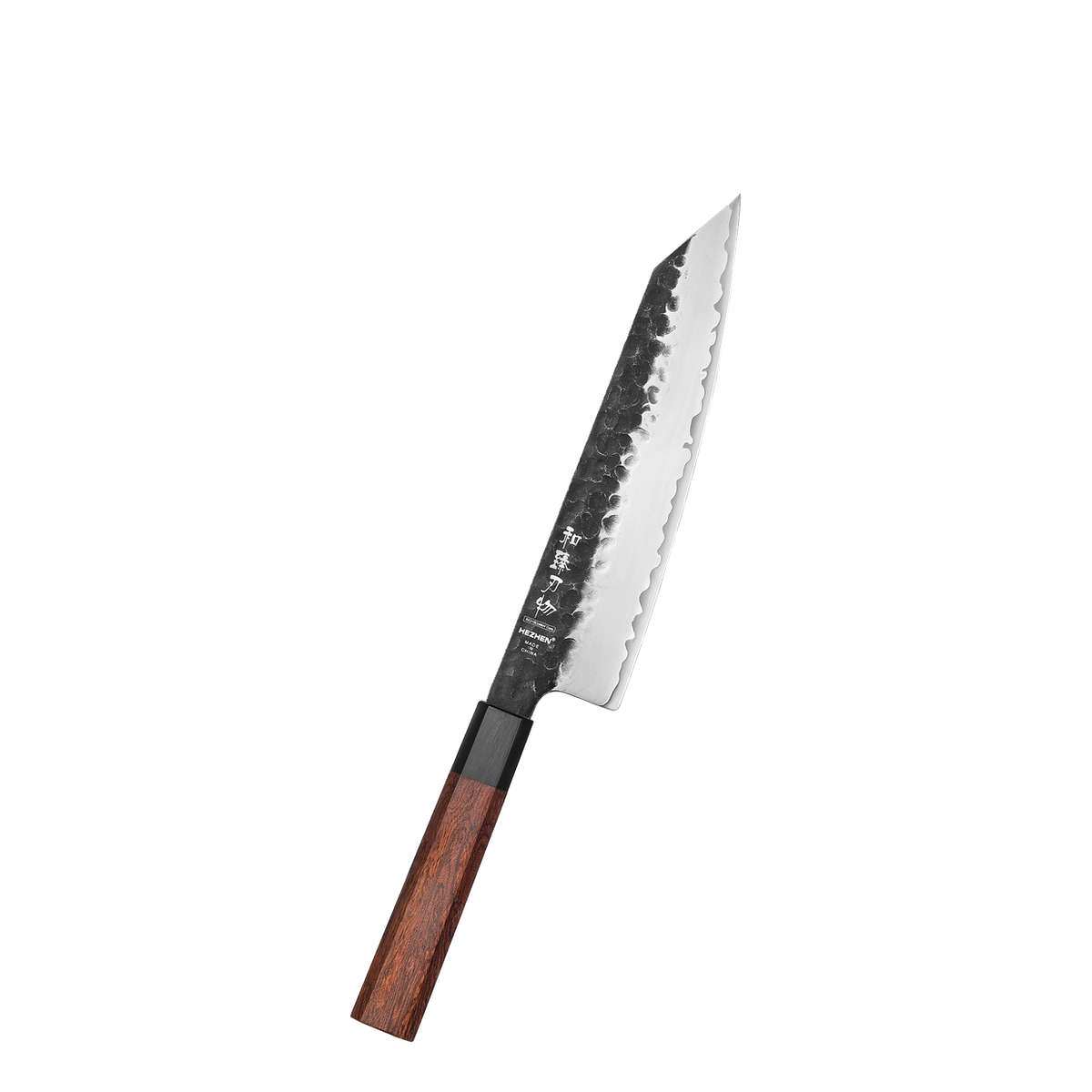
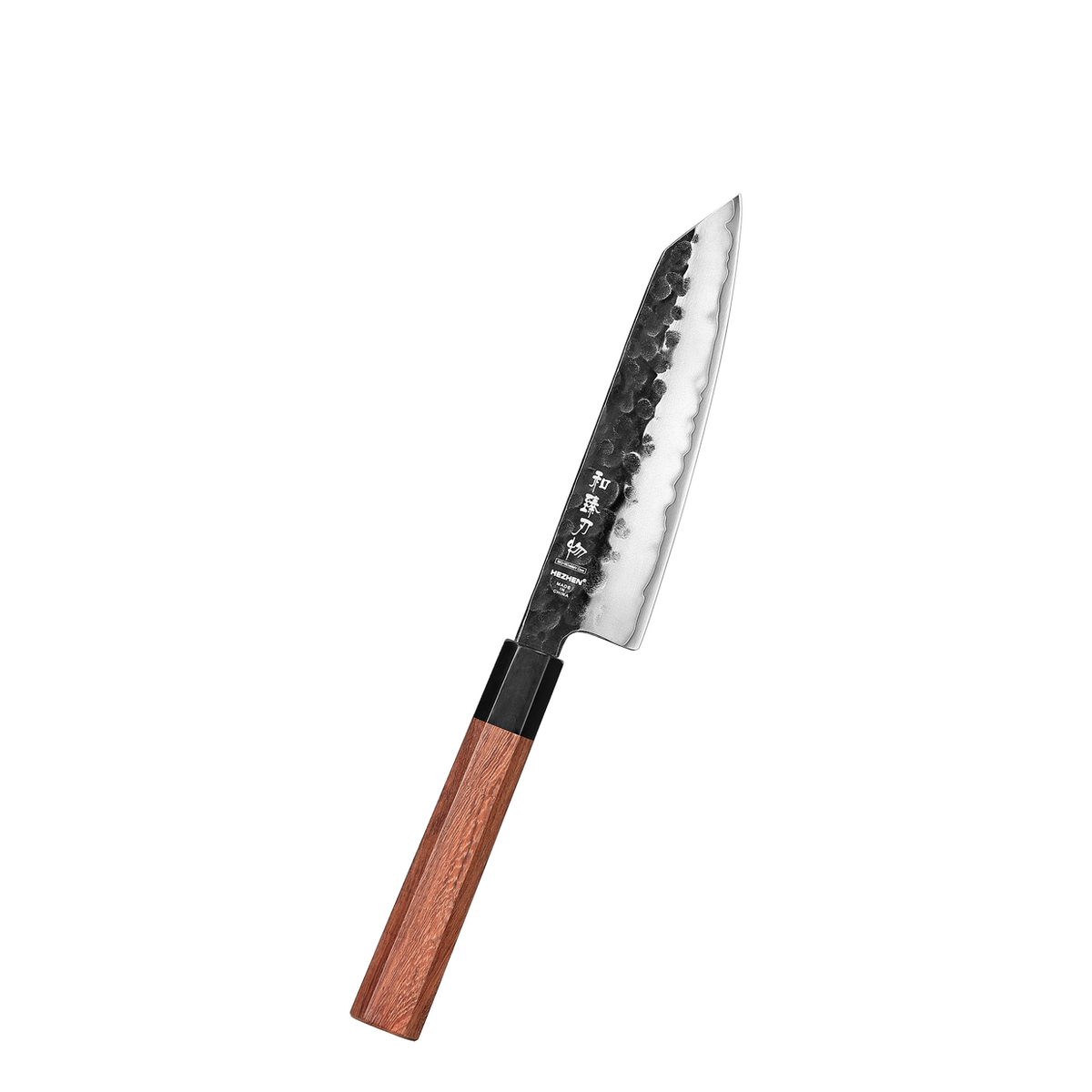
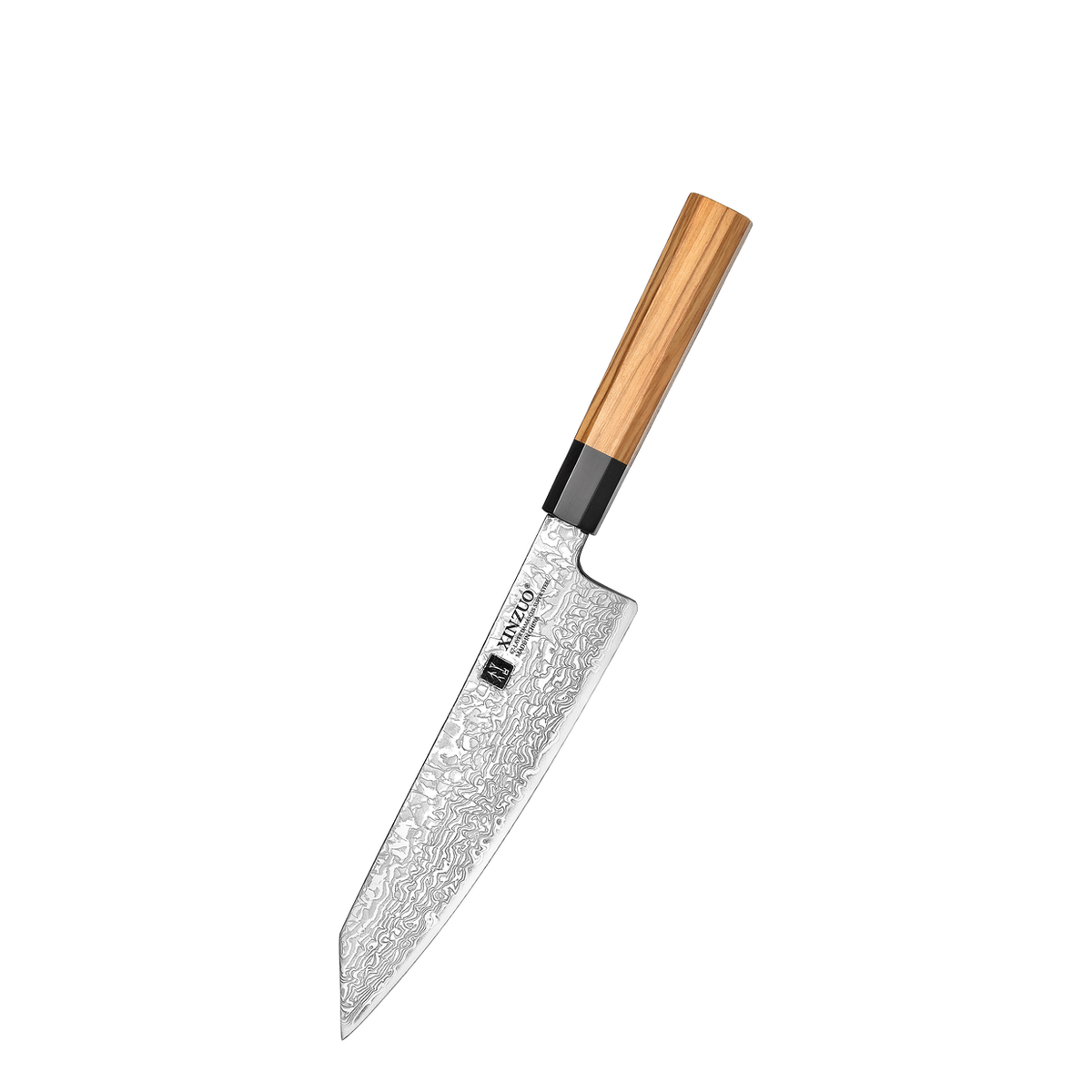
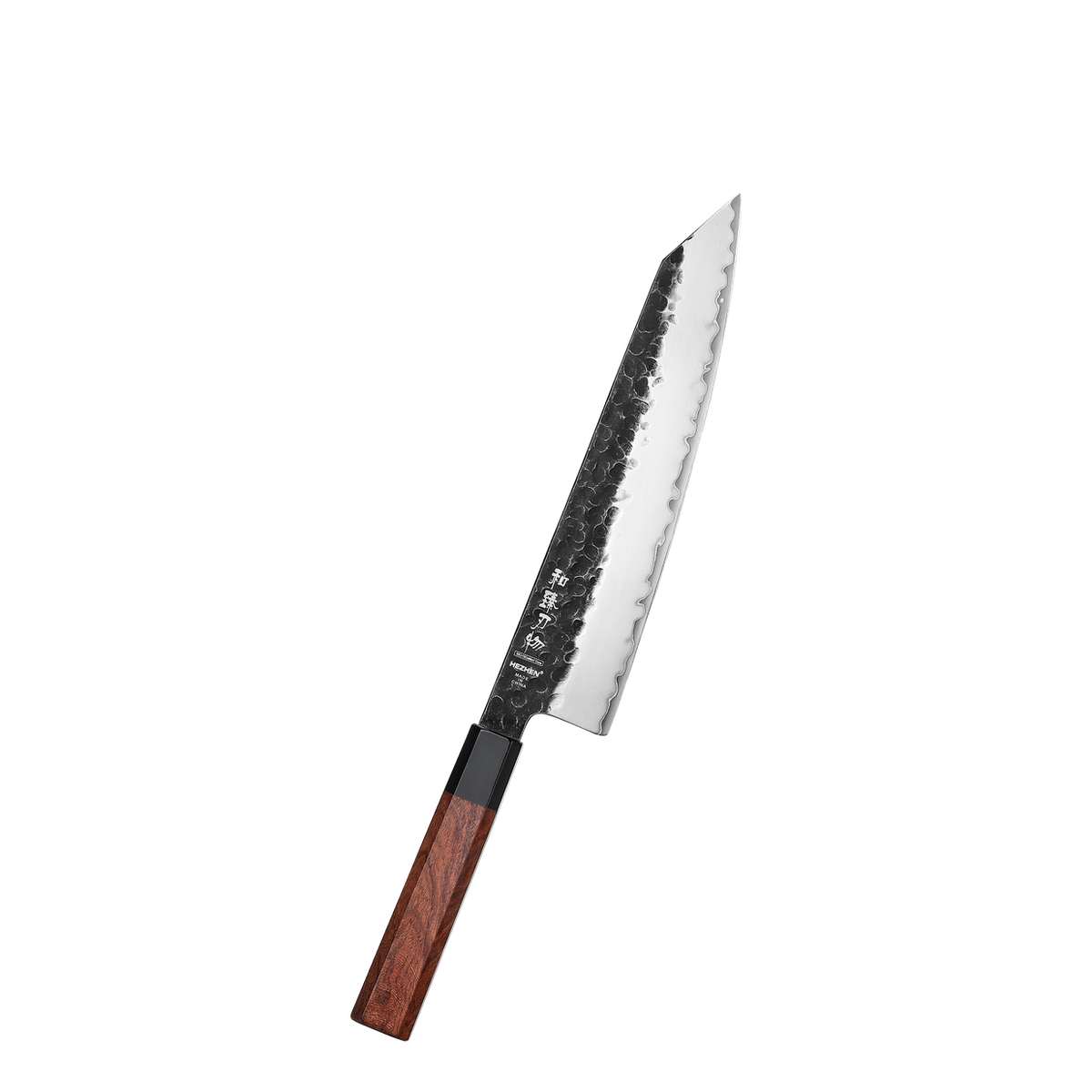
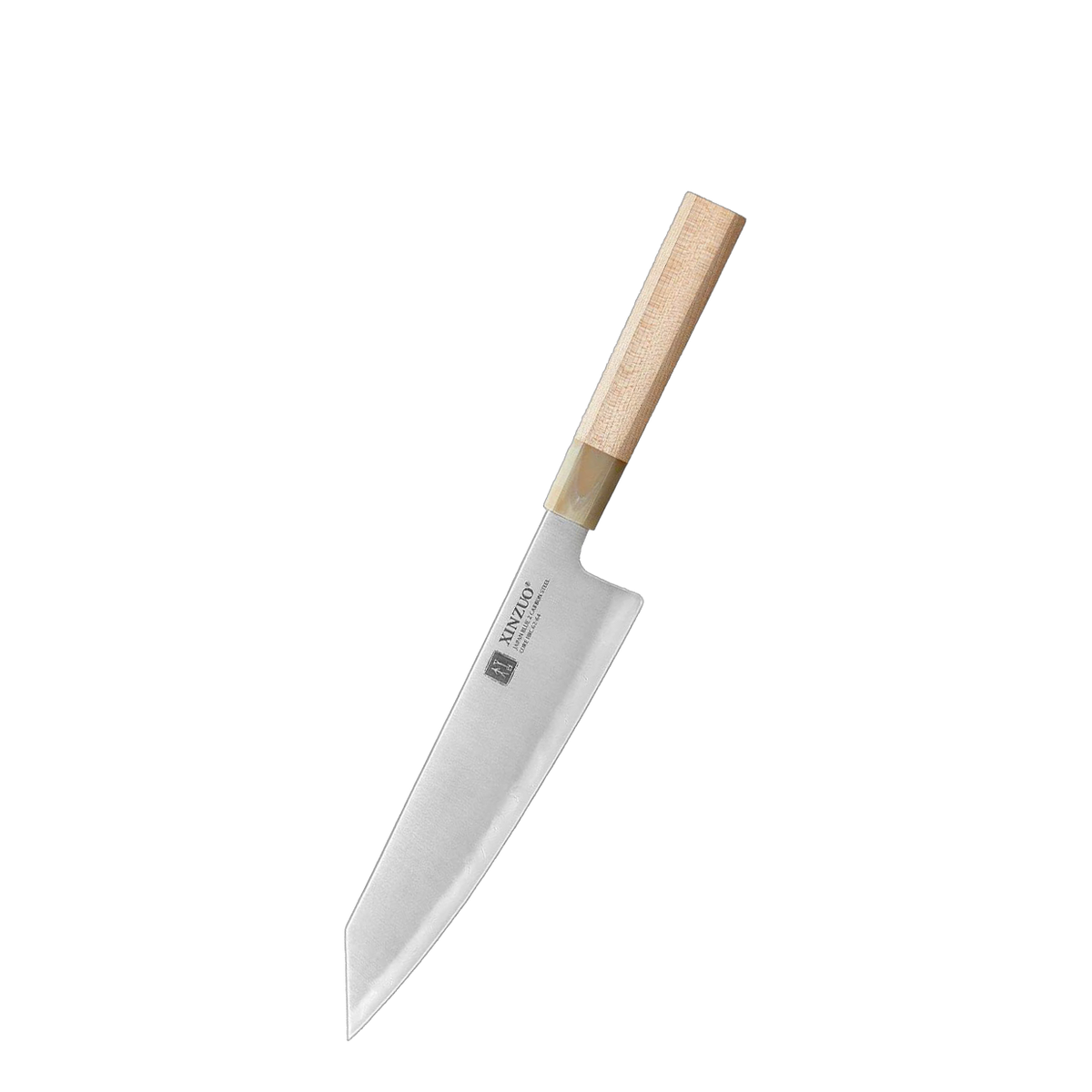
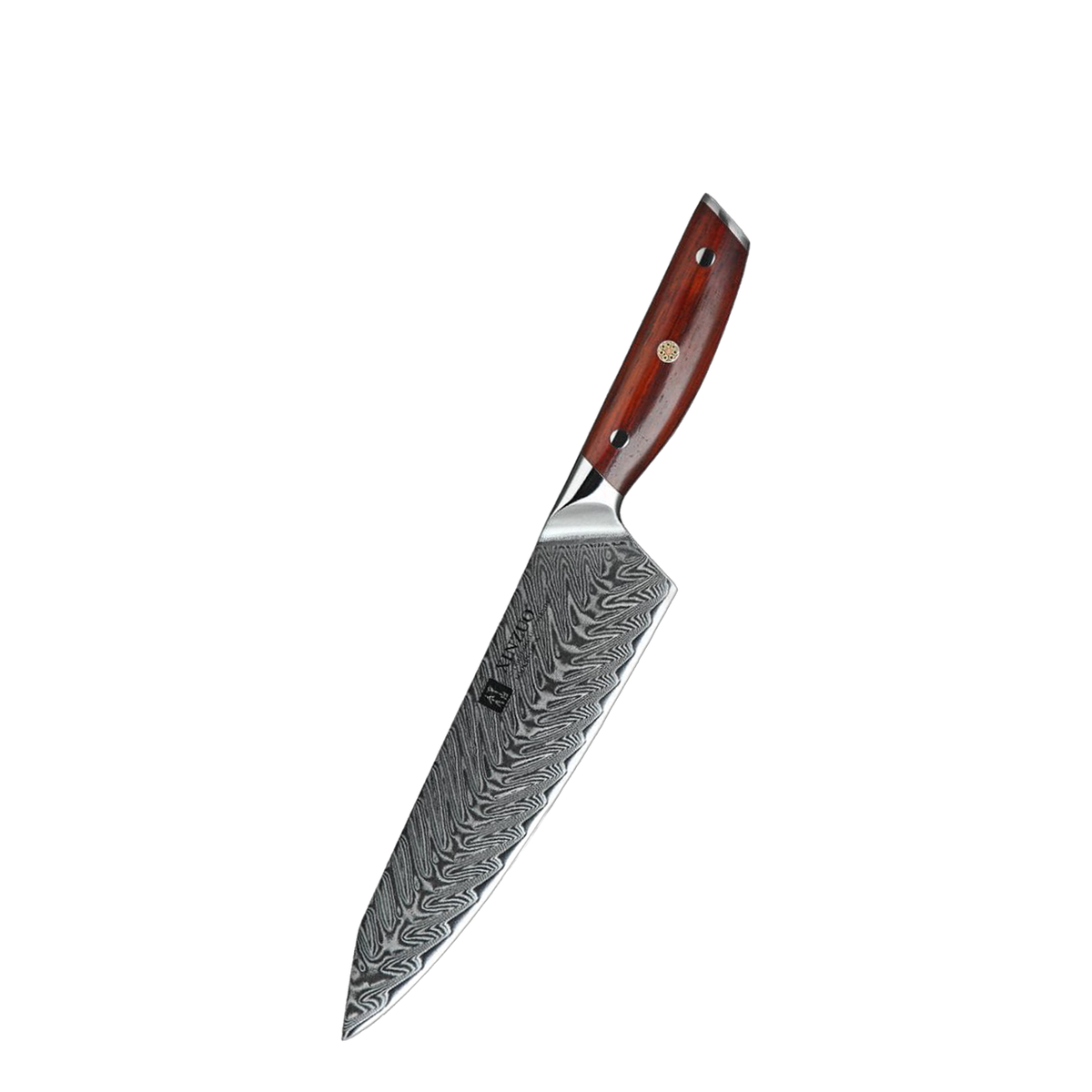
A bunka is a Japanese-style all-rounder built around a distinctive reverse-tanto K-tip: a flat cutting edge for board-contact push cuts, and a sharp angled point for detail work. It suits any cook who wants one agile knife that slices, dices and minces, with better tip access than a santoku for scoring, deboning fish and fine mincing. This collection runs ten bunka blades from a compact 5.8 inch through to a full 10 inch, across everyday stainless, high-end powder steels and traditional Blue Steel, so there is a version to match how you actually cook.
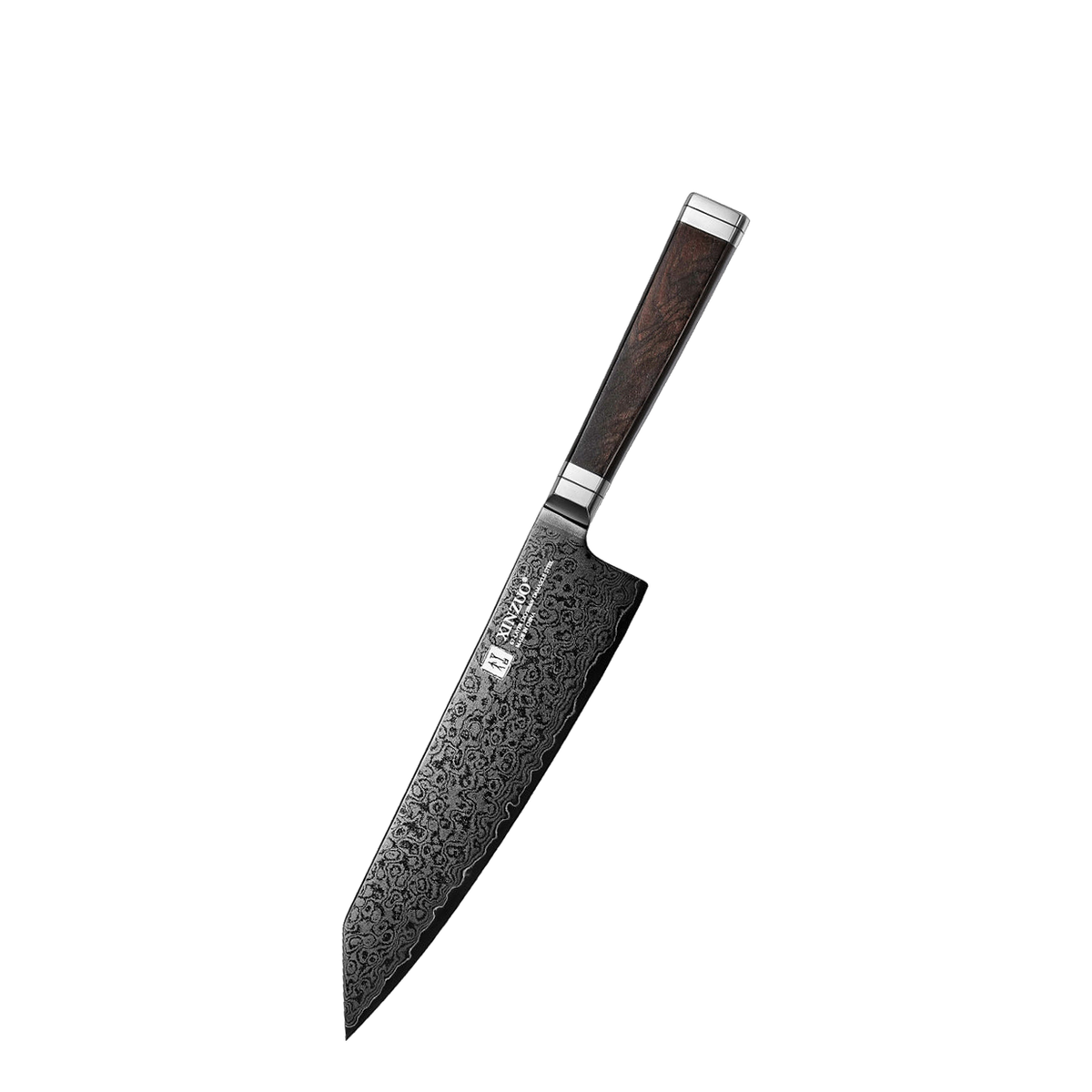
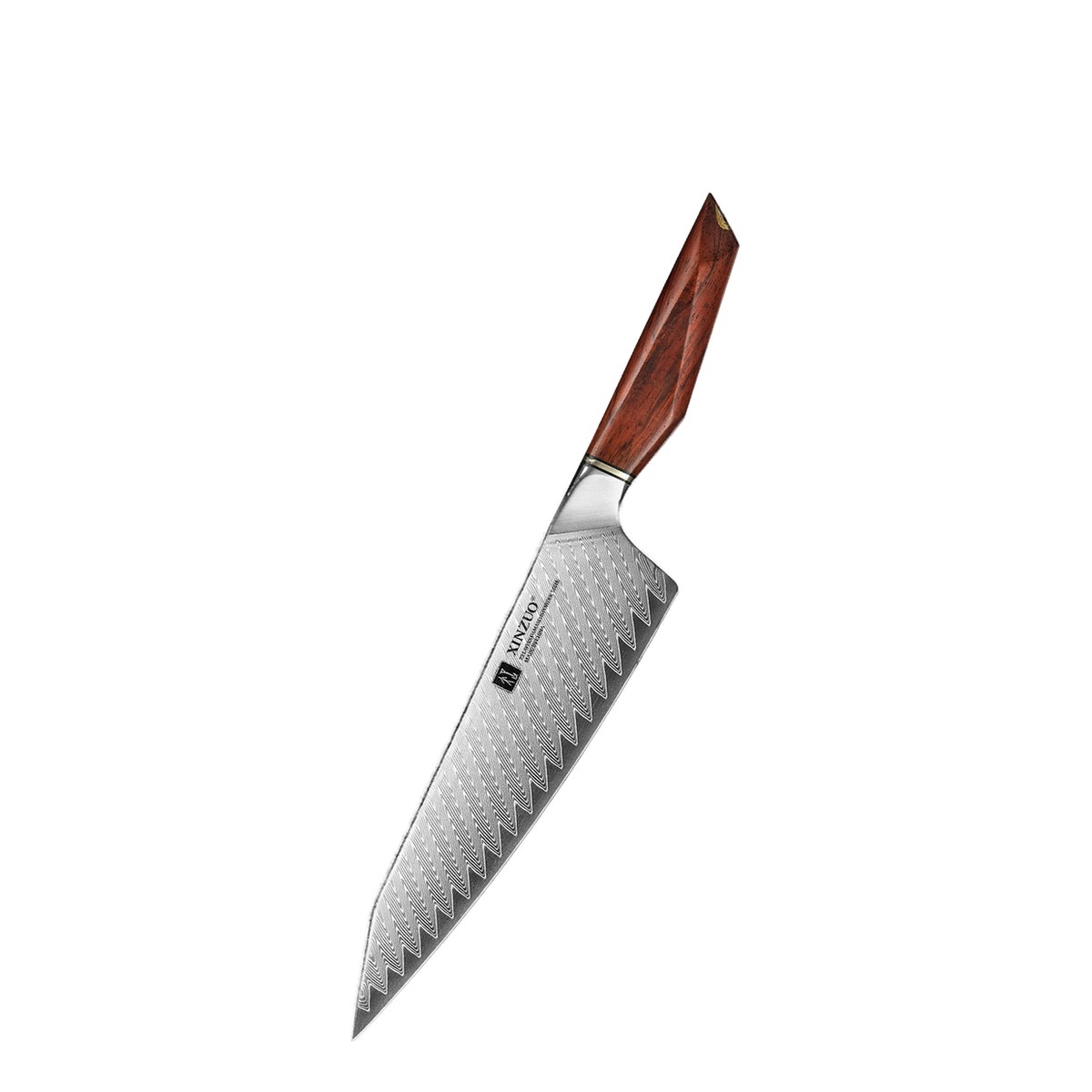
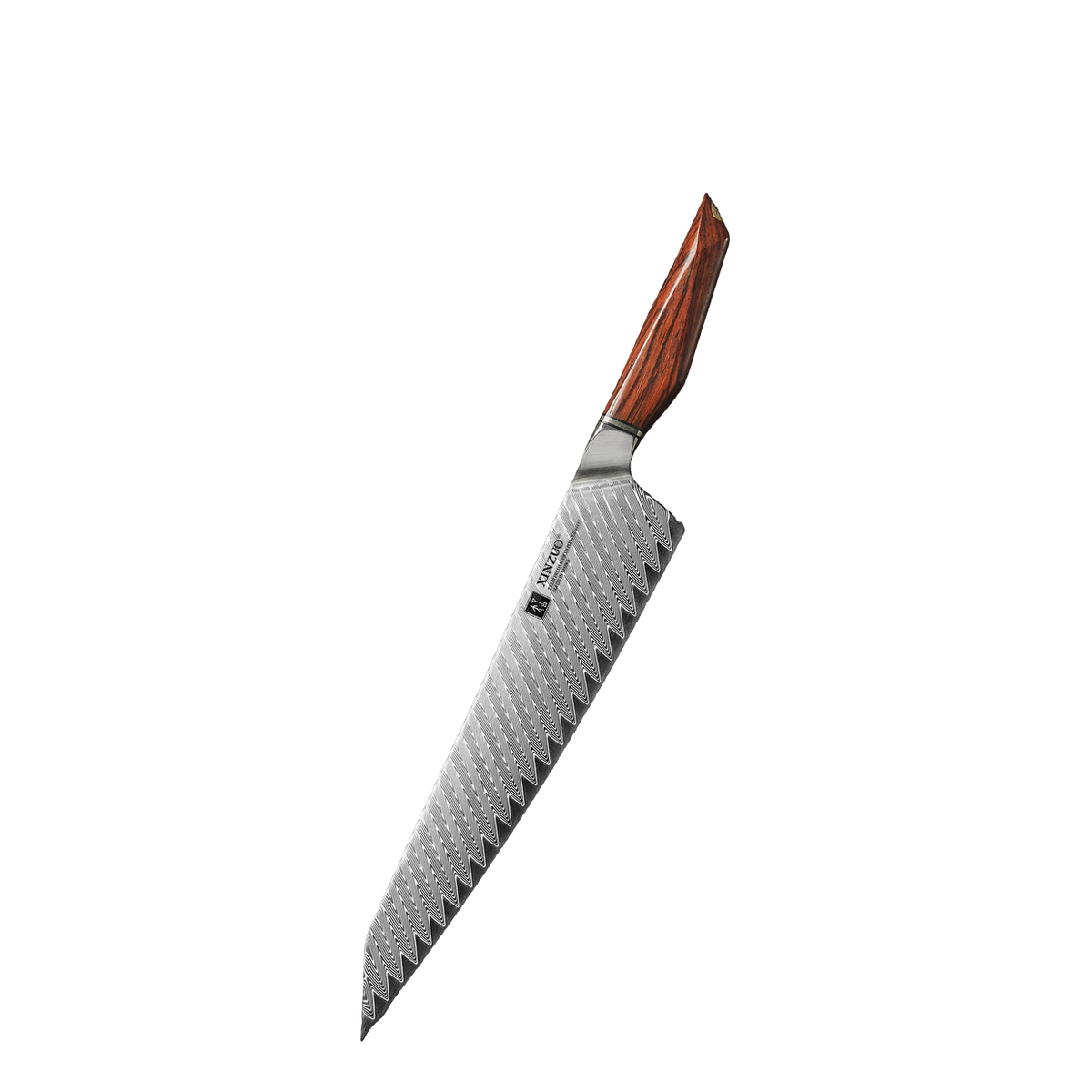
Every bunka here is made in our Yangjiang workshop, then tested in our own kitchen before it goes on sale. The workhorse is the Mo Series (X06) 8.5 inch: a 10Cr15CoMoV stainless core in 67-layer Damascus at 60±2 HRC, finished with a burnt-oak handle. It is easy to live with, quick to bring back to a keen edge, and the same core we build most of our everyday Damascus around. The Uliassi Series (X03), offered at 8.5 inch and 10 inch, steps up to a 14Cr14MoVNb powder-steel core under 73-layer Damascus at 62±2 HRC, with a rosewood handle. Powder steel is finer-grained, so it holds its edge longer between sharpenings.
What is a bunka knife used for?
A bunka is a general-purpose kitchen knife for slicing, dicing and chopping, and it is especially handy with fish and medium vegetables. The flat belly keeps the full edge in contact with the board for clean push cuts through onions, herbs and greens, while the pointed K-tip drops in for precise work: scoring skin, mincing garlic, deboning a fillet or breaking down a bunch of parsley. Think of it as your one blade for most prep, sitting between a chef knife and a santoku in feel. For pure vegetable work on a board, many cooks pair it with a flat-profile nakiri.
Bunka vs santoku: which is better?
Neither is strictly better; they solve slightly different problems. Both are Japanese-style all-rounders with a flat profile suited to push-cutting, and both are lighter and more nimble than a Western chef knife. The difference is the tip. A santoku has a rounded, dropped tip that is safe and forgiving but limits fine point work, whereas the bunka's angled K-tip gives you a proper point for scoring, detail cuts and getting into tight spots. If you value tip access and precision, buy the bunka. If you want the gentlest learning curve and mostly do straightforward chopping, the santoku is the easier pick. Many keen cooks end up owning both.
Which bunka steel should you choose?
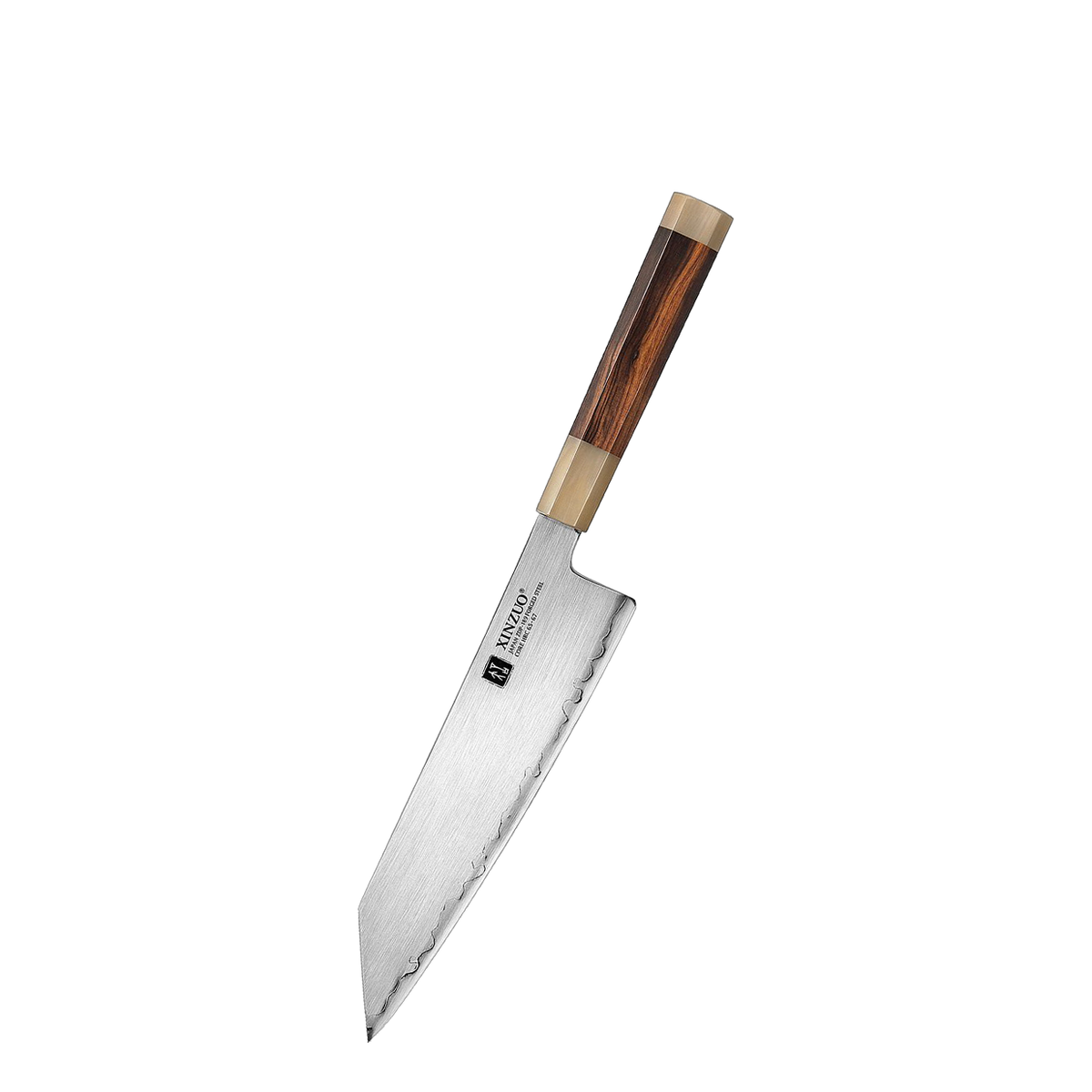
Match the steel to how much sharpening you want to do. For a low-fuss stainless daily driver, the models with a 10Cr15CoMoV core (the Mo Series X06 and Zhen PM8O in 67-layer Damascus, and the Retro Series PM8S as a 3-layer composite) sit at 60±2 HRC and are the easiest to maintain. The Ji Series (X08) 8 inch runs a 12Cr18MoV core in 67-layer Damascus at 58-62 HRC with an ebony-wood handle, a slightly softer, tougher option. Step up to a proprietary 14Cr14MoVNb powder-steel core in the Uliassi Series (X03) 73-layer Damascus at 62±2 HRC for noticeably longer edge retention. At the top, the Zhen Series (X05Z) 8.3 inch uses genuine Japanese ZDP-189 powder steel at 65-67 HRC with a desert ironwood and white buffalo horn handle: extreme hardness and edge retention for experienced sharpeners. There is also a traditional route in the Zhen Series (PM8M) 8.5 inch, a 3-layer Blue Steel No. 2 (Aogami) composite at 62-64 HRC that takes a screaming-sharp edge but is non-stainless, so it needs drying after every use to keep rust away.
Bunka range at a glance
| Series | Sizes | Core steel | Cladding | Hardness | Handle |
|---|---|---|---|---|---|
| Mo Series (X06) | 8.5 inch | 10Cr15CoMoV stainless | 67-layer Damascus | 60±2 HRC | Burnt oak |
| Zhen Series (PM8O) | 8.5 inch | 10Cr15CoMoV stainless | 67-layer Damascus | 60±2 HRC | Olive wood, buffalo horn |
| Retro Series (PM8S) | 5.8, 8.5, 10 inch | 10Cr15CoMoV stainless | 3-layer composite | 60±2 HRC | Red wood, buffalo horn |
| Ji Series (X08) | 8 inch | 12Cr18MoV | 67-layer Damascus | 58-62 HRC | Ebony wood |
| Uliassi Series (X03) | 8.5, 10 inch | 14Cr14MoVNb powder steel | 73-layer Damascus | 62±2 HRC | Rosewood |
| Zhen Series (X05Z) | 8.3 inch | ZDP-189 powder steel | Composite | 65-67 HRC | Desert ironwood, white buffalo horn |
| Zhen Series (PM8M) | 8.5 inch | Blue Steel No. 2 (Aogami) | 3-layer composite | 62-64 HRC | Maple, buffalo horn |
What size bunka knife is best?
An 8 to 8.5 inch bunka is the sweet spot for most home kitchens: long enough to slice through larger vegetables and portion fish in one stroke, still controllable for everyday prep. That is why most of this range sits at 8, 8.3 or 8.5 inch. Go smaller with the 5.8 inch Retro Series if you want a nimble blade for detail work, herbs and small hands, or larger with the 10 inch Uliassi if you regularly break down big produce and want maximum edge on the board.
Common questions
Are bunka knives Japanese-made? No. The bunka is a Japanese-style blade shape. Most of our bunka knives use Chinese steels such as 10Cr15CoMoV and 14Cr14MoVNb, with genuine Japanese ZDP-189 and Blue Steel cores on the top models. The knives themselves are made in our own workshop in Yangjiang, China. We are upfront about that rather than implying a Japanese origin we do not have.
Is a bunka good for beginners? Yes, if you pick a stainless model. The 10Cr15CoMoV Mo, Zhen PM8O and Retro Series bunkas at 60±2 HRC are forgiving, corrosion-resistant and easy to sharpen. Save the ZDP-189 and non-stainless Blue Steel models for once you are comfortable maintaining an edge.
How do I look after a bunka? Hand wash and dry straight after use, never the dishwasher, and hone before heavy prep. The Blue Steel PM8M is non-stainless, so dry it immediately and wipe with a little oil if storing. Stored on a magnetic holder and sharpened occasionally on a whetstone, a bunka lasts decades.
What is the warranty? Every Xinzuo and Hezhen knife carries a lifetime warranty against manufacturing defects, you are covered by Australian Consumer Law, and Australian shipping is free over $100.
Deciding between blade styles? Compare the bunka against a rounded-tip santoku or a flat-edged nakiri for vegetable prep, or step up to a full-size chef knife for heavier work. Want more layered blades? Browse our full range of Damascus kitchen knives. New to this shape? Our bunka knife guide covers everything you need to know.
More on Bunka Knives
- The complete bunka knife guide: learn about the distinctive k-tip profile and why it outperforms the santoku for precision work. Bunka knife guide
- See how the bunka compares to the santoku, nakiri, and gyuto in our complete guide to Japanese kitchen knives. Japanese knife types explained
- Understanding knife edge types: double bevel vs single bevel, and why bunka knives use a double bevel edge. Knife edge types guide
- The santoku is the bunka's closest relative. Compare our santoku knives if you prefer a rounder tip profile. Shop Santoku Knives
- Need a longer blade? Our gyuto knives deliver Japanese precision in a full-sized chef knife format. Shop Gyuto Knives


