


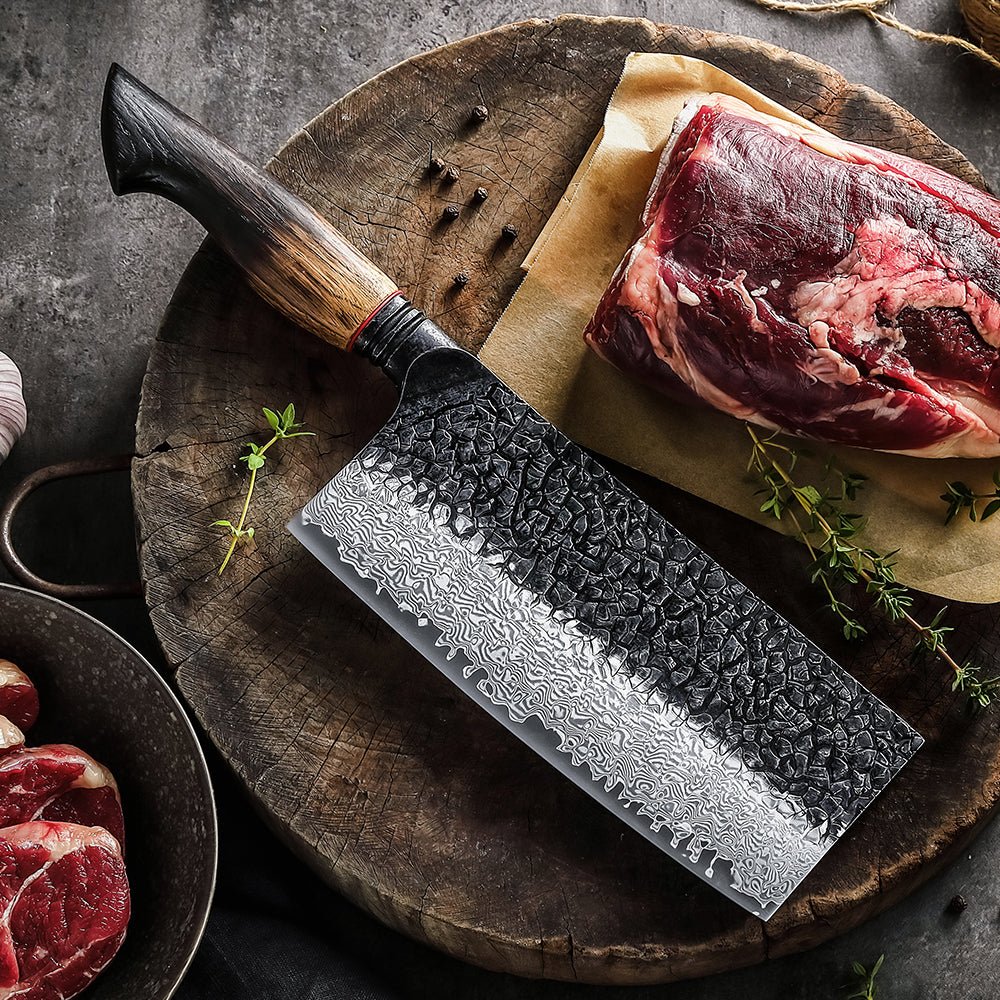
Pick up a Chinese vegetable cleaver for the first time and you'll probably feel like you're holding the wrong tool. It looks like something for splitting chickens. It weighs more than your chef knife. The blade is a rectangle. Everything about it seems to scream "overkill" for cutting vegetables. And yet professional Chinese cooks have been using this exact tool as their primary knife for thousands of years, often as their only knife. They're not wrong.
Quick answer: A Chinese vegetable cleaver (cai dao) is a thin, light precision tool, not a bone-crunching meat cleaver. It excels at high-volume vegetable prep, garlic smashing, and scooping cut ingredients. A chef knife wins for rocking cuts, butchery, and all-purpose versatility. Many serious cooks own both.
Is a Chinese Vegetable Cleaver the Same as a Meat Cleaver?
This confusion kills the cai dao's reputation in the West. When Australians hear "cleaver," they picture a heavy butcher's tool for hacking through pork ribs. The Chinese vegetable cleaver is a completely different instrument. Confusing the two is like confusing a scalpel with a machete just because both have a blade and a handle.
Here are the actual differences:
A cai dao's blade thickness of 1.5 to 2mm puts it right in line with a quality chef knife or gyuto. The steel is harder, the edge is more acute, and the whole design prioritises clean, precise cuts rather than brute impact. If you've ever swung a meat cleaver at a carrot, you know what happens: the carrot explodes. A cai dao glides through that same carrot like a mandoline.
How Does a Cai Dao Compare to a Chef Knife?
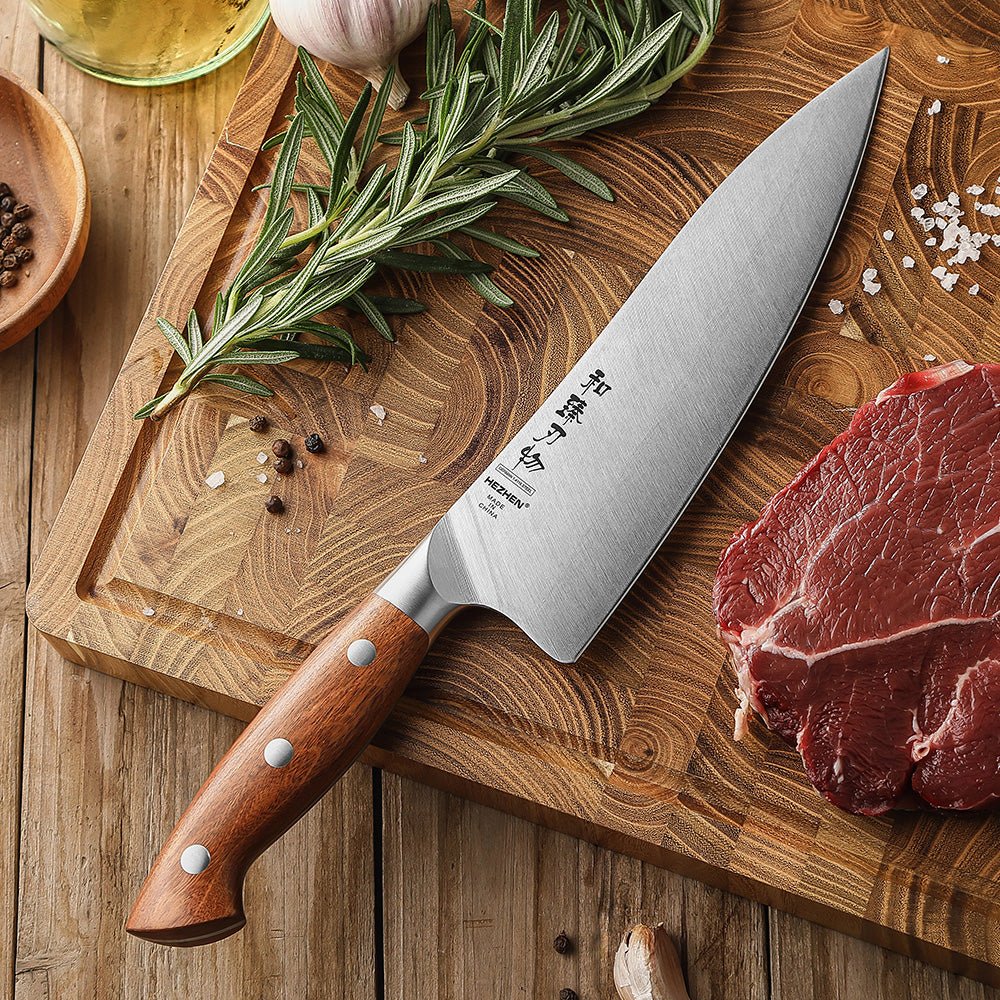
On paper, these two knives fill similar roles. Both handle slicing, dicing, and mincing. Both work on vegetables and boneless proteins. Both are around 7 to 8 inches in blade length. The differences come down to blade shape, cutting technique, and what each tool is optimised for.
A Western or Japanese-style chef knife has a curved belly that rises from heel to tip. This curve enables a rocking motion where the tip stays anchored on the board while the heel rises and falls. It's fast for mincing herbs and garlic, and the pointed tip is useful for precision tasks like scoring, trimming, and breaking down proteins.
A cai dao has a completely straight edge. No belly, no curve, no tip to speak of. The entire cutting edge contacts the board at once, making it purpose-built for vertical push cuts and pull cuts rather than rocking. This straight edge is exactly why it produces cleaner cuts on vegetables, with less cell damage, less bruising, and less oxidation.
Where Does the Cai Dao Outperform a Chef Knife?
High-Volume Vegetable Prep
If you've ever prepped vegetables for a stir-fry serving six people, you know how tedious it gets with a chef knife. Two capsicums, a head of broccoli, four carrots, a bunch of spring onions, half a cabbage. The cai dao was literally designed for exactly this kind of workload. The broad blade gives you a long, straight cutting edge that moves through piles of vegetables with a simple up-and-down motion. No rocking, no wrist rotation. Just lift, lower, repeat. After an hour of prep, your wrist will thank you.
The Smash
Lay a garlic clove under the flat of a cai dao, press down firmly, and the skin pops right off. The clove is pre-crushed and ready for mincing. Try this with a chef knife and you're working with a narrow, curved blade that wants to roll off the clove. You can do it, but it's awkward. The cai dao's flat, wide surface gives you a stable platform that makes garlic smashing feel automatic. Same goes for bruising ginger, lemongrass, or galangal.
The Scoop
This is the move that converts people. After dicing an onion, instead of reaching for a bench scraper or cupping your hands, you just slide the broad side of the blade under the pile and transfer everything to the wok in one motion. It's a built-in spatula. Considering how many times you move cut ingredients from board to pan during a typical cooking session, this saves a surprising amount of time and mess.
Precision on Large, Flat Ingredients
Slicing a block of tofu into even 5mm slabs. Breaking down a whole cabbage. Cutting daikon into translucent sheets for Vietnamese rolls. These are jobs where the cai dao's tall, straight blade gives you a consistent reference surface. You can rest the flat against your knuckles and just work through the ingredient methodically. The height of the blade also keeps your knuckles safely above the cutting board, even on very thin cuts.
Where Does the Chef Knife Outperform a Cai Dao?
Rocking Cuts and Mincing
Mincing a big pile of parsley, chiffonading basil, or reducing a mound of garlic to paste: these tasks are faster with a curved blade. The rocking motion is mechanically efficient for rapid repetitive cuts because you're using the blade's curve as a fulcrum. A cai dao can mince, but it requires a chopping technique that's louder, less precise, and slower for very fine work.
Protein Work
The pointed tip on a chef knife lets you trim silver skin from a tenderloin, butterfly a chicken breast, or score fish skin before searing. A cai dao has no tip, so these tasks require a different knife. Similarly, any task involving careful cuts around bones or joints is strictly chef-knife territory (or, better yet, boning knife territory).
General Versatility
A chef knife is still the single most versatile knife you can own. It handles 90% of kitchen tasks reasonably well: slicing bread in a pinch, portioning a cake, cutting through a sandwich, peeling a mango. It's the knife you reach for when you're not sure what you need. A cai dao is more specialised. It dominates a narrower range of tasks, but within that range, it outperforms any other knife shape.
Why Does the Thin Blade Profile of a Cai Dao Matter?
A good vegetable cleaver has a blade thickness at the spine of just 1.5 to 2mm. That's roughly the same as a Japanese-style gyuto and noticeably thinner than most German chef knives (which run 2.5 to 3mm at the spine). This thin profile serves a specific purpose: reducing the wedging force that pushes ingredients apart as the blade passes through.
When you cut a potato with a thick blade, the steel acts like a wedge, physically pushing the two halves apart before the edge has finished its cut. The result is cracking and uneven surfaces. With a thinner blade, the cut stays cleaner because less material is displacing the food. This is why Japanese-style knives are typically thinner than German ones, and why a well-made cai dao cuts vegetables so cleanly.
The trade-off is fragility. A 1.5mm spine at 60+ HRC will hold a wicked edge, but it will also chip if you twist the blade in a cut, hit a bone, or drop it on a tile floor. This is not a design flaw. It's a deliberate engineering choice: maximum cutting performance at the cost of forgiveness. If you treat the blade with respect, it rewards you with cuts that no thicker knife can match.
How Do You Learn to Use a Cai Dao?
If you've only ever used Western knives, the cai dao requires a mental reset. The rocking motion you've spent years internalising doesn't apply here. Instead, you'll use three primary techniques.
The push cut: Lift the blade entirely off the board. Guide it forward and down in one smooth motion, contacting the board with the full length of the edge simultaneously. This is the bread-and-butter technique for most vegetable cutting. The forward motion adds a slicing component that produces cleaner cuts than simple vertical chopping.
The tap chop: For rapid cutting of herbs, spring onions, and other small ingredients, use a fast up-and-down tapping motion. The blade travels only 2 to 3 centimetres off the board. Speed comes from the wrist, not the elbow. This is where the cai dao's weight becomes an advantage: the blade does the work, so you just guide it.
The horizontal slice: This is something a chef knife cannot do well. Turn the blade parallel to the board and slice horizontally through an ingredient. Think about cutting a block of tofu into thin sheets, or creating pockets in chicken breasts. The cai dao's broad, flat blade stays level naturally, making horizontal cuts surprisingly easy.
For grip, use a pinch grip with your thumb and index finger on opposite sides of the blade, just ahead of the handle. Your remaining three fingers wrap around the handle. This gives you fine control over the angle and lets you feel exactly where the edge is tracking. Keep your guide hand in a claw position with knuckles forward and fingertips curled back.
How Do You Sharpen and Maintain a Vegetable Cleaver?
Maintaining a cai dao follows the same principles as any thin, hard kitchen knife. The flat, straight edge actually makes it easier to sharpen than a curved chef knife because you don't need to follow a belly curve on the stone. You can simply lay the bevel flat and make consistent strokes.
Sharpen at the factory angle, typically 15 to 18 degrees per side for most quality cai dao. Use a 1000-grit whetstone for regular maintenance and a 3000- to 6000-grit stone for finishing. The broad blade can feel awkward on a standard 200mm stone at first, but you'll find that the straight edge tracks predictably once you establish a rhythm.
Between sharpenings, use a ceramic honing rod or a leather strop to maintain the edge. Avoid grooved steel honing rods. They're too aggressive for hard Japanese-style steels and can chip rather than realign the edge.
For storage, a magnetic knife holder is ideal. The rectangular blade doesn't fit standard knife block slots, and drawer storage risks both edge damage and accidental cuts. A magnetic strip keeps the blade accessible, protected, and visible.
Who Should Buy a Vegetable Cleaver?
A cai dao is not for everyone, and that's fine. Here's an honest assessment of who will actually use one versus who will let it gather dust.
Buy one if you:
- Cook a lot of Asian food, particularly Chinese, Vietnamese, or Thai dishes with heavy vegetable prep
- Regularly prep large volumes of vegetables (meal prepping, cooking for a family, batch cooking)
- Already own a chef knife and want a specialist that does vegetable work faster
- Enjoy learning new techniques and are patient enough to develop push-cut muscle memory
- Want a single knife for veg prep that can also smash garlic, scoop, and scrape
Skip it if you:
- Need one knife that does absolutely everything (stick with a chef knife)
- Primarily cook proteins and only do light vegetable prep
- Aren't comfortable with the weight and size of a larger blade
- Don't want to learn a new cutting technique
For cooks who fall into the first category, a well-made cai dao becomes one of those tools you wonder how you ever lived without. It won't replace your chef knife, but it will take over a significant portion of your daily cutting work.
Related Reading
- Cleaver Knife Guide: Chinese vs Western
- Nakiri Knife Guide: The Japanese Vegetable Specialist
- Best Knife for Vegetables: Buying Guide
- Knife Technique: Rock Chop, Push Cut, Pull Slice
- How to Choose a Chef Knife: Complete Buying Guide
- Japanese-style Knife Types Explained
- Knife Steel Hardness Guide
- Knife Care and Daily Maintenance Guide
Frequently Asked Questions
Is a vegetable cleaver better than a chef knife for stir-fry prep?
For high-volume stir-fry prep, yes. The cai dao's flat edge and tall blade let you push-cut through piles of vegetables with a simple up-and-down motion, then scoop everything into the wok in one pass. A chef knife works fine for smaller quantities, but the rocking motion is slower and more fatiguing when you are cutting four or five different vegetables for a single dish.
Can a vegetable cleaver replace a chef knife?
For about 70% of kitchen tasks, yes. A cai dao handles slicing, dicing, mincing, and scooping as well as or better than a chef knife. Where it falls short is rocking through herbs (no curved belly), precision tip work like trimming silver skin or scoring (no pointed tip), and cutting around bones. If you cook mostly vegetables and boneless proteins, a cai dao can be your primary knife.
What cutting techniques work with a vegetable cleaver?
Three main techniques. The push cut: lift the blade and drive it forward and down through the food in one stroke. The tap chop: rapid up-and-down chopping 2 to 3cm off the board for herbs and spring onions. The horizontal slice: turn the blade parallel to the board to cut thin sheets through tofu, chicken breast, or large vegetables. Rocking cuts do not work because the edge is flat.
What is the difference between a nakiri and a Chinese vegetable cleaver?
Both have flat edges and rectangular profiles, but they differ in size and weight. A nakiri is typically 165 to 180mm long and weighs 150 to 200g, making it a light, agile vegetable slicer. A cai dao runs 180 to 220mm with a taller, heavier blade (250 to 400g) that adds momentum for denser produce and doubles as a garlic smasher and bench scraper. The nakiri is a specialist; the cai dao is closer to an all-rounder.
Are vegetable cleavers hard to learn for beginners?
The rectangular shape feels unfamiliar if you have only used curved Western knives, but the actual cutting technique is simpler. Push-cutting is a straight up-and-down motion with no wrist rotation, and the tall blade keeps your knuckles well clear of the board. Most people adjust within a few days of regular use. Start with softer vegetables like spring onions and capsicum before moving to denser produce.