


The German vs Japanese-style knife debate isn't just about geography, it's about two fundamentally different approaches to kitchen tools. While German knives were built for medieval butchers breaking down whole animals, Japanese-style blades evolved from samurai swords designed for precision cuts. Understanding these philosophical differences will help you choose the style that matches your cooking habits.

How Do German and Japanese Knife Design Philosophies Differ?
German knives follow the 'one tool, many jobs' philosophy. These workhorses were designed to handle everything from breaking down chickens to crushing garlic with the flat of the blade. Their thick spines, full bolsters, and hefty weight reflect centuries of European butchery traditions where durability trumped delicacy.
Japanese-style knives take the opposite approach. Each blade has a specific purpose, whether it's a nakiri for vegetables or a sujihiki for slicing. This specialisation comes from Japanese culinary culture where precision cutting preserves texture and presentation. The thinner blades and harder steel prioritise sharpness over toughness.
Modern Chinese manufacturers like Xinzuo have recognised that home cooks want the best of both worlds. By combining German practicality with Japanese sharpness, they're creating knives that work for real kitchens, not just professional settings.
How Does Steel Hardness Differ Between German and Japanese-Style Knives?
The most significant difference between German and Japanese styles lies in steel hardness, measured on the Rockwell C scale (HRC). German knives typically run 56 to 58 HRC, while Japanese-style blades push 60 to 67 HRC.
This isn't just numbers on paper. A German knife at 57 HRC can take serious abuse. Drop it, hit a bone, or toss it in the dishwasher (though you shouldn't), and it'll likely survive. The softer steel bends rather than chips, making these knives forgiving for busy cooks or kitchen novices.
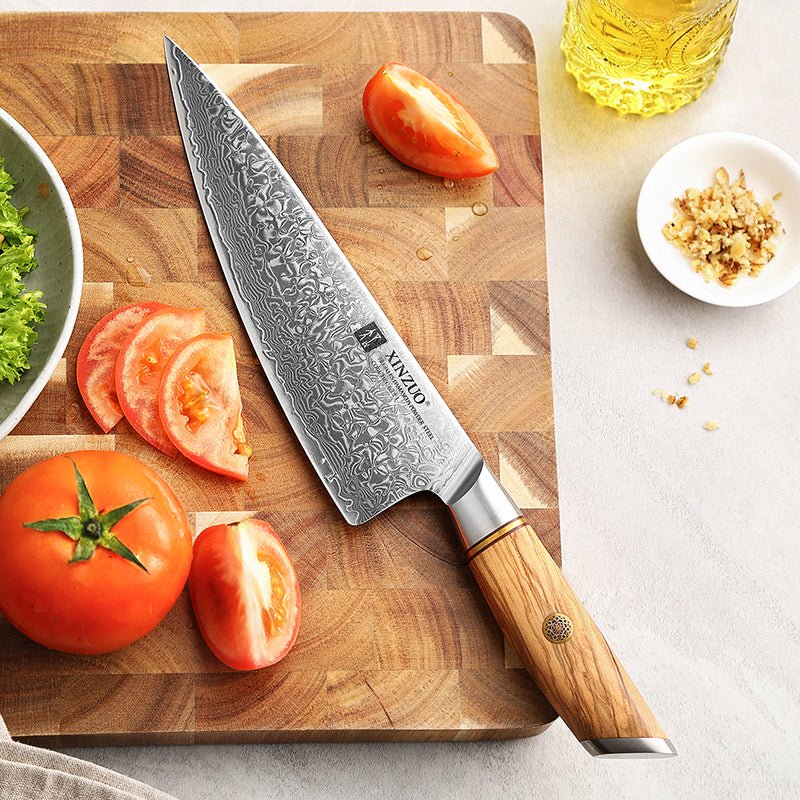
Japanese-style knives at 62 HRC stay sharp three to four times longer than their German counterparts. The Xinzuo Lan Series, with its powder steel at 62±2 HRC, exemplifies this approach. You'll sharpen less often, but when you do, it requires more skill and proper whetstones.
The trade-off is brittleness. Hard steel chips rather than bends. Use a 65 HRC knife on frozen foods or twist it while cutting, and you might see tiny chips along the edge. It's physics, not poor quality.
How Do German and Japanese Handle Designs Compare?
German knife handles prioritise all-day comfort with their curved, ergonomic grips. The full tang construction (where steel extends through the entire handle) adds weight and balance point near the bolster. This forward balance helps with rocking motions when mincing herbs or dicing onions.
Japanese handles favour control over comfort. The traditional octagonal or D-shaped handles might feel strange initially, but they prevent the knife from rotating in your hand during precise cuts. The lighter weight and blade-forward balance support the push-cut and pull-slice techniques common in Japanese cooking.
Many modern knives blend these approaches. The Xinzuo Mo Series Chef Knife uses a Western-style handle with Japanese-style blade geometry, giving you familiar ergonomics with superior cutting performance.
How Do Maintenance Requirements Differ Between the Two Styles?
German knives are the pickup trucks of the kitchen. A quick steel rod honing every few uses keeps them functional, and they'll tolerate neglect better than any Japanese-style blade. Their softer steel sharpens easily on basic equipment, making maintenance accessible for beginners.
Japanese-style knives demand respect and routine care. The harder steel holds an edge brilliantly but requires proper whetstones for sharpening. You can't use a pull-through sharpener or electric device without damaging the blade. Daily washing and drying prevents corrosion, especially on san-mai construction knives with reactive steel cores.
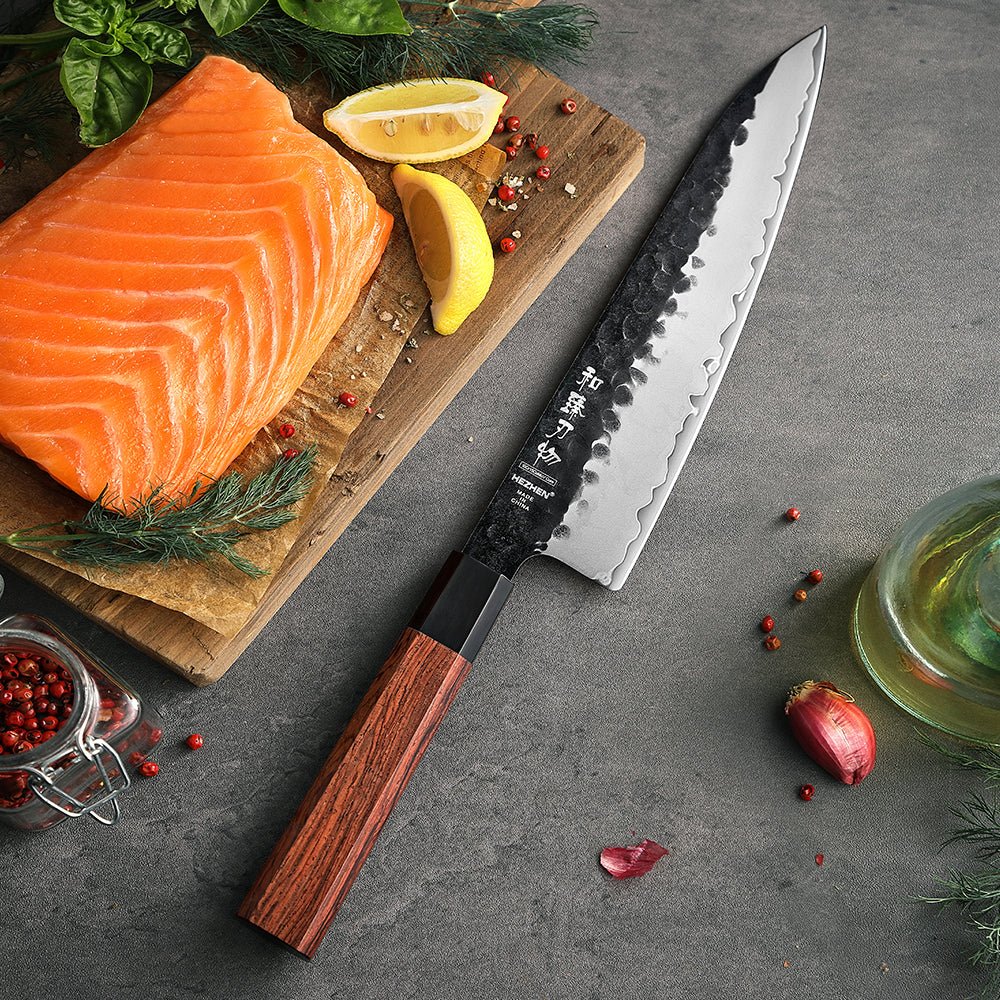
The maintenance gap narrows with modern alloys. Steels like 10Cr15CoMoV offer Japanese-level hardness (60 HRC) with German-style corrosion resistance. You get extended edge retention without the fussy care requirements of traditional carbon steel.
How Do German and Japanese Knife Prices Compare?
Traditional German knives from Wüsthof or Henckels start around $150 for an eight-inch chef knife. Japanese-style knives from established brands like Shun or Miyabi begin at $200 and climb rapidly. You're paying for heritage, marketing, and import costs as much as steel quality.
This pricing opened the door for Chinese manufacturers to offer compelling alternatives. A knife like the Xinzuo Supreme Series delivers German-style durability at $39.99, while the Mo Series provides Japanese-inspired Damascus performance from $129.99. The value proposition is clear: similar performance at half the traditional price.
Quality Chinese knives succeed by focusing on what matters, which are steel quality, heat treatment, and edge geometry, while skipping expensive marketing and heritage premiums. They're proof that good knives don't require a century-old German forge or Japanese master smiths.
How Do You Choose Between German and Japanese Knife Styles?
Choose German-style if you cook casually, want one knife for everything, prefer low maintenance, or tend to be rough with tools. The forgiving nature and versatility suit cooks who view knives as tools rather than treasures.
Go Japanese-style if you enjoy precise knife work, don't mind regular maintenance, cook lots of vegetables or fish, or appreciate the ritual of caring for quality tools. The superior sharpness rewards cooks who invest time in technique.
Consider hybrid designs if you want sharp edges without fussy maintenance, cook seriously but lack time for extensive care, or appreciate both Western and Asian cuisine. Modern Chinese knives excel in this middle ground.
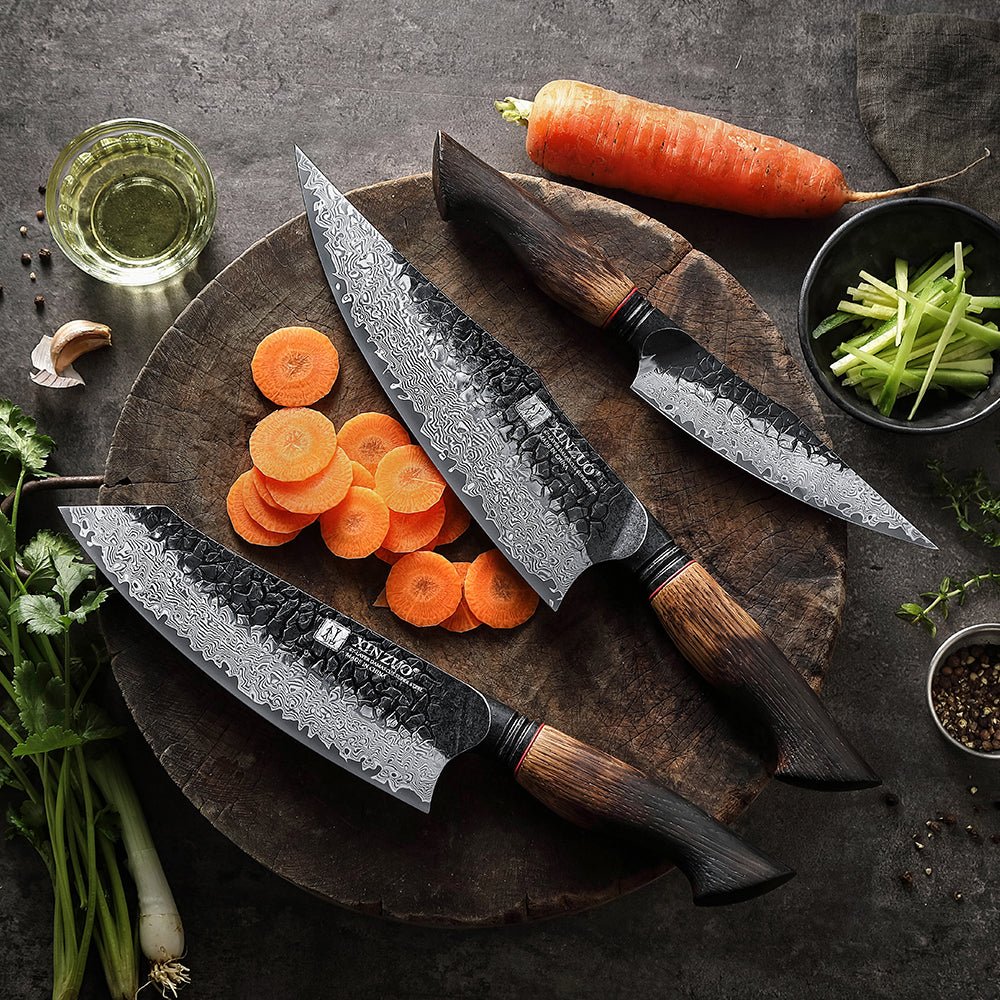
The German vs Japanese debate misses the point for most home cooks. You don't need to choose sides when modern manufacturing offers knives that combine the best of both traditions. Focus on your cooking style, maintenance preferences, and budget rather than arbitrary geographic loyalties.
Today's best kitchen knives might come from Yangjiang rather than Solingen or Seki City. By understanding what each philosophy offers, you can choose knives based on performance rather than passport. After all, your ingredients don't care where your knife was made, only how well it cuts.
Further Reading
Frequently Asked Questions
Why are Japanese-style knives thinner and lighter than German knives?
Japanese culinary tradition prizes precision cuts that preserve the texture and cell structure of ingredients, especially fish and vegetables. Achieving that requires a thin blade (1.5 to 2mm spine) and an acute edge angle (10 to 15 degrees), which are only possible with harder steel at 60 to 67 HRC. German knives evolved from European butchery traditions where durability mattered more than delicacy, so they use softer steel (56 to 58 HRC) with thicker spines (2.5 to 3mm) to withstand heavy chopping and bone work.
Why do Japanese-style knives chip but German knives don't?
Harder steel is more rigid at the molecular level. Japanese-style knives at 60+ HRC hold acute edges longer because the crystalline structure resists deformation, but that same rigidity means the steel fractures rather than flexes under impact or lateral force. German knives at 56 to 58 HRC bend and spring back instead of chipping, which is why they survive being dropped, hitting bones, or cutting frozen food without edge damage.
What is the difference between a Western handle and a Japanese wa-handle on a knife?
Western handles are curved, ergonomic, and heavier, with the full tang adding weight near the bolster for a forward-balanced feel suited to rocking cuts. Japanese wa-handles (octagonal or D-shaped) are lighter and position the balance point closer to the blade, giving more control for push-cutting and pull-slicing. The flat faces of an octagonal handle naturally orient the blade in your hand without you needing to look.
Can a knife combine German durability with Japanese sharpness?
Yes. Modern steels like 10Cr15CoMoV achieve Japanese-level hardness at 60 HRC with German-style corrosion resistance, giving you extended edge retention without the fussy maintenance of traditional carbon steel. Pairing this steel with a Western handle shape and Japanese-style blade geometry creates a hybrid knife, like the gyuto, that rock-chops and push-cuts equally well. Chinese manufacturers like Xinzuo specialise in this approach.
Are German knives easier to sharpen than Japanese-style knives?
Yes. The softer steel (56 to 58 HRC) removes material faster and is forgiving of inconsistent technique, so pull-through sharpeners, electric sharpeners, and whetstones all work fine. Japanese-style knives at 60+ HRC require a whetstone and a steady hand to maintain the more acute edge angle without damaging the harder steel. Pull-through and electric sharpeners remove too much material and cannot hold a consistent bevel on hard steel.