

The magnetic-vs-block debate comes up constantly, and the answer depends on your kitchen, your knives, and whether you have small humans running around. But there is a clear winner for most home cooks.
Is a Magnetic Knife Holder or Knife Block Better?
So which is better?
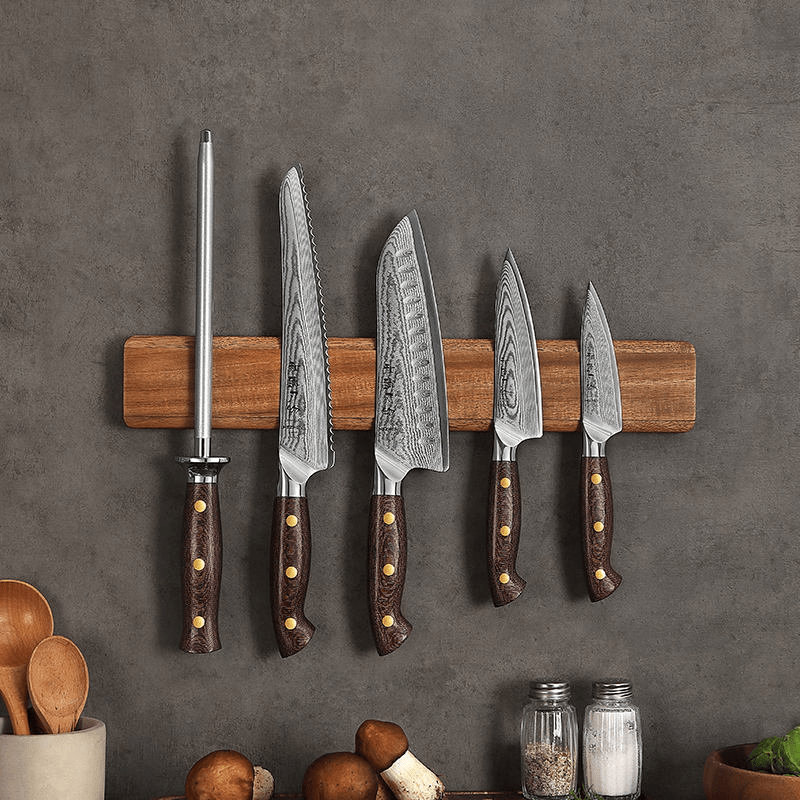
Magnetic wall strips win for edge preservation, hygiene, and flexibility. Knife blocks win if you can't drill into a wall, have young children, or need something portable.
Both are vastly better than loose-in-a-drawer. The single worst thing you can do to good knives is let them rattle around with other utensils.
How Do Magnetic Knife Holders Work and What Are Their Benefits?
A magnetic knife holder is a bar (usually 30 to 50 cm long) that mounts to your wall. Knives stick to it via strong magnets embedded in the strip.
Edge preservation is the big advantage. When a knife sits on a magnetic strip, the blade contacts nothing. No slot walls, no other blades, no wooden dividers. For high-hardness Japanese steel (58+ HRC), this matters a lot. Harder steel is more prone to chipping from incidental contact. Eliminating that contact means your knives stay sharper between honings.
Hygiene is the other major win. Every surface of the knife is exposed to air. Nothing traps moisture. You can wipe the strip itself with a damp cloth in five seconds. Compare that to the dark, narrow slots of a knife block.
Flexibility. Any knife fits. Your 27cm bread knife, your 10cm paring knife, that oddly shaped nakiri you impulse-bought. No slot is too narrow or too short.
The Downsides
You need a wall, and you need to drill into it. A strip loaded with six or seven knives is heavy, so proper mounting (studs or rated drywall anchors) matters.
Knives are exposed. If you mount the strip near your stove, you'll get a film of cooking grease on the blades. And if you have kids who can reach the counter, having sharp knives at grab height is a real safety concern.
There's a technique to placing and removing knives. Lay the spine against the magnet first, then roll the flat of the blade onto the strip. To remove, reverse the motion. Sliding the edge along the magnet surface is how scratches happen.
For Japanese-style knives: Choose a wood-faced magnetic holder over bare steel. The wood surface is gentler on blade faces when placing and removing knives. Acacia and walnut faces look great and provide enough grip that knives don't slide.
What Are the Pros and Cons of Knife Blocks?
The classic countertop knife block comes in two types: traditional (fixed slots cut into wood) and universal (filled with flexible rods or bristles that grip any blade).
Portability and zero installation are the main advantages. Take it out of the box, put it on the counter, done. No drilling, no stud finder.
Child safety is a real consideration. Blades are tucked inside, out of sight, and most kids can't easily extract a knife from a tight slot.
The Downsides
Hygiene. Those dark, narrow slots are warm, sometimes damp, and almost impossible to clean thoroughly. NSF International identified knife blocks as one of the top germ-carrying items in the kitchen. The slots can harbour bacteria, especially if you ever put a knife back without fully drying it first.
Edge damage. Most people pull a knife straight out of the block, dragging the cutting edge along the wooden slot wall. Then they do the same thing in reverse when putting it back. That's two passes of the edge against wood every single use.
The spine-first rule: Always insert knives with the spine entering the slot first and the edge facing up. The cutting edge never contacts the slot walls. This single habit eliminates the biggest drawback of knife blocks.
Fixed slots limit your collection. If your knives don't match the pre-cut sizes, you're stuck. Universal blocks (with flexible rods) solve this but are harder to clean since particles get trapped between the rods.
A note on Japanese-style knives: wa-handles are often wider than Western handles and may not fit standard block slots. Check dimensions before buying.
What Other Knife Storage Options Are Available?
In-Drawer Knife Trays
Lined trays with individual slots that sit in a kitchen drawer. Blades stay separated, out of sight, and out of reach. The trade-off is sacrificing an entire drawer and the extra step of opening it every time you need a knife.
Individual Blade Guards
Plastic or felt sheaths that slide over each blade. Cheapest option. Best used for knives that travel or as a supplement to other storage. They can trap moisture against the blade if the knife isn't dried properly before sheathing.
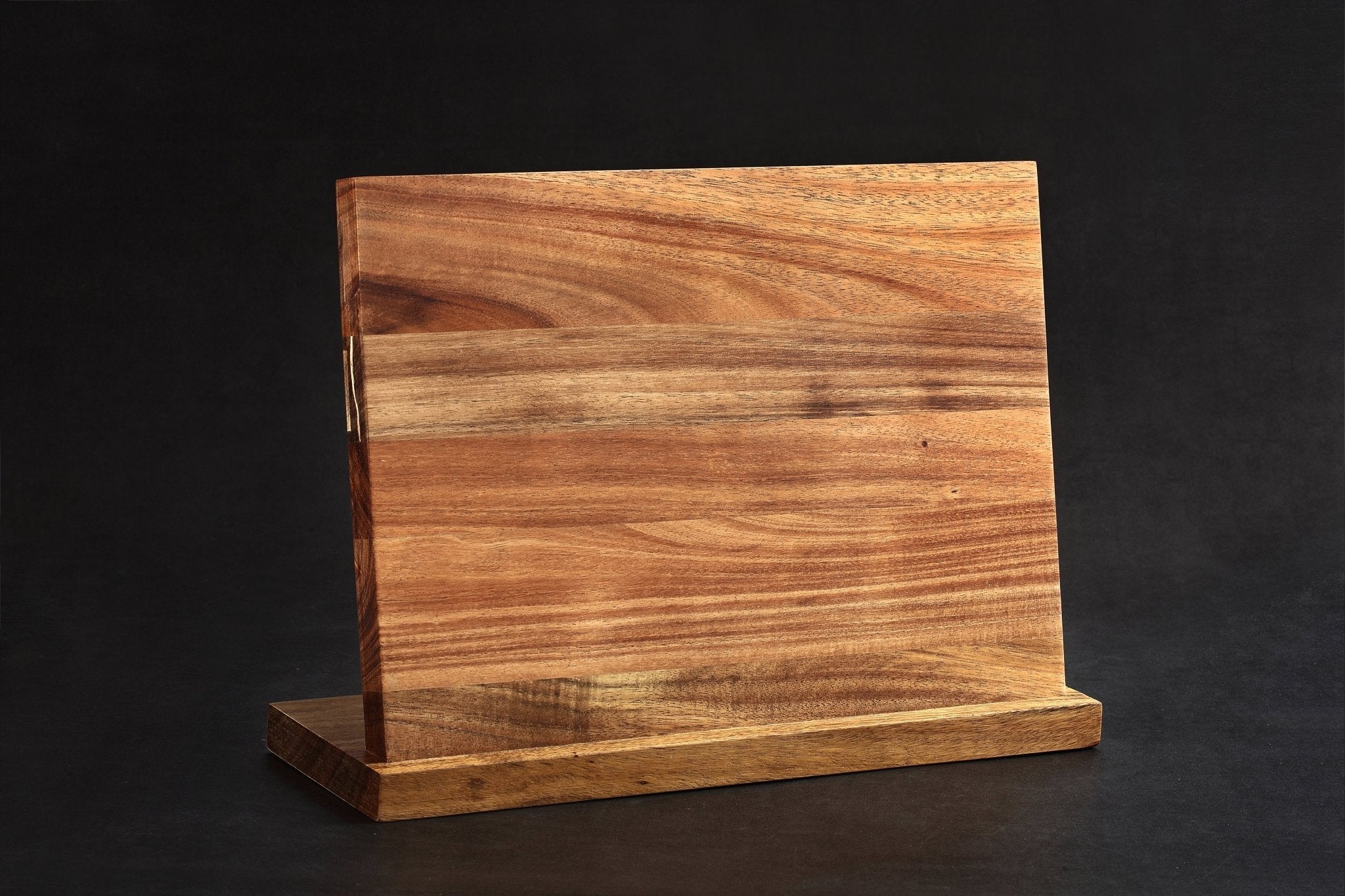
How Do Magnetic Holders and Knife Blocks Compare Side by Side?
Which Should You Choose?
Go magnetic if: you have wall space near your prep area, you want the best edge preservation, you care about hygiene, or you own a mix of knife sizes (especially Japanese-style knives with wa-handles).
Go with a block if: you're renting and can't drill walls, you have young children, or you prefer the look of a countertop block. Get a universal block with flexible rods rather than fixed slots for more flexibility.
Go with a drawer tray if: you have the drawer space, want a minimalist countertop, and don't mind the extra step. Also strong for child safety.
You can combine methods. Daily drivers on a magnetic strip, less-used knives in guards in a drawer. There's no rule that says you need one system for everything.
What Is the One Rule That Matters for Knife Storage?
Never store knives loose in a drawer.
Magnetic strip, knife block, drawer tray, individual guards. Any of these protects your edges. What destroys knives is letting them tumble around with tongs, peelers, and other metal objects. Every time you open that drawer, blades knock against things. Every time you rummage for a spatula, exposed edges scrape against everything nearby.
Get your knives out of that drawer. The specific method matters far less than the decision to use any proper storage at all.
Related Reading
Frequently Asked Questions
What is the best way to store kitchen knives?
A magnetic wall strip is the best option for most kitchens because the blade never contacts any surface, preserving the edge longer than any other method. If you cannot mount a strip (renters, families with young children), a freestanding magnetic block or a universal knife block with flexible rods are strong alternatives. The single worst option is loose in a drawer, where blades chip against other utensils and dull within weeks.
Are magnetic knife holders bad for knives?
No, provided you use a quality holder with a wood or rubber face rather than bare metal. Cheap metal-surfaced strips can scratch blade faces, which is especially visible on Damascus steel finishes. The correct technique is to place the spine against the magnet first and roll the blade flat, then reverse the motion to remove. Done properly, a magnetic holder causes zero edge wear.
Are knife blocks sanitary?
Traditional slotted knife blocks ranked seventh on the NSF International list of germiest household items. The narrow slots trap moisture, crumbs, and food particles in a dark environment where bacteria and mould thrive. Cleaning the slots requires pipe cleaners and a diluted bleach solution at least once a month. Magnetic holders avoid this problem entirely because every surface stays exposed to air.
Do magnetic knife strips work with all types of knives?
They work with any knife that has a steel blade, regardless of size or shape, which makes them far more flexible than fixed-slot blocks. Ceramic knives will not stick because they contain no ferrous metal. Very lightweight knives like small paring knives need a gentler touch when removing from the strip to avoid the blade flexing against the magnet surface.
Is it safe to have a magnetic knife holder with kids in the house?
Wall-mounted strips can be installed above child reach height (at least 150cm from the floor), which is actually safer than a countertop block a toddler can pull knives from. Freestanding magnetic blocks on the counter are less safe around young children since the blades are exposed at grab height. For households with small children, an in-drawer knife tray or a high-mounted wall strip offers the best combination of edge protection and child safety.