
Viking Knives
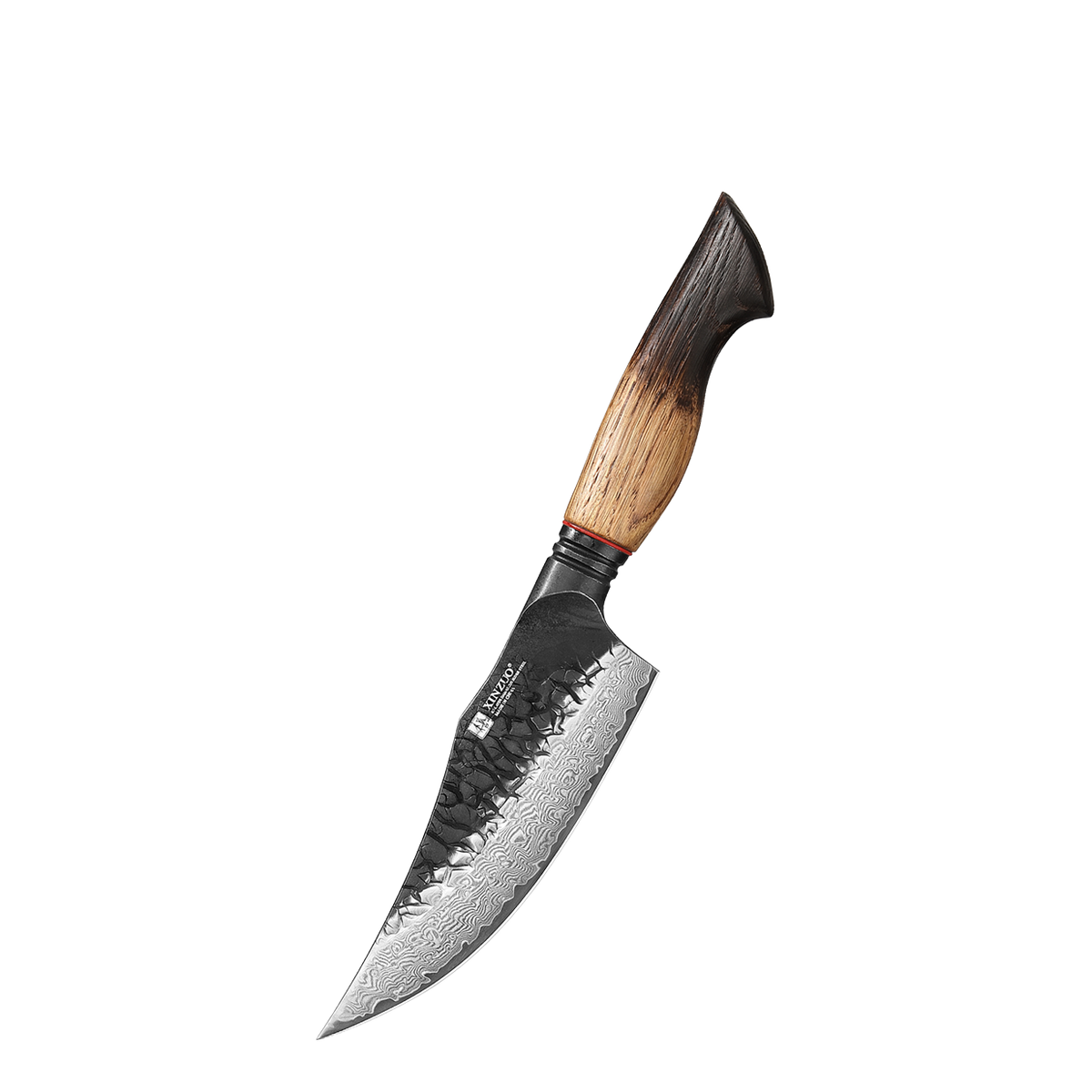
A Viking knife is a multi-purpose kitchen blade with a distinctive, dropped-tip profile and a rustic, forged look, built for cooks who want one characterful all-rounder rather than a matched set.
This is a small, honest collection: two Damascus Viking knives, one from the Mo Series and one from the Ji Series, both made in our Yangjiang workshop, the Mo with a 10Cr15CoMoV core and the Ji with a 12Cr18MoV core. If you are drawn to the aesthetic as much as the cutting, this is the page for you.
-
BEST
SELLER -
Choosing Viking Knives
The name is about the look and the shape, not a historical reproduction. Each blade carries a bold forge-welded Damascus pattern over a hardened cutting core, with a deep belly and a distinctive tip that suits rocking, slicing and everyday prep. Both knives here run 67-layer Damascus cladding, so you get genuine layered steel rather than an etched pattern printed on a single billet. The difference between the two comes down to size, core steel and handle wood, which we lay out below.
Which Viking knife should you buy?
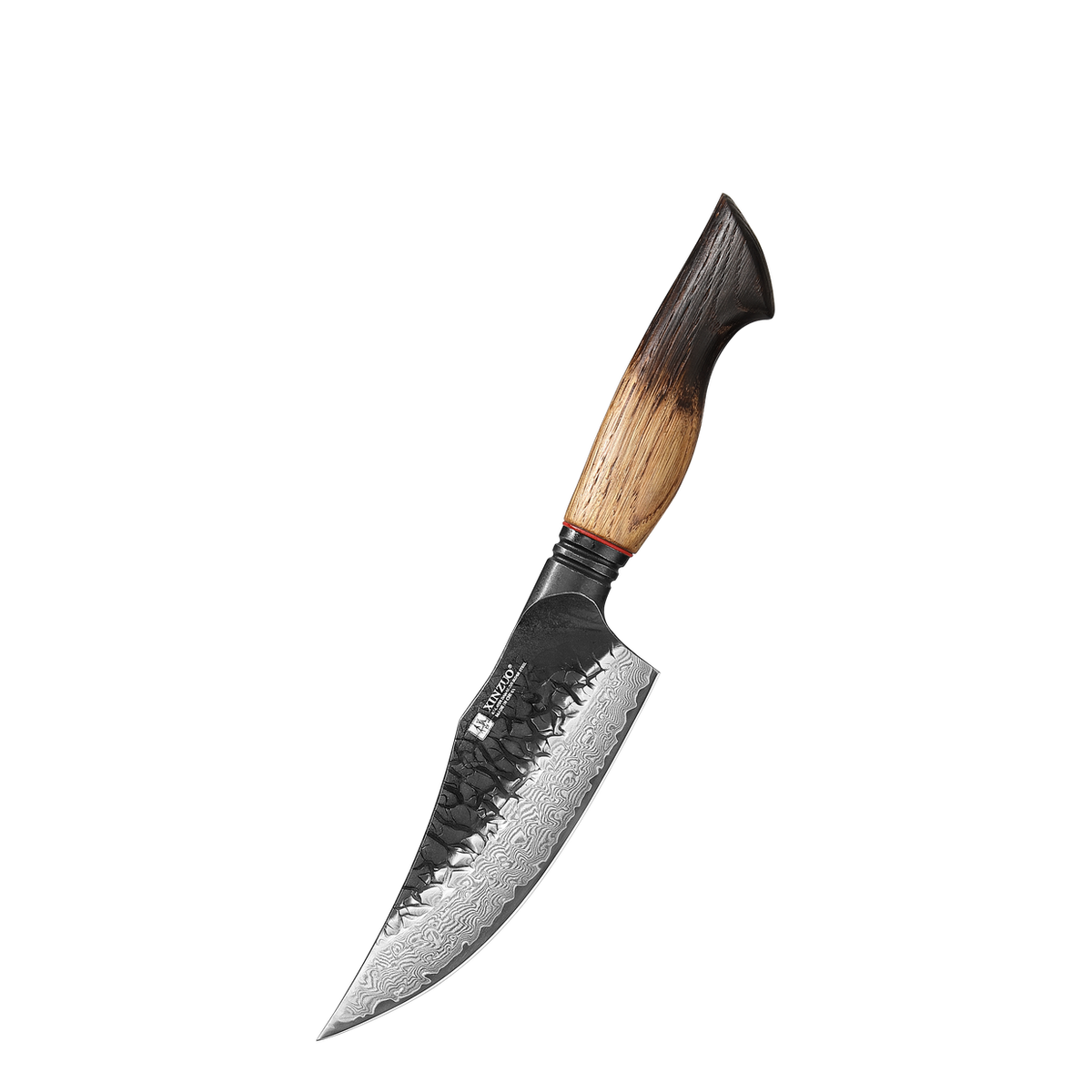
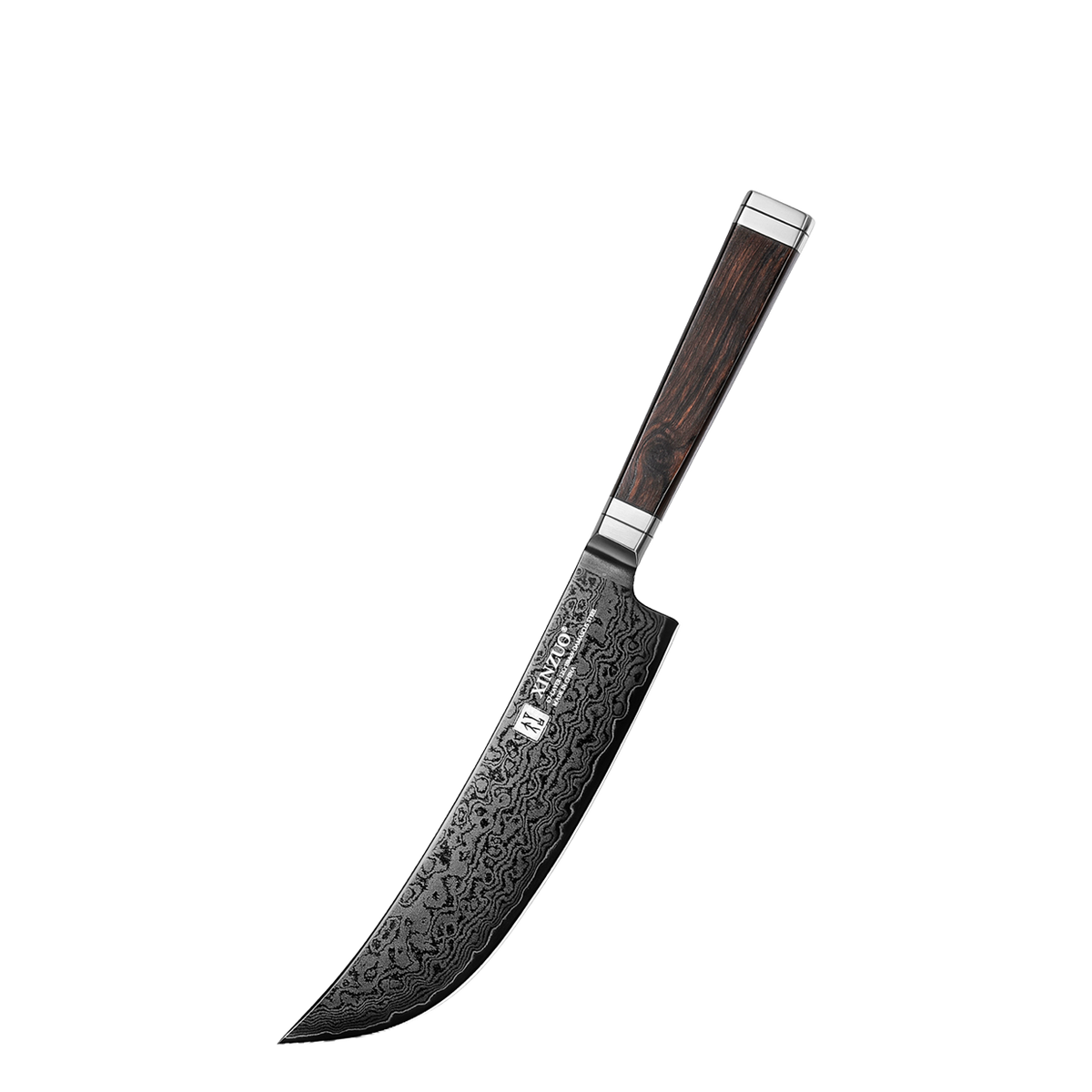
Choose by size and feel. The Mo Series Viking (5.8 inch) is the compact option, easy to control for detail prep and smaller hands, finished with a burnt-oak handle made using the Japanese Shou Sugi Ban charring technique and run at 60±2 HRC. The Ji Series Viking (7.5 inch) is the full-size workhorse: a longer blade for bigger boards and confident slicing, built on a 12Cr18MoV stainless core at 58-62 HRC with a dense ebony-wood handle. If you cook in a small kitchen or want a nimble second knife, take the 5.8 inch. If this is your main all-rounder, take the 7.5 inch.
Mo Series and Ji Series Viking, side by side
| Knife | Blade length | Damascus cladding | Core steel | Hardness | Handle |
|---|---|---|---|---|---|
| Mo Series Viking (X06) | 5.8 inch | 67-layer | Damascus over hardened stainless core | 60±2 HRC | Burnt oak (Shou Sugi Ban) |
| Ji Series Viking (X08) | 7.5 inch | 67-layer | 12Cr18MoV stainless | 58-62 HRC | Ebony wood |
What is a Viking knife used for?
It is a general-purpose kitchen knife, so it handles most daily jobs: slicing vegetables, portioning meat, breaking down herbs, and everyday prep. The deep belly gives you room to rock through onions and garlic, while the dropped, distinctive tip helps with finer, more controlled cuts. Think of it as a chef knife with more character in the blade profile, rather than a specialist tool. If you mainly cut vegetables you may prefer a flat-profile blade, and if you want a curved all-rounder a santoku is the closer cousin.
Is a Damascus Viking knife just for looks?
No. The layered Damascus is genuine forge-welded steel, not a printed pattern, and it does real work: a hard cutting core gives you edge retention, while the softer outer layers add corrosion resistance and absorb shock so the blade takes daily prep without chipping. The Ji Series runs a 12Cr18MoV core known for corrosion resistance and steady edge retention, and both knives are given a vacuum heat treatment before finishing. The striking pattern is a genuine result of the forging, not a substitute for it.
Common questions
Is the steel Japanese? No. The Mo has a 10Cr15CoMoV core and the Ji a 12Cr18MoV core, and both blades are made in our own Yangjiang workshop in China. We are upfront about it rather than implying a Japanese origin we do not have.
How do I look after a Viking knife? Hand wash and dry it straight after use, never the dishwasher, and hone before heavy prep. Kept on a magnetic holder or in a block and sharpened occasionally on a whetstone, a Damascus blade like this lasts decades. The ebony and burnt-oak handles prefer an occasional wipe of food-safe oil rather than long soaks.
What is the warranty? Every Xinzuo knife carries a lifetime warranty against manufacturing defects, you are covered by Australian Consumer Law, and Australian shipping is free on orders over $100.
Want the wider range each Viking comes from? Browse the full Mo Series and Ji Series collections, or see every layered blade in our Damascus kitchen knives range. If you would rather a classic all-rounder, compare with our chef knives or a curved santoku.


