


What Are the Most Important Knife Care Basics?
The entire knife care routine, in one box:
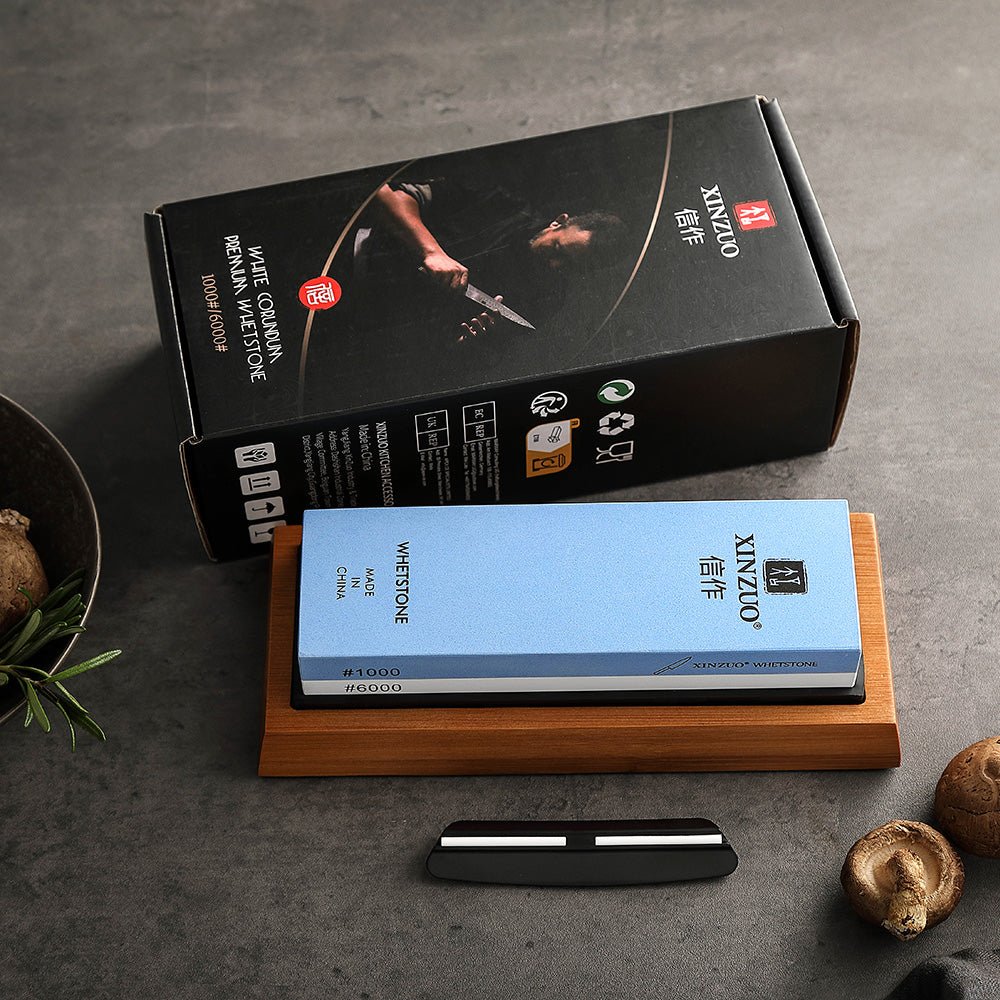
Hand wash with warm water and mild soap after every use. Dry immediately with a towel. Hone before each cooking session (15 seconds). Sharpen on a whetstone every 3 to 6 months. Store on a magnetic rack, in a block, or with blade guards. Cut on wood or plastic boards only.
That is the whole program. It takes under a minute a day, and it will genuinely double the working life of your blades.
Good knives are not fragile. They don't need pampering. But they do need a basic routine, the same way a cast iron pan needs a wipe of oil or a good pair of boots needs occasional conditioning. Skip the routine and even the best blade becomes an expensive butter knife.
What Does a Good Daily Knife Care Routine Look Like?
Step 1: Wash the knife by hand immediately. Warm water, a drop of dish soap, a soft sponge. Run the sponge along the blade (spine to edge, not across the edge) and clean both sides. Takes about 20 seconds. Do not soak the knife in the sink. Do not leave it sitting in a pile of dirty dishes.
Step 2: Dry it completely with a clean towel right away. Water sitting on steel causes oxidation. On carbon steel and reactive Damascus, this happens fast. Even on stainless, standing moisture promotes micro-corrosion at the edge where the steel is thinnest.
Step 3: Return the knife to proper storage. Magnetic rack, knife block (slide it in spine-first so the edge doesn't drag), blade guard, or an in-drawer tray.
Why Is Honing the Most Important Daily Habit?
Every time you use a knife, the very tip of the cutting edge bends and folds microscopically. The knife isn't dull in the traditional sense. The edge is still there. It's just been pushed out of alignment.
Honing straightens that edge back up. It does not remove metal. It does not sharpen. It simply realigns what's already there, and it is the single most impactful thing you can do between sharpenings.
How to hone: Hold the rod vertically with the tip resting on a folded towel. Place the knife's heel against the rod at your sharpening angle (15 degrees for Japanese, 20 for German). Draw the blade down and across from heel to tip, alternating sides. Five to ten strokes per side. 15 seconds total.
Choosing the Right Honing Rod
A traditional steel honing rod is too aggressive for Japanese steel. It causes microchipping along the edge. If you own both Japanese and German knives, just buy a ceramic rod and use it for everything. For more on honing technique, see our honing rod guide.
When and How Should You Sharpen Your Knives?
The Tomato Test
Place a ripe tomato on your cutting board. Rest the blade on the skin without applying downward pressure. Draw the knife across. A sharp knife bites into the skin and slices cleanly under its own weight. If you need to press down or saw, the knife needs sharpening.
Sharpening Schedule
A combination whetstone (1000 grit on one side, 3000 on the other) is the best all-purpose sharpening tool. Pull-through sharpeners remove far too much metal. Our whetstone sharpening guide covers the full process.
Science note: A 2025 study published in PNAS (Wu et al.) found that cutting onions with a dull blade produces up to 40 times more tear-inducing aerosol droplets than a sharp one. Keeping your knives sharp is not just about performance. It directly affects the food you serve.
What Will Damage Your Knives the Most?
1. The dishwasher. Caustic detergent, sustained high heat, and the blade bouncing against other items attacks the knife on three fronts simultaneously. One cycle won't ruin a knife. Six months of cycles will.
2. Glass, ceramic, marble, and granite cutting boards. These materials are harder than your knife's steel. You can visibly dull a razor-sharp knife in a single prep session on a glass board.
3. Loose drawer storage. Every time you open the drawer, your knife slides into contact with other metal utensils. Over months, the edge accumulates dozens of tiny chips and rolls.
4. Cutting bone or frozen food with Japanese-style knives. Hard, high-HRC steel is brittle. Slamming it into chicken bone or a frozen block concentrates enormous force on a thin edge. The result is chipping.
5. Leaving knives wet. Even stainless steel is "stain-less," not "stain-proof." Moisture promotes oxidation, especially along the edge.
6. Using the wrong honing rod. A steel rod on Japanese steel (58+ HRC) causes microchipping instead of edge realignment.
7. Twisting the blade laterally. Torquing the blade sideways to pry apart food creates lateral stress that thin edges aren't built to absorb.
Which Cutting Board Is Best for Your Knives?
Browse our cutting board collection if you need a new one.
What Is the Best Way to Store Your Knives?
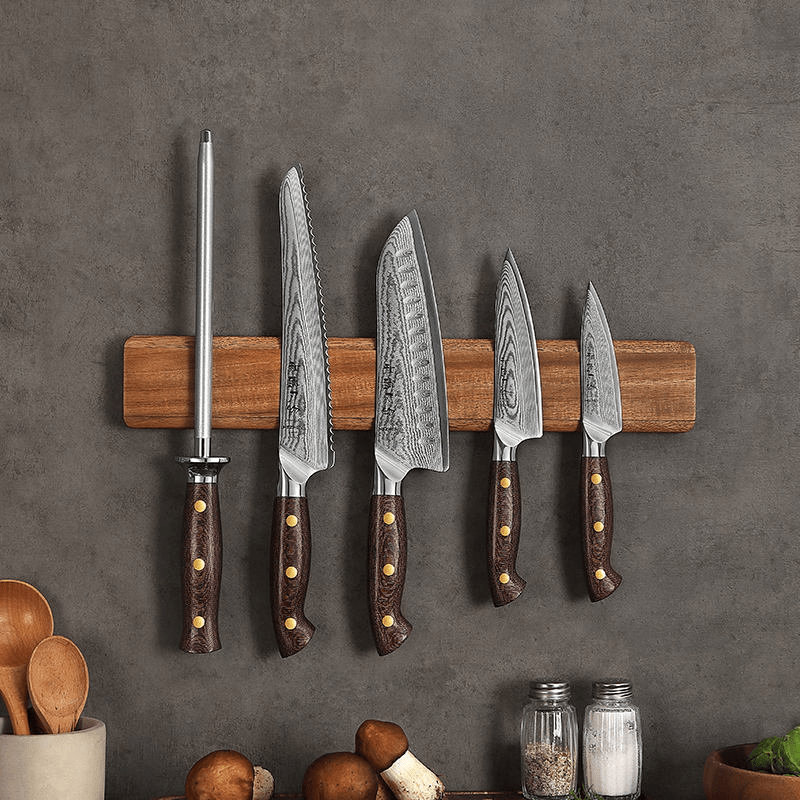
A magnetic knife holder mounted on the wall is the best option for most kitchens. The knives are visible, accessible, and the edges never touch anything. A knife block works well too, as long as you insert spine-first.
If drawer storage is your only option, use blade guards or an in-drawer tray. Never store unprotected knives loose in a drawer. We compared the options in our magnetic holder vs knife block guide.
Do Damascus and Carbon Steel Knives Need Special Care?
Acidic Foods
Tomatoes, citrus, onions, and vinegar are mildly corrosive to reactive steels. On Damascus blades, prolonged contact creates uneven spots in the pattern. Wipe the blade with a damp cloth while cutting acidic ingredients, and wash promptly when done.
Pattern Maintenance
The Damascus pattern fades slightly over time with regular cleaning and use. This is normal and purely cosmetic. A simple re-etching with ferric chloride restores the contrast. Our Damascus care guide covers the process, and our article on identifying real Damascus explains why the pattern is more than decoration.
Patina vs Rust
Carbon steel develops a patina over time, a stable blue-grey oxidation layer that actually protects the steel beneath it. Patina is normal and desirable. Rust is orange, rough, and pitting. If you see orange spots, scrub them off with baking soda paste, dry the blade, and apply a thin coat of food-safe mineral oil.
Sources
- Wu, Z. et al. (2025). "Droplet outbursts from onion cutting." Proceedings of the National Academy of Sciences, 122(42).
Related Reading
- How to Sharpen Kitchen Knives with a Whetstone
- Honing Steel Guide
- Magnetic Holder vs Knife Block
- Damascus Steel Care Guide
- Real Damascus Steel vs Fake
Frequently Asked Questions
What is the difference between honing and sharpening a kitchen knife?
Honing straightens a bent edge without removing metal. A few passes on a ceramic rod take 15 seconds and should be done every two to three uses. Sharpening grinds away steel to create a new edge on a whetstone, and is needed every 3 to 6 months for a home cook. Think of honing as maintenance between services and sharpening as the full service itself.
Does what you cut on matter more than how often you sharpen?
Yes. A knife used daily on an end-grain wood board can go 6 months between sharpenings. The same knife on a glass or ceramic plate will need sharpening within weeks. The cutting surface contacts the edge thousands of times per session, so switching from a hard board to wood or HDPE plastic makes a bigger difference to edge life than any sharpening schedule.
How long does a kitchen knife stay sharp between sharpenings?
A quality knife (60+ HRC) used 3 to 5 nights per week on a wood board typically holds a working edge for 3 to 6 months. Softer German steel (54 to 58 HRC) dulls faster but is easier to touch up. Regular honing extends the interval by realigning the edge before it folds far enough to feel blunt. The quickest test: if a ripe tomato skin resists the blade under its own weight, it is time to sharpen.
Can a dishwasher ruin a good kitchen knife?
Yes. Dishwasher detergent is caustic enough to corrode steel, the sustained heat accelerates oxidation, and the water jets bounce the blade against racks and other items, chipping the edge. One cycle won't destroy a knife, but regular dishwasher use over several months will dull the edge, pit the blade surface, and crack or swell wooden handles. Hand washing takes 20 seconds and avoids all of this.
How should you store kitchen knives to protect the edge?
A magnetic wall rack is ideal because the blade hangs in open air with nothing touching the edge. A knife block works if you insert spine-first so the edge does not drag on wood. For drawer storage, use blade guards or an in-drawer tray with individual slots. Never store loose knives in a drawer where they knock against utensils and other blades.