

What Knife Do You Need for Sashimi?
Sashimi demands a knife that can pass through raw fish in a single, uninterrupted pull stroke. A sawing motion ruptures cell walls, releasing moisture and creating a dull, ragged surface instead of the clean, glossy finish that defines good sashimi. The traditional tool is a yanagiba (single-bevel, 270mm+), but a sujihiki (double-bevel, 240mm+) achieves similar results with a much lower learning curve. Whichever you choose, you need a long blade, hard steel (58+ HRC), and a keen edge ground at an acute angle.
Why Does Sashimi Require a Specific Knife?
Sashimi is not just "raw fish cut into pieces." The quality of each slice depends on what happens at the cellular level during cutting. When a sharp, long blade passes through fish in one continuous pull, it separates muscle fibres cleanly. The surface of each slice stays smooth and reflective, almost glassy. That smooth surface is not just cosmetic. Intact cells retain moisture, which means better texture on the tongue and a cleaner, sweeter taste.
Now think about what happens when you use a short or dull knife. You saw back and forth. Each direction change drags the edge across already-cut surfaces, rupturing cells and releasing their contents. Myoglobin and moisture pool on the cutting board. The slice surface looks matte and rough. The fish tastes mushier and less clean. Research in food science has repeatedly confirmed this: the number of strokes and the sharpness of the blade directly affect moisture loss in sliced protein.
This is why sashimi chefs in Japan train for years on knife technique before they are allowed to cut fish for customers. The knife is half the equation. The other half is the discipline to complete every cut in a single pull, heel to tip, without hesitation and without sawing.
A chef knife cannot do this reliably. It is too short (most are 210mm or less), too thick behind the edge, and has too much belly in the profile. You end up rocking or pushing rather than pulling, which is exactly the wrong motion for raw fish.
What Is a Yanagiba and How Is It Used for Sashimi?
The yanagiba (literally "willow blade") is the knife that Japanese sashimi chefs have used for centuries. It is long, narrow, and ground on one side only. The flat back (ura) and the angled front (shinogi) create an asymmetric edge that does something mechanically interesting: as the blade moves through the fish, it steers itself away from the flat side. For a right-handed yanagiba, each slice naturally separates to the left, away from the block of fish you are portioning.
This self-steering effect is not subtle. It means slices release from the blade without sticking, which lets you work quickly through a fillet without having to peel each slice off. In a professional sushi restaurant where a chef might cut 200 or more slices during a service, that small efficiency adds up.
Yanagiba are typically between 270mm and 330mm (about 10.5 to 13 inches). The length is not for show. You need enough blade to pull through a wide piece of fish in a single motion. Shorter yanagiba exist (240mm), but they limit what species you can work with effectively.
What Is a Sujihiki and Why Choose It Over a Yanagiba?
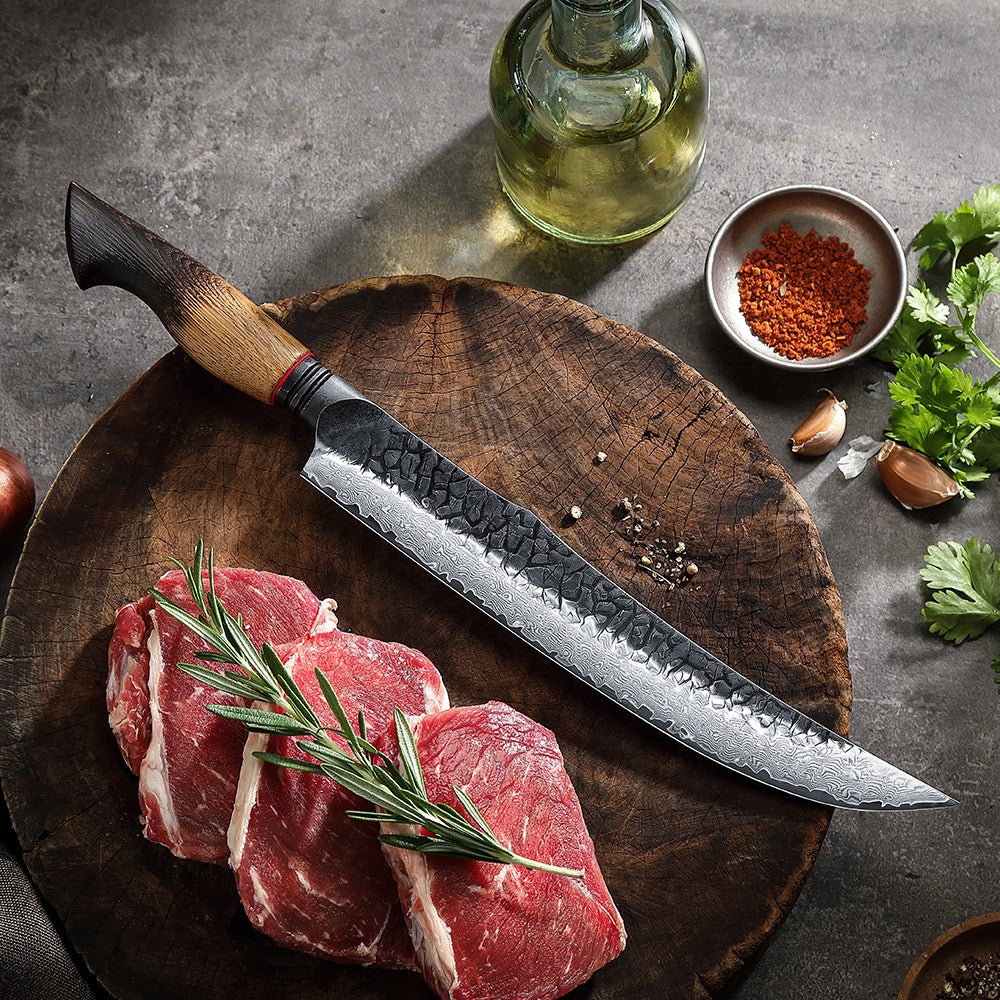
A sujihiki is essentially what happens when Japanese bladesmiths apply their grinding techniques and steel quality to a symmetrical, Western-style slicing knife. It is long, narrow, and thin behind the edge, just like a yanagiba. But the grind is equal on both sides, which means no self-steering, no hand-specific orientation, and standard sharpening technique.
For sashimi specifically, the sujihiki gives up that self-steering advantage. Slices do not release quite as effortlessly as they do from a single-bevel knife. But the trade-off is significant: you sharpen it the same way you sharpen any other knife (both sides, on a whetstone), it works equally well for left-handed and right-handed users, and the learning curve is dramatically lower.
Professional sushi chefs in Japan will always choose a yanagiba. But for a home cook in Australia who prepares sashimi a few times a month and also wants to carve roasts, slice brisket, and portion smoked salmon, the sujihiki is the far more practical choice. It handles all of those tasks with one knife rather than requiring a dedicated single-bevel blade that sits in a drawer most of the time.
Why Does Blade Length Matter for Fish?
This is the single most important variable in sashimi knife selection, and most people get it wrong by going too short.
The rule is simple: the blade must be long enough to complete the cut in a single pull stroke. If the fish is 150mm wide (about 6 inches, which is typical for a salmon fillet), your blade needs to be at least 240mm to pull through the full width without running out of edge. For larger species, or if you are slicing on a diagonal to create wider pieces, you need more blade.
240mm is the absolute minimum for sashimi work. 270mm (about 10.5 inches) gives you comfortable margin for most fish species you will encounter in Australia. 300mm is professional territory and handles everything from kingfish loins to whole tuna blocks.
Why does a single pull matter so much? Every time you reverse direction, the blade drags across the cut surface in the opposite direction. Those fibres you just separated cleanly get sheared again. On raw fish, which has very delicate muscle structure compared to cooked meat, each direction reversal creates visible damage. Hold a piece of sashimi cut with a single pull next to one that was sawed and the difference is obvious, even to someone who has never thought about it before.
Should You Choose Single Bevel or Double Bevel for Fish?
The honest assessment: unless you are cutting sashimi daily and are willing to invest time learning single-bevel sharpening, the double-bevel sujihiki will get you 90% of the way there with a fraction of the maintenance overhead. Professional itamae will disagree, and they are right within their context. But for a home cook in Melbourne pulling kingfish out of the fridge on a Friday night, the sujihiki is the more honest recommendation.
What Steel Do You Need in a Sashimi Knife?
Sashimi cutting demands the sharpest edge you can achieve, which means hard steel. Soft steel (below 57 HRC) cannot hold an acute edge angle. It rolls, folds, and dulls within minutes of contact with fish. You might start each cut with a keen edge, but by the tenth slice, you are tearing rather than slicing.
The minimum for sashimi work is 58 HRC. At this hardness, the crystalline grain structure of the steel is rigid enough to maintain an edge ground at 12 to 15 degrees per side. The edge stays keen through an entire prep session.
VG-10 is the most practical steel for sashimi knives at accessible price points. It reaches 60-61 HRC, takes a very fine edge on a whetstone, and contains enough chromium (~15%) to resist corrosion from fish proteins and citrus. This matters because raw fish is acidic, and a reactive carbon steel blade will discolour and potentially transfer metallic flavours if not meticulously maintained.
High-carbon stainless options like SG2/R2 (63-64 HRC) take an even keener edge and hold it longer. These are excellent for sashimi but cost more and chip more easily if mishandled.
Traditional white steel (shirogami) is what many yanagiba are made from. It is pure carbon steel with almost no alloying elements, which means it takes the absolute sharpest edge possible. But it rusts if you look at it wrong. For home use without the discipline of a professional kitchen's maintenance routine, stainless or semi-stainless steels are the safer choice.
The steel hardness directly determines how thin and acute you can grind the edge. For sashimi, thinner is always better, up to the point where the edge becomes too fragile for the task. VG-10 at 60 HRC sits at the sweet spot for most users.
What Are the Basic Sashimi Slicing Techniques?
The motion is a long, smooth pull. Not a push, not a rock, not a saw. You draw the blade from heel to tip in one unbroken stroke.
Start by placing the heel of the blade at the far edge of the fish. The blade should be angled at roughly 30 to 45 degrees relative to the fillet (this angle determines slice width). Apply very light downward pressure. Then pull the knife toward you in a single continuous motion, letting the full length of the edge pass through the fish. The tip should exit the near edge cleanly.
Three things to keep in mind.
Speed should be moderate and consistent. Not fast, not slow. Rushing creates uneven pressure along the edge, producing slices that are thicker at one end. Going too slowly builds friction and lets the blade grip the fish, which can cause tearing.
Downward pressure should be almost zero. The weight of the blade and your guiding hand provide all the force you need. If you are pressing down hard, the knife is dull. Stop and sharpen it.
Keep the fish cold. Take it out of the fridge and slice it immediately. As fish warms up, the proteins soften and become harder to cut cleanly. Cold, firm flesh gives the blade something to bite into. Professional sashimi chefs work quickly and return unused portions to refrigeration between cuts.

Which Knives Suit Different Australian Fish Species?
Australia has some of the best sashimi-grade fish in the world, and each species has slightly different characteristics that affect knife selection.
The pattern is straightforward: softer fish needs a sharper knife and benefits from a longer blade because soft flesh is more prone to tearing from short, repeated strokes. Firmer fish like kingfish and tuna are more forgiving of technique but dull edges faster because of their dense muscle structure.
For most Australians who buy sashimi-grade fish from the Sydney Fish Market, Melbourne's Queen Vic Market, or a good local fishmonger, Tasmanian salmon and kingfish are the species you will work with most often. A 270mm sujihiki handles both comfortably.
The bottom-line recommendation: A 240-270mm sujihiki in VG-10 steel is the best sashimi knife for Australian home cooks. It handles every common species, sharpens easily on a standard whetstone, resists corrosion from fish acids, and doubles as a carving knife for roasts and brisket. If you want the traditional single-bevel experience and are prepared to learn the sharpening technique, a yanagiba is the purist's choice. For everyone else, the sujihiki gets the job done beautifully.
Related Reading
- Sujihiki Knife Guide
- Fillet Knife Buying Guide
- Japanese-style Knife Types Explained
- Knife Steel Hardness Guide
- Knife Edge Types Guide
- How to Sharpen Knives with a Whetstone
- Best Knife for Meat: Buying Guide
- Knife Technique: Rock Chop, Push Cut, and Pull Slice
Frequently Asked Questions
Do I need a sashimi knife to make sushi at home?
Not for simple rolls. If you are cutting maki with nori, rice, and a strip of salmon, a sharp chef knife works fine. A dedicated sashimi knife (yanagiba or sujihiki, 240mm+) makes a real difference when you are slicing raw fish for nigiri or sashimi, where each piece needs a clean, glossy surface from a single pull stroke. If you prepare raw fish more than a few times a month, it is worth the investment.
What is the best sashimi knife length for home use?
270mm (about 10.5 inches) suits most home cooks. It is long enough to pull through a salmon fillet or kingfish loin in a single stroke without running out of blade. 240mm works for smaller fish and lighter use, but you will run short on wider fillets. 300mm is professional length and only needed if you regularly work with large whole-muscle cuts like tuna blocks.
Should I buy a yanagiba or a sujihiki for sashimi?
A sujihiki for most home cooks. It has a double-bevel grind that sharpens the same way as any other kitchen knife, works in either hand, and doubles as a carving knife for roasts and brisket. A yanagiba's single-bevel edge gives slightly cleaner fish release, but it requires hand-specific models and specialised sharpening technique. Choose a yanagiba only if sashimi is your primary focus and you are willing to learn single-bevel maintenance.
Why does the number of strokes matter when cutting sashimi?
Each time the blade reverses direction, it drags across already-cut surfaces and ruptures muscle cells. The released moisture (myoglobin) pools on the board, the slice surface turns matte, and the texture becomes mushy. A single pull stroke from heel to tip separates fibres cleanly, leaving each piece smooth, glossy, and full of flavour. This is why sashimi knives are long, thin, and built for one continuous motion.
Can you use a chef knife to slice sashimi?
You can, but the results will be noticeably worse. A standard 200 to 210mm chef knife is too short to complete a pull stroke through most fillets, so you end up sawing. The thicker blade (2.5mm+ at the spine) also compresses the fish, squeezing out moisture and leaving a rough surface. For occasional sashimi, a sharp chef knife is acceptable. For anything beyond that, a 240mm+ sujihiki or yanagiba is a significant upgrade.