


How Do You Maintain Your Knife Edge Between Whetstones?
Here's something that trips up nearly every home cook at some point: you grab that steel rod from the knife block, give your chef knife a few dramatic swipes like you've seen on TV, and assume you've just sharpened it. You haven't. What you've done is hone it, and the difference between honing and sharpening matters more than most people realise. Understanding that difference is the single most important thing you can do to keep your knives performing well between proper whetstone sessions.

Why Does Your Knife Get Dull?
To understand why honing works, you need to understand what actually happens to a knife edge during use. A sharp knife edge is incredibly thin at the apex. On a quality Japanese-style knife like a Xinzuo, that edge can be as thin as 10 to 15 microns. That's roughly one-fifth the width of a human hair. At that scale, the metal is surprisingly fragile.
Every time you cut through food, push against a cutting board, or (please stop doing this) scrape the blade sideways across the board to scoop up diced onions, microscopic forces act on that thin edge. The metal at the very tip doesn't break off immediately. Instead, it bends. It folds over to one side, sometimes curling back on itself like a tiny wave. This is called edge rolling, and it's the most common reason a knife feels dull.
The important part: the metal is still there. It hasn't worn away. The edge has simply moved out of alignment. Imagine a piece of tinfoil folded over the edge of a ruler. The ruler is still sharp underneath, but the foil prevents it from cutting cleanly. That's what a rolled edge does to your knife.
This is different from two other types of edge damage:
- Microchipping: Tiny fragments of steel actually break away from the edge. This happens more often with very hard steels (above 62 HRC) or when cutting through bones, frozen foods, or hard seeds. Under magnification, the edge looks like a serrated bread knife rather than a smooth line.
- True dulling: Over many uses, the apex gradually wears down and becomes rounded. The edge gets thicker at the tip, requiring more force to initiate a cut. No amount of realignment fixes this because there's no longer a thin edge to realign.
Honing fixes rolled edges. It does nothing for chips or true dulling. That's why you need both tools in your maintenance routine.
What Is the Difference Between Honing and Sharpening?
Honing uses a rod (steel, ceramic, or diamond) to push the bent edge back into alignment. Think of it as straightening bent metal. No significant amount of steel is removed. The process takes about 30 seconds and should happen every few uses.
Sharpening uses an abrasive surface (a whetstone, typically) to grind away metal and create a brand-new edge. This is a more involved process that removes material to reshape the bevel. For most home cooks, this needs to happen every two to six months depending on use.
| Factor | Honing | Sharpening |
|---|---|---|
| What it does | Realigns bent edge | Removes metal, creates new edge |
| Time required | 30 seconds | 15 to 30 minutes |
| Frequency | Every 2 to 3 uses | Every 2 to 6 months |
| Tool used | Honing rod or strop | Whetstone |
| Skill level | Beginner-friendly | Moderate (requires practice) |
| Metal removal | Negligible | Significant |
What Are the Different Types of Honing Rods?
Not all honing rods are created equal, and choosing the wrong one for your knife can actually cause damage. Here's what you need to know about each type.
Traditional Steel Rods
These are the classic ribbed metal rods you find in most knife blocks. They work by physically pushing the rolled edge back into place through contact with the ridged surface. Steel rods are best suited for softer European-style knives (typically 54 to 58 HRC). The ridges are aggressive enough to realign softer steel but can chip harder Japanese-style knives. If you own a traditional German knife set, a steel rod is perfectly fine. If you own Xinzuo knives or any Japanese-style blade, skip these entirely.
Ceramic Rods
Ceramic honing rods have a smooth, extremely hard surface (typically around 7 on the Mohs scale). They realign the edge while also performing an incredibly fine amount of polishing. This makes them ideal for harder Japanese-style knives in the 58 to 67 HRC range. The smooth surface won't catch and chip the harder, more brittle steel the way a grooved steel rod can. For Xinzuo knives, a ceramic rod is the best daily maintenance tool you can own.
Diamond Rods
Diamond rods are coated with fine diamond grit and are the most abrasive option. They don't just realign the edge; they actively remove metal, making them a hybrid between a honing rod and a sharpener. Use these sparingly and only when your edge needs more correction than a ceramic rod can provide. They're useful for touch-ups on very hard steels or for removing minor chips, but regular use will shorten your knife's lifespan because you're grinding away steel every time. Think of a diamond rod as the step between "honing isn't working anymore" and "time for the whetstone."
What Is the Proper Honing Technique?
Bad technique with a honing rod does more harm than good. Here's how to do it properly.
Step 1: Set your angle. Hold the rod vertically with the tip resting firmly on a folded towel on your countertop. Place the heel of the knife against the top of the rod at approximately 15 degrees for Japanese-style knives, or 20 degrees for European knives. A good trick: 90 degrees is the knife perpendicular to the rod. Half that is 45. Half again is about 22. Tilt just slightly less than that, and you're at 15. It doesn't need to be exact, but consistency matters more than precision.
Step 2: Apply light pressure. This is where most people go wrong. You are not trying to force the edge into shape. Use roughly the same pressure you'd use to spread cold butter on soft bread. The weight of the knife itself provides most of the force you need. Pressing too hard, especially on a ceramic rod, risks chipping the edge.
Step 3: Sweep the blade downward. Draw the knife down and toward you in a smooth arc, moving from the heel to the tip so the entire edge contacts the rod. Maintain your angle throughout the stroke. Then switch to the other side of the rod and repeat with the opposite side of the blade.
Step 4: Alternate sides evenly. Do 4 to 6 strokes per side, alternating each time. That's it. More strokes aren't better. If 5 strokes per side doesn't restore the edge, the problem isn't something honing can fix.
How Often Should You Hone vs Sharpen?
There's no universal schedule because it depends on how much you cook, what you cut, and what cutting board you use. But here are practical guidelines that work for most home cooks.
Hone your knife every two to three cooking sessions. If you're a daily cook, that means honing every other day or so. Some professional cooks hone before every service. It takes 30 seconds and causes zero wear on the blade, so there's no downside to doing it frequently.
Sharpen on a whetstone when honing no longer restores the edge. For most home cooks using quality knives on proper cutting boards, that's every three to six months. If you cook professionally or use your knives very heavily, you might sharpen monthly.
A simple test: after honing, try slicing a ripe tomato. If the knife slides through the skin without needing to saw, your edge is fine. If it skids across the surface or requires pressure to break the skin, it's time for the whetstone.
Why Are Ceramic Rods Better for Japanese-Style Knives?
Japanese-style knives like Xinzuo's range are hardened to 60 HRC and above. At that hardness, the steel holds a sharper edge for longer, but it's also more brittle. A grooved steel honing rod acts like a file against this hard steel. Instead of gently pushing the edge back into line, the ridges can catch and fracture the thin edge, creating microchips that actually make the knife duller.
Ceramic rods solve this problem. Their ultra-smooth surface applies even pressure across the edge without the aggressive bite of steel grooves. The ceramic is hard enough to realign the edge (harder than the knife steel itself) but smooth enough not to cause damage. It's the difference between straightening a wire with your fingers versus dragging it across a cheese grater.
What Should You Do When Honing Stops Working?
If you've been honing regularly and the knife still won't cut well, one of these things is happening:
The edge is truly dull, not just rolled. After months of use, the apex wears down to the point where there's nothing left to realign. The fix: sharpen on a whetstone, starting with a 1000-grit stone and finishing on a 3000 to 6000-grit stone.
The edge is chipped. Run your fingernail very gently along the edge (perpendicular to the blade, not along it). If you feel tiny catches or rough spots, you have microchips. Honing won't fix these. You need to remove enough metal on a whetstone to get below the chips and re-establish a clean edge.
Your angle is inconsistent. If you're rocking the knife at different angles on each stroke, you're actually rounding the edge rather than straightening it. Focus on maintaining a consistent angle, even if it's not perfectly precise. Consistency beats accuracy here.
You're using the wrong rod. A smooth steel rod on a very hard Japanese-style knife barely does anything because the rod isn't hard enough to move the steel. Switch to ceramic. Conversely, a diamond rod used too aggressively will remove metal you don't need to remove.
The knife needs re-profiling. If the bevel angle has changed over time (common with knives sharpened by different people or electric sharpeners), honing at the "correct" angle won't help because it doesn't match the actual edge geometry. A full re-profiling on a coarse whetstone resets the bevel.
What Does a Complete Knife Maintenance Schedule Look Like?
For the best results, follow this routine:
- Every 2 to 3 uses: Hone with a ceramic rod. Takes 30 seconds.
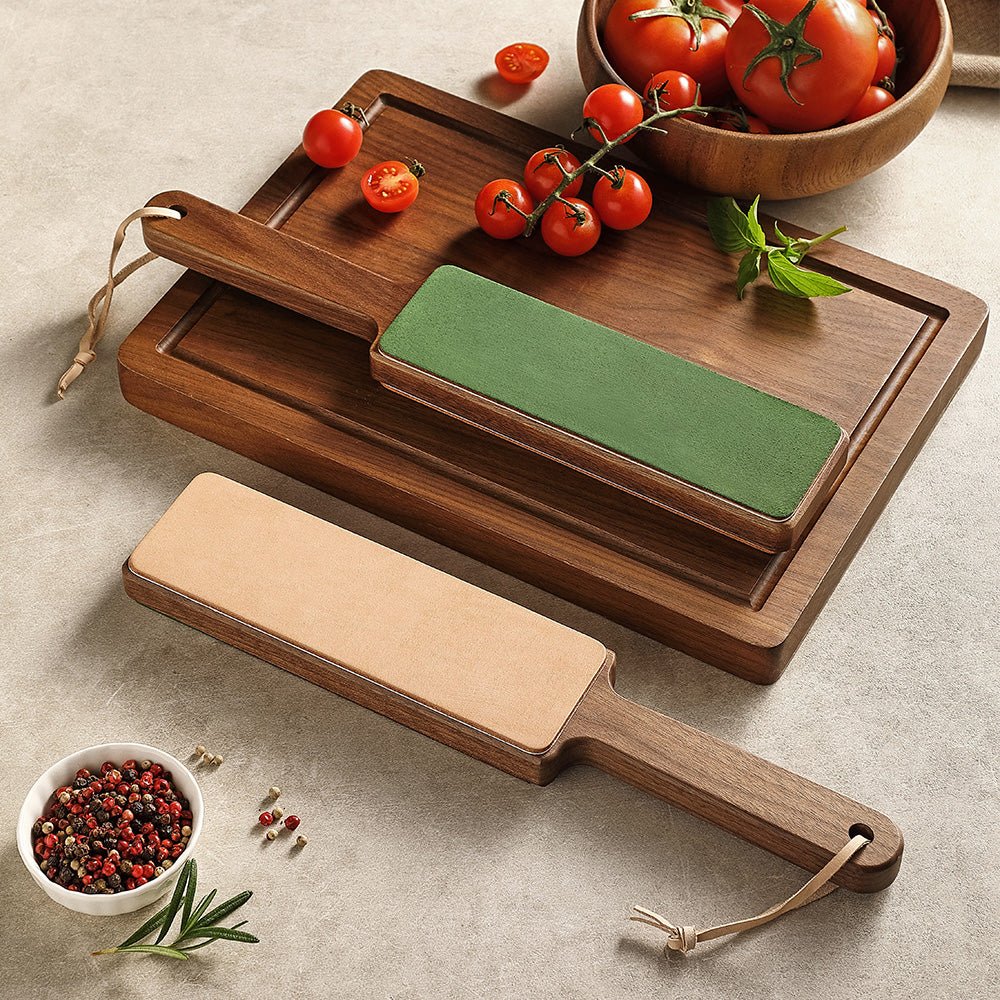
- Monthly: Strop on a leather strop with polishing compound for an extra-refined edge (optional but satisfying).
- Every 3 to 6 months: Sharpen on a whetstone. Start at 1000 grit, finish at 3000 to 6000 grit.
- Yearly: Assess whether you need to re-profile. If you've been consistent with your whetstone angle, you won't.
Browse Xinzuo's full range of sharpening accessories and premium whetstones to build out your maintenance kit.
Ready to Keep Your Knives at Their Best?
A sharp knife is a safe knife. Explore our curated selection of honing rods, whetstones, and strops to maintain your Xinzuo knives at peak performance.
Shop Sharpening AccessoriesRelated Reading
- How to Sharpen Knives with a Whetstone: Step-by-Step Guide
- Knife Sharpening Angle Guide: Finding the Right Angle for Your Blade
- Whetstone Grit Guide for Kitchen Knives
- Knife Care and Daily Maintenance Guide
- Knife Steel Hardness Guide: Understanding HRC Ratings
- How Often Should You Sharpen Kitchen Knives?
- German vs Japanese-style Kitchen Knives: Which Style Is Right for You?
- How to Choose a Chef Knife: The Complete Buying Guide
Frequently Asked Questions
Can a honing steel damage a knife?
A traditional grooved steel rod can chip knives harder than about 60 HRC because the ridges catch and fracture the brittle edge. This is why Japanese-style knives should only be honed with a ceramic rod, which has a smooth surface that realigns without chipping. On softer European knives (56 to 58 HRC), a steel rod is safe and effective. Too much pressure on any rod can also create microchips, so use light strokes.
What is the difference between a ceramic and steel honing rod?
A steel rod has grooved ridges that physically push a rolled edge back into alignment. It works well on softer steels below 58 HRC but is too aggressive for harder blades. A ceramic rod has a smooth, extremely hard surface (about 7 on the Mohs scale) that realigns and lightly polishes the edge without catching. Ceramic is the safer choice for any knife above 58 HRC and the only type recommended for Xinzuo knives.
How many strokes do you need on a honing rod?
Four to six strokes per side, alternating each time. That is enough to realign a rolled edge from normal kitchen use. If the knife still feels dull after six strokes per side, the problem is beyond what honing can fix and you need a whetstone. More strokes are not better, as excessive honing on a diamond rod actually removes steel unnecessarily.
Should I strop my kitchen knife instead of honing?
Stropping on leather serves a similar purpose to honing but with an even gentler touch. It polishes the very apex of the edge and removes any remaining micro-burr from sharpening. A strop loaded with polishing compound can extend time between whetstone sessions by weeks. For daily maintenance, a ceramic honing rod is faster and more practical. For the best results, use the rod between cooking sessions and the strop after sharpening.
Do you need to hone a knife before every use?
Before every use is ideal for softer European knives (56 to 58 HRC) because their edges roll easily during normal cutting. For harder Japanese-style knives above 60 HRC, every two to three uses is enough since the harder steel resists rolling. Honing takes about 15 to 30 seconds and causes no measurable wear on the blade, so doing it more often than needed has no downside.