


Why Do Most Knife Gifts Miss the Mark?
I've watched a lot of well-intentioned people buy kitchen knives as gifts. The pattern is almost always the same: they walk into a store (or browse online), see a nice-looking knife or a big impressive set, and buy it because it looks like it belongs in a kitchen. The recipient opens it, says thank you, and six months later it's sitting in a drawer unused, or worse, getting tossed around in a utensil holder.
The problem isn't the thought. It's the match.
A knife gift fails when the knife doesn't fit how the person actually cooks. A 10-inch German chef's knife is overkill for someone who mostly chops vegetables. A paring knife, no matter how beautiful, isn't exciting to open. A 15-piece block set sounds generous, but half those knives will never leave the block.
Getting it right requires knowing a bit about who you're buying for. That's what this guide is about: figuring out what kind of cook they are, what they probably already own, and what would actually make their time in the kitchen better.
The short version: A great knife gift matches the recipient's cooking style, experience level, and what's missing from their kitchen. A single well-chosen knife beats a set of mediocre ones every time.
What Should You Buy for Each Type of Recipient?
People fall roughly into four categories when it comes to kitchen knives. Knowing which camp your recipient belongs to will narrow your options dramatically.
1. The Beginner Who's Ready to Upgrade
This person cooks regularly but has never owned a good knife. They're using whatever came in a starter set from a department store, or something picked up on sale years ago. The blade is dull, the handle is uncomfortable, and they don't know what they're missing.
For this person, a quality 8-inch chef's knife or 7-inch santoku is the single best gift you can buy. It will genuinely change how they experience cooking. When you go from a cheap stamped blade to a properly forged, well-balanced knife, the difference is immediate and obvious. Onions stop making you cry as much. Herbs get sliced instead of bruised. Prep takes half the time.
Stick to versatile shapes. Chef's knives and santokus handle about 90% of kitchen tasks. Avoid anything specialty for this person.
2. The Enthusiast Adding to a Collection
This person already has a decent chef's knife. They might have two or three good knives. They know the difference between a santoku and a nakiri, and they've probably mentioned wanting something specific at some point.
If you can find out what they already own, buy what fills a gap. A bread knife if they bake. A utility or petty knife for detail work. A nakiri if they cook a lot of vegetables. A cleaver if they do a lot of meat prep.
If you can't figure out what they have, a high-quality santoku is rarely a duplicate since most home cooks start with Western-style chef's knives and the santoku gives them a different feel and profile to work with. It's flatter, lighter, and excels at the push-cutting technique that many Japanese recipes call for.
Enthusiasts also tend to appreciate a nice knife set if it's curated well. A three-piece set (chef's, santoku, utility) in matching handles gives them a cohesive collection without redundant pieces.

3. The Professional Chef
Buying for a professional is tricky because they almost certainly know exactly what they want. They have opinions about blade geometry, handle materials, steel types, and edge angles. Buying them the wrong knife is like buying a carpenter the wrong saw.
Two approaches work here. First, if you know their preferred style and can have a subtle conversation about what they've been eyeing, go for it. Professionals respect quality materials and craftsmanship, so a well-made knife in a steel they appreciate (67-layer Damascus, SG2 powder steel, that sort of thing) will land well.
Second, and honestly the safer bet: get them a gift card. This isn't lazy. Professionals appreciate the chance to pick exactly what they want. A gift card to a quality knife retailer, paired with a nice handwritten note, is a better gift than a $300 knife they won't use because the handle doesn't suit their grip.
4. The Casual Cook Who Appreciates Quality
This person doesn't cook every day, but when they do, they enjoy it. They care about having nice things in their kitchen. They'd rather own one beautiful knife than five decent ones.
For this recipient, aesthetics matter almost as much as performance. Damascus steel with visible layered patterns, a polished handle in a rich wood tone, attractive packaging. They want something that looks good in a magnetic knife holder on the wall and feels special every time they pick it up.
A single high-end chef's knife or santoku in a presentation box is ideal. These are the people who will actually display the knife, maintain it, and show it off to dinner guests. They may not use it daily, but when they do, they want it to be an experience.
What Is the Quick Reference for Knife Gifts by Recipient Type?
What Gift Pairings Actually Make Sense?
A knife on its own is a great gift. A knife paired with something that supports it becomes a complete kitchen upgrade. Here are combinations that work well together.
Knife + Whetstone
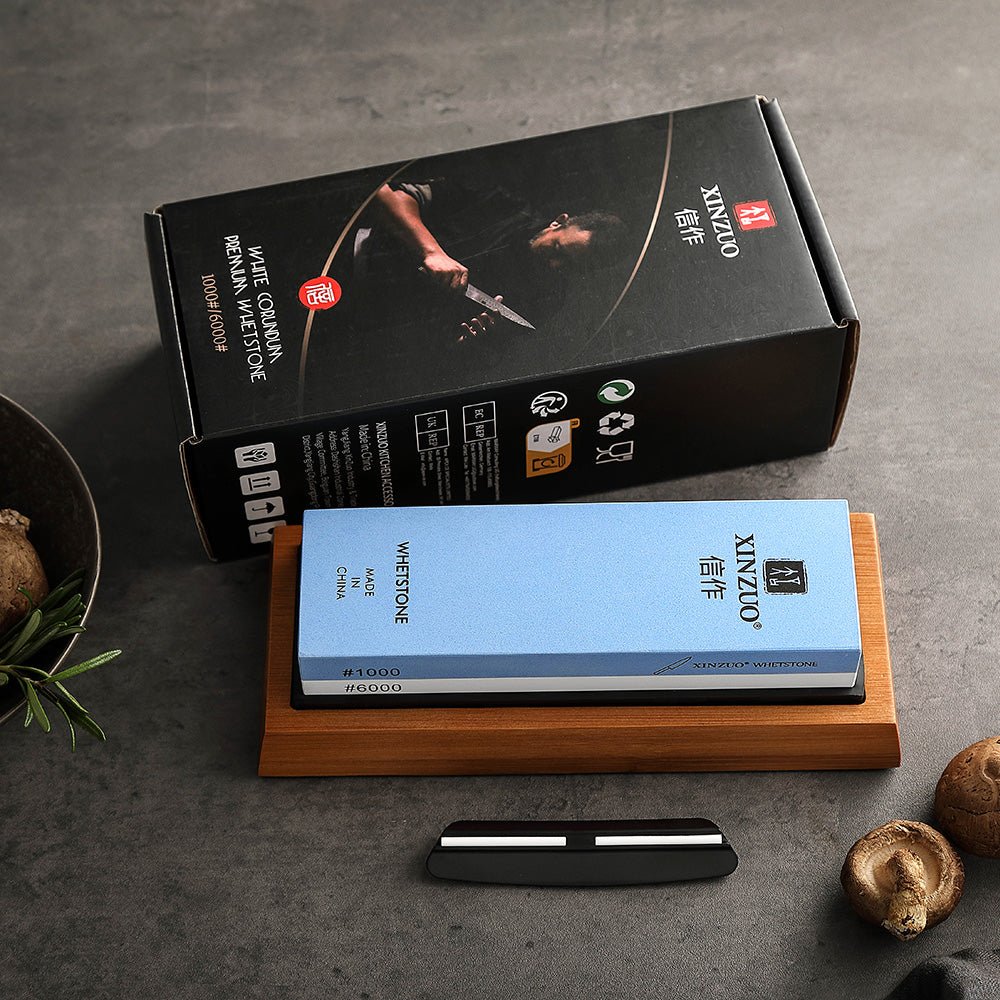
This is the pairing for someone who's serious about their kitchen tools (or who you think could be). A dual-grit whetstone (1000/6000 is the most versatile combination) teaches them to maintain their own edge. The 1000 grit side handles regular sharpening, and the 6000 side polishes the edge to a mirror finish.
Include a note saying something like "this is the sharpening stone that matches your new knife" and you've given them a skill, not just an object. Most people have never sharpened a knife properly, and once they learn, they never go back to pull-through sharpeners.
Knife + Cutting Board
A great knife on a terrible cutting board is a waste. Hardwood or end-grain boards protect the blade's edge far better than bamboo or plastic. If you know they're using a glass, ceramic, or thin plastic board, pairing a new knife with a proper hardwood cutting board is arguably the more impactful half of the gift. The board protects the knife, feels better to cut on, and lasts for years with basic care (oil it every month or two).
Knife + Magnetic Holder
If they don't have a good way to store knives, a wall-mounted magnetic knife holder is a smart add-on. It keeps the blade accessible, protects the edge (no rattling around in a drawer), and looks great in any kitchen. Plus it solves the "where do I put this" problem that sometimes keeps gifted knives from getting used.
Knife Set + Knife Care Kit
For a bigger budget, a knife set paired with a whetstone and a bottle of food-safe mineral oil (for the handles) covers every angle. The recipient has the knives, the sharpening tools, and the maintenance supplies from day one.
How Do You Pick the Right Knife for Real Gift Scenarios?
Sometimes the easiest way to figure out a gift is to match it to a scenario. Here are a few common ones.
They just moved into their first apartment. A single 8-inch chef's knife is the perfect housewarming gift. It's the one knife that can handle everything from breaking down a chicken to mincing garlic. Pair it with a cutting board if your budget allows.
They cook a lot of Asian food. A santoku or nakiri is going to match their cooking style better than a Western chef's knife. The flatter profile works with the push-cut technique common in Japanese and Chinese cooking, and it excels at working through piles of vegetables quickly.
They love hosting dinner parties. A carving knife (sujihiki) makes a real impression at the table. There's something about slicing a roast with a proper long, thin blade that elevates the whole meal. It's a knife they probably wouldn't buy themselves, which makes it a great gift.
They bake bread regularly. A proper bread knife with a long, scalloped edge is something most home bakers don't invest in. They're usually using a cheap serrated knife that crushes the crust instead of slicing through it. A good bread knife makes a noticeable difference on every loaf.
You have no idea what they need. A quality chef's knife in the $100-200 range is the safest bet. Even if they already own one, a better one becomes their new daily driver and the old one becomes the backup.
What Knives Should You NOT Give as a Gift?
Some knife gifts are almost guaranteed to disappoint. Avoid these.
Cheap knife block sets. Those 12 or 15-piece sets you see for $80 are filled with knives nobody needs. Tomato knives, "sandwich knives," steak knives with rattling handles, a pair of kitchen shears that fall apart. The steel quality across all those blades is poor because the budget got spread too thin. Three good knives will outperform fifteen mediocre ones every single day.
Specialty knives for someone who doesn't cook much. A deba (Japanese fish-butchering knife) is a bad gift for someone who buys pre-filleted salmon. A Chinese cleaver looks dramatic but requires technique to use well. Specialty knives are for people who already know they want one.
Novelty or gimmick knives. Anything with a built-in fork, a serrated chef's knife, or one of those "aero" knives from a TV ad. These end up in the donation bin.
A knife without any means to maintain it. If the person doesn't own a honing rod or whetstone, the knife will be dull within a few months and they'll think it's just like every other knife they've owned. Consider including maintenance tools or at least a card explaining basic care.
Why Does Handle Preference Matter for Knife Gifts?
A knife could have perfect steel, perfect geometry, and a perfect edge, but if the handle doesn't feel right in their hand, they won't reach for it.
There are two main handle styles. Western handles are contoured, usually with a full tang and rivets, and they feel substantial and heavy. Japanese (wa-style) handles are lighter, cylindrical or octagonal, and the balance point sits closer to the blade. Neither is better. It comes down to what feels natural.
If you've cooked with the person, you might have noticed what they already use. If not, there are a couple of ways to figure it out without ruining the surprise.
- Check their knife drawer or block when you're at their place. What style of handles do they already have?
- Ask a partner, roommate, or family member what their kitchen knives look like.
- If you really can't find out, Western-style handles are the safer bet for most Australian home cooks since that's what they're used to.
Material matters too. Pakkawood and G10 (a resin composite) are durable and easy to maintain. Natural wood handles are beautiful but need occasional oiling. Avoid plastic handles if you want the gift to feel premium.
How Should You Present and Package a Knife Gift?
How you present a knife gift affects how it's received. A bare knife in a cardboard box feels like a kitchen supply purchase. The same knife in a presentation box, wrapped properly, with a handwritten note about why you chose it, feels like a real gift.
A few practical tips:
- If the knife comes in a gift box, use it. Don't re-wrap it in generic paper that hides the branding.
- Include a small card explaining the knife: what steel it's made from, what it's best used for, and any care instructions. Most quality knives come with this information, but a personal note in your own words carries more weight.
- If you're pairing a knife with a whetstone or cutting board, arrange them together in a gift basket or box rather than wrapping them separately. The visual impact of seeing a complete kit matters.
- For shipping gifts, make sure the knife is secured inside its box or sheath. A loose knife in a shipping carton is a safety issue and can damage the edge.
One tradition worth knowing about: in some cultures, giving a knife as a gift is considered bad luck (the superstition is that it "cuts" the relationship). The workaround is to tape a coin to the gift, and the recipient "pays" you for the knife with the coin, making it a purchase rather than a gift. It's a fun detail to include if you think the recipient would appreciate the gesture.
Are Knife Gift Cards Worth Considering?
There's a stigma around gift cards, like they show less thought. For knives, the opposite is true. A knife is a personal tool. The weight, the balance, the handle shape, the blade profile, the length. All of these are preferences that vary from person to person.
A gift card from a quality knife retailer, combined with a note saying "I wanted to get you a great knife, but I know you're particular about what you use, so pick the one that fits your hand," shows more thoughtfulness than guessing wrong.
This is especially true for professionals, experienced home cooks, and anyone who has already expressed specific preferences. They'll respect the honesty, and they'll end up with a knife they actually love using.
Related Reading
- Chef Gift Guide: Professional Kitchen Tools
- How to Choose a Chef Knife: The Complete Buying Guide
- Best Kitchen Knives Under $200
- Kitchen Knife Sets vs Individual Knives
- Santoku vs Chef Knife
- Magnetic Knife Holder vs Knife Block
- Knife Care: Daily Maintenance Guide
- How to Sharpen Knives with a Whetstone
Frequently Asked Questions
Is it bad luck to give a knife as a gift?
Many cultures have a superstition that gifting a knife "cuts" the relationship between giver and receiver. The traditional workaround is to tape a coin to the knife. The recipient gives the coin back, turning the gift into a symbolic purchase. It costs nothing and puts superstitious recipients at ease.
How much should you spend on a kitchen knife gift?
$100 to $200 AUD buys a single forged chef knife or santoku in high-carbon steel, which is the sweet spot for a gift that feels special and performs well. Below $100, you are limited to accessories like whetstones or cutting boards. Above $200, you move into premium Damascus sets and multi-piece bundles.
Should I buy a knife set or a single knife as a gift?
A single high-quality knife is almost always the better gift. Most block sets include four or five knives the recipient will never use, and the per-knife quality drops to fit a price point. One well-chosen 8-inch chef knife or 7-inch santoku will get daily use and make a bigger impression than a 15-piece set collecting dust.
What size kitchen knife is best for a gift?
An 8-inch (200mm) chef knife is the safest choice for most recipients because it handles roughly 90% of kitchen tasks. For someone with smaller hands or limited counter space, a 7-inch santoku gives similar versatility in a lighter, shorter profile. Avoid anything longer than 10 inches unless you know the recipient works with large cuts of meat.
What knife accessories pair well with a knife gift?
A 1000/6000 grit combination whetstone is the best pairing because it lets the recipient maintain their edge for years. A quality end-grain cutting board is a close second, since many home cooks still use glass or bamboo surfaces that dull knives fast. Either accessory turns a one-time gift into a long-term kitchen upgrade.