


Is Your Knife Storage Damaging Your Knives?
I want you to try something. Pull your best kitchen knife out of whatever you're storing it in right now, and run your thumb (carefully, perpendicular to the edge) along the blade near the heel. Feel that? If it's not as sharp as the day you bought it, your storage might be part of the problem.
Most people spend real money on good knives and then jam them into a cheap wooden block or toss them loose in a drawer. Both of those approaches are actively working against you. Every time a sharp edge drags against wood, plastic, or another piece of metal, you're creating micro-abrasions on the blade. Do that twice a day for a year and you've got a knife that feels dull no matter how recently you've sharpened it.
The way you store your knives affects three things: edge retention, safety, and the longevity of the blade itself. Get it right and your knives stay sharper longer, you sharpen less often, and nobody gets cut rummaging through a drawer at 7am. Get it wrong and you're stuck in a cycle of dulling and resharpening that slowly grinds away at your blade's steel.
So which storage method actually makes sense? That depends on your kitchen, your knives, and how you cook. I've used all of the main options over the years, and each one has real advantages and real drawbacks. Let me walk you through them honestly.
Are Traditional Wood Knife Blocks a Good Option?
The classic countertop knife block. You've seen these a thousand times. They're in every kitchen department, usually bundled with a mediocre knife set. And look, they're not terrible. They keep blades separated, they look decent on a counter, and they make it easy to grab the knife you need quickly.
But they have some genuine problems.
The biggest issue is the slots themselves. When you slide a knife in and out of a tight wooden slot, the edge contacts the wood on both sides. Gravity means the blade naturally rests on its edge at the bottom of the slot. Over months and years, that repeated contact takes a measurable toll on sharpness. You can mitigate this by storing knives spine-down (edge facing up), but most people don't, and most block designs don't make it intuitive.
Storage tip: If you do use a slotted block, always insert knives with the spine (back) entering first and the edge facing upward. This prevents the cutting edge from dragging against the wood slot walls.
Then there's the hygiene question. The interior of those slots is dark, narrow, and almost impossible to clean properly. Food particles, moisture, and dust accumulate in there. Studies have found that knife block interiors can harbour bacteria and mould, especially in humid kitchens. You can minimise this by making sure knives are completely dry before storing them, but you'll never get those slots truly clean without serious effort.
Finally, traditional blocks are inflexible. They're designed for a specific set of knives with specific blade sizes. Buy a new knife that doesn't match a slot? Too bad. Want to rearrange? You can't. That rigidity is a real limitation if your collection grows or changes over time.
Are Magnetic Knife Holders and Wall Strips Worth It?
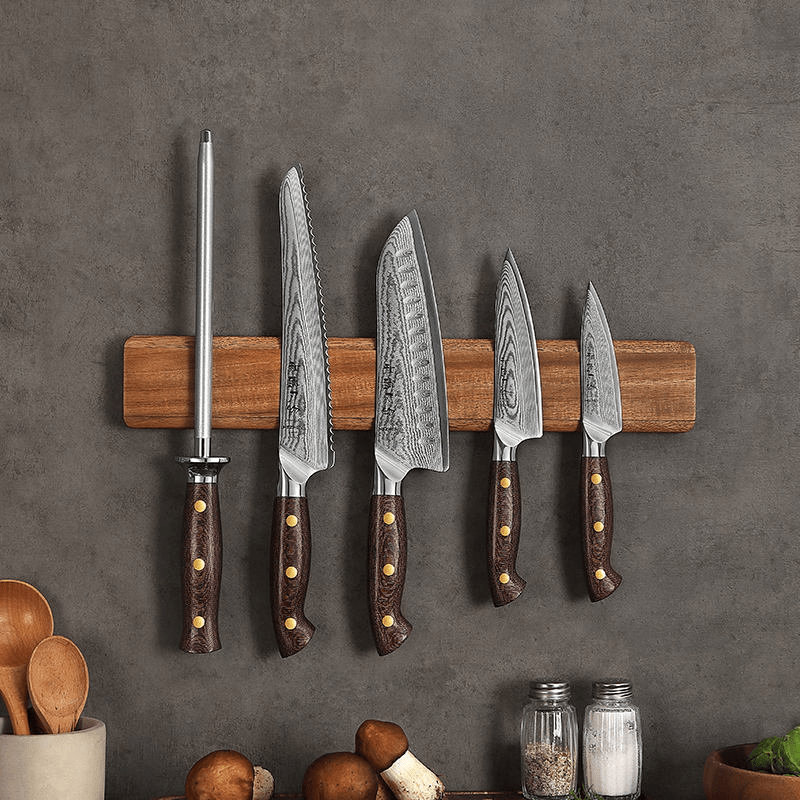
This is where things get interesting. A magnetic knife strip is, at its core, a bar with strong magnets inside that you mount on your wall. You place the flat of the blade against the strip and the magnet holds it in place. Simple.
And the advantages are significant. The blade never contacts anything except the flat magnetic surface, meaning the cutting edge stays untouched during storage. Air circulates freely around the blade, so there's no trapped moisture or bacterial buildup. Every knife fits regardless of size or shape. And you get a visual display of your collection that, frankly, looks great in a well-designed kitchen.
For edge preservation, magnetic holders are the clear winner. Nothing touches the edge. Full stop.
Why magnetic storage protects your edge: A sharp knife edge is only about 0.2mm wide at the tip of the bevel. Even light contact with wood or plastic can bend or roll that fine edge. Magnetic holders support the knife by the flat of the blade, keeping the edge completely free from contact.
The downsides are worth mentioning though. Blades are exposed, which means they're accessible to children and anyone walking past. You need wall space and the willingness to drill into it. And with very thin, lightweight blades (like a petty knife), you need to be careful when removing them so the blade doesn't flex against the magnet as you pull it off. The trick is to lift the spine away first, then the edge, rather than sliding the blade sideways.
One more thing: magnet quality matters enormously. Cheap magnetic strips with weak magnets are genuinely dangerous because knives can slide or fall. You want strong rare-earth magnets that hold a heavy chef's knife securely, even if someone bumps the counter nearby.
What About Freestanding Magnetic Blocks?
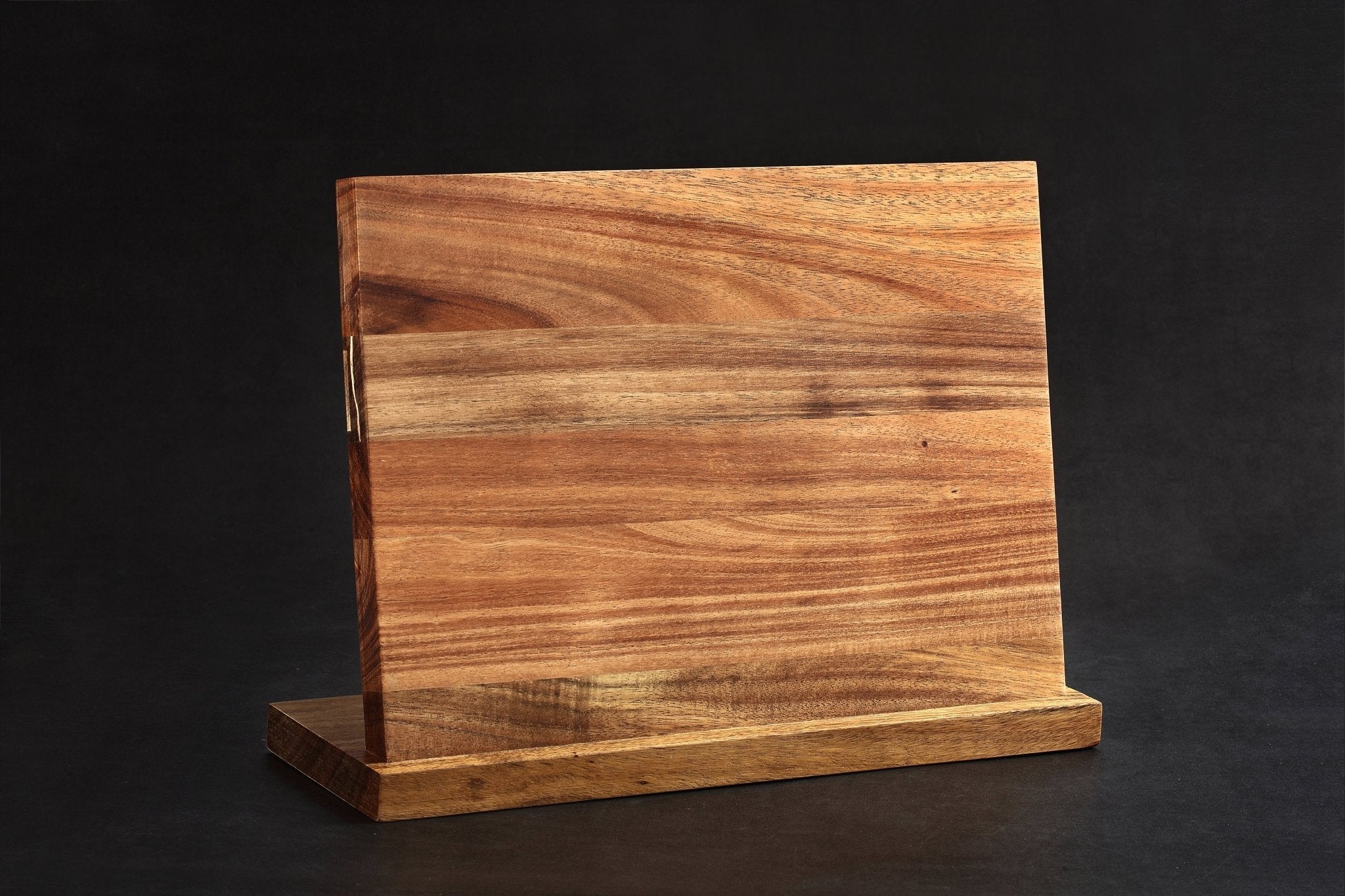
If you want the edge-protection benefits of magnetic storage but don't want to mount anything on your wall, freestanding magnetic blocks are worth a serious look. These sit on your countertop like a traditional block, but instead of slots, they use magnets to hold blades against the outside surface.
You get the best of both worlds. No slots means no edge contact, no trapped moisture, no bacteria concerns. The knives are displayed attractively. And because there are no fixed slots, any knife fits on any surface of the block. Rearrange however you like. Add knives, remove knives, it doesn't matter.
The countertop footprint is typically smaller than a traditional block, too. Most freestanding magnetic blocks are relatively slim, taking up less space than those bulky angled blocks with 15 slots.
The main consideration is the same as with wall strips: exposed blades. If you have young children, you'll want to position the block at the back of the counter or consider a different option entirely.
Is In-Drawer Knife Storage Right for You?
Some kitchens don't have counter space to spare, or you simply prefer a clean, minimal look with nothing on the benchtop. In-drawer knife storage is the answer, and when done well, it works brilliantly.
Dedicated knife drawer inserts hold each blade in its own slot or channel, keeping them separated and preventing the nightmare scenario of loose knives clanking together. The knives are hidden away, the counter stays clear, and everything is out of reach of children.
The trade-offs? You're giving up an entire drawer (or a large portion of one), which is significant in a small kitchen. And some cheaper drawer inserts have the same edge-contact problem as traditional blocks: the blade sits in a slot with the edge resting against the material. Look for inserts where the knife is held by the handle or the spine, not the blade edge.
What to look for: The best in-drawer storage holds knives horizontally with the blade suspended, not resting on the edge. Cork-lined or felt-lined slots are gentler than bare wood. Magnetic drawer inserts exist too, and they share the same edge-protection benefits as wall-mounted magnetic strips.
There's also the practical consideration of access speed. Reaching up to a wall strip or a countertop block is faster than opening a drawer, bending down, and selecting a knife. It sounds trivial, but when you're cooking daily and reaching for your chef's knife dozens of times a week, those small frictions add up.
When Should You Use Knife Guards and Blade Sheaths?
If you're set on drawer storage but don't want a dedicated insert, individual knife guards are the simplest solution. These are lightweight sheaths (usually plastic or wood with felt lining) that slide over each blade individually. You can then put the protected knives in any drawer without worrying about edge contact or safety.
Guards are also essential if you ever transport your knives. Taking a good knife to a friend's house for a dinner party, bringing your own blades to a cooking class, even just moving house. Without a guard, you're risking chips, dings, and potentially cutting through whatever bag or box you've packed them in.
The downside is minor but real: you have to put the guard back on every single time you put the knife away. Skip it once and you're back to a bare blade loose in a drawer. It requires a tiny bit of discipline.
Good guards grip the blade firmly without putting pressure on the edge. They should slide on and off smoothly but never fall off on their own. Cheap guards that are too loose are worse than useless because they create a false sense of security.
Do You Need a Knife Roll?
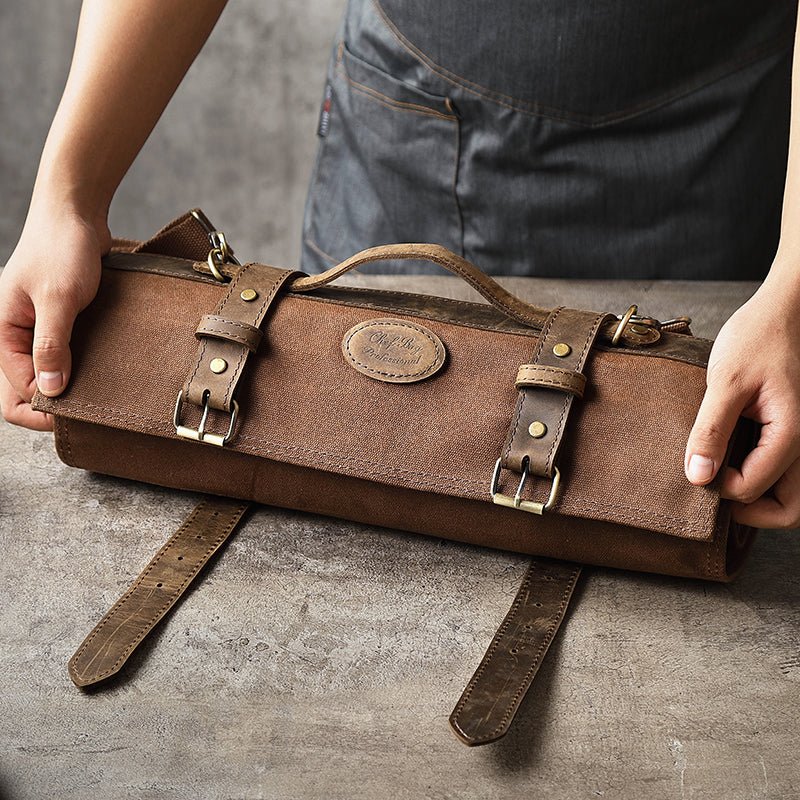
A knife roll isn't really everyday home storage, but if you're a working chef, a culinary student, or someone who regularly cooks in different locations, it's not optional. It's necessary.
A well-made knife roll gives each blade its own pocket or slot, keeps everything secure during transport, and rolls up into a compact package you can carry with one hand. Leather rolls age beautifully and last for decades. Canvas rolls are lighter and easier to wash.
Some home cooks use a knife roll as their primary storage, hanging it on a hook or keeping it rolled in a cabinet. It's unconventional but it works, especially if you only have three or four knives you use regularly. Each blade is individually protected, nothing touches anything else, and the whole collection takes up almost no space.
Which Storage Method for Which Knife?
Not every knife needs the same treatment. Here's how I think about matching storage to specific knife types:
Your primary chef's knife (gyuto, santoku): This is the knife you use most, so accessibility matters. A magnetic wall strip or countertop magnetic block puts it within arm's reach. These are your workhorse blades and they deserve the best edge protection you can give them.
High-carbon and Damascus steel knives: These are more reactive and more prone to moisture damage. Magnetic storage with good airflow is ideal. Avoid any enclosed storage where moisture can linger. If you use a guard, make sure the blade is bone-dry before sheathing it.
Smaller utility and paring knives: These are light enough that magnetic strips hold them well, but they're also the most commonly tossed into drawers. If drawer storage is your preference, guards are non-negotiable for these. A bare paring knife loose in a drawer is an accident waiting to happen.
Cleavers and heavy knives: These are heavy. Make sure your magnetic holder is rated for the weight. A thick Chinese cleaver can weigh 400g or more, and a weak magnet won't hold it reliably. Freestanding magnetic blocks or dedicated slots in a drawer insert work well for these.
Bread knives and serrated blades: Serrated edges are less affected by slot contact since the teeth are recessed from the contact points. These are fine in a traditional block if that's what you have. But they also fit perfectly on a magnetic strip.
My recommendation for most home cooks: A magnetic wall strip or freestanding magnetic block for your three or four most-used knives, plus individual guards for anything stored in a drawer. This combination covers accessibility, edge protection, and safety without requiring a complete kitchen redesign.
What Do Most Knife Storage Guides Get Wrong?
Humidity matters more than you think. If your kitchen runs humid (especially in coastal Australian climates), enclosed storage like traditional blocks and drawer inserts can trap moisture against carbon steel blades. I've seen beautiful knives develop rust spots from nothing more than being stored slightly damp in an enclosed block. Magnetic storage with open airflow prevents this entirely.
The material of the magnet cover matters too. A bare metal magnet can scratch your blade's finish. The best magnetic holders have a wood, bamboo, or rubber surface between the magnet and the blade. This protects the flat of the blade while the magnet does its job underneath.
And finally, no storage solution compensates for putting knives away wet. Regardless of what you choose, dry your blades completely with a clean towel before storing them. This single habit will do more for your knives than any storage upgrade.
What Knife Storage Options Does Xinzuo Offer?
We carry storage solutions across each of these categories because different kitchens need different approaches. Our magnetic knife holders use strong rare-earth magnets with protective wood surfaces to keep your blades secure without scratching. The freestanding magnetic blocks work beautifully with any knife collection and take up minimal counter space.
For transport and drawer storage, our leather knife rolls are built to last and designed to protect blades during travel, while our knife guards offer affordable individual blade protection for any storage scenario.
Related Reading
- Magnetic Knife Holder vs Knife Block: Which Is Better?
- Knife Care: A Daily Maintenance Guide
- How to Sharpen Knives with a Whetstone
- How to Choose a Chef Knife: The Complete Buying Guide
- Kitchen Knife Sets vs Individual Knives
- Knife Steel Hardness Guide
- How to Care for Damascus Steel Knives
- Best Kitchen Knives Under $200
Frequently Asked Questions
Is a universal knife block better than a slotted block?
For most kitchens, yes. A universal block uses flexible rods or bristles that grip any blade shape, so you are not locked into a specific knife set. Slotted blocks only fit the knives they were designed for, and buying a new knife that does not match a slot means it has nowhere to go. The trade-off is that universal blocks are harder to clean, since food particles get trapped between the rods.
How often should you clean a knife block?
At least once a month. Remove all knives, turn the block upside down and shake out loose debris, then clean the slots with a pipe cleaner dipped in a solution of one teaspoon bleach per litre of warm water. Let the block air dry completely (several hours or overnight) before putting knives back. Inserting damp knives into a block is the fastest way to grow mould inside the slots.
Do knife blocks dull your knives?
Yes, if you drag the cutting edge along the wooden slot walls when inserting and removing knives. Most people do this without realising it. Over hundreds of repetitions, the micro-abrasion measurably dulls the blade. The fix is simple: always insert spine-first with the edge facing up, so the cutting edge never contacts the wood.
Should I store knives in a block or a drawer?
A block is faster to access since the knives sit on the countertop within arm's reach. A lined drawer insert hides the knives, frees up bench space, and is safer around children. Both protect edges if designed properly. Never store knives loose in a drawer without an insert, because the blades knock against utensils and each other, dulling the edge and risking cuts when you reach in.
Will Japanese-style knives fit in a standard knife block?
Often not. Japanese wa-handles are wider and rounder than Western riveted handles, and many do not slide into standard block slots. Blade profiles differ too: a tall nakiri or a wide cleaver may be too wide for slots sized for Western chef knives. A universal block, magnetic holder, or in-drawer tray avoids this problem because none of them rely on fixed slot dimensions.