

What Is a Carving Knife and When Do You Need One?
What most home cooks should buy
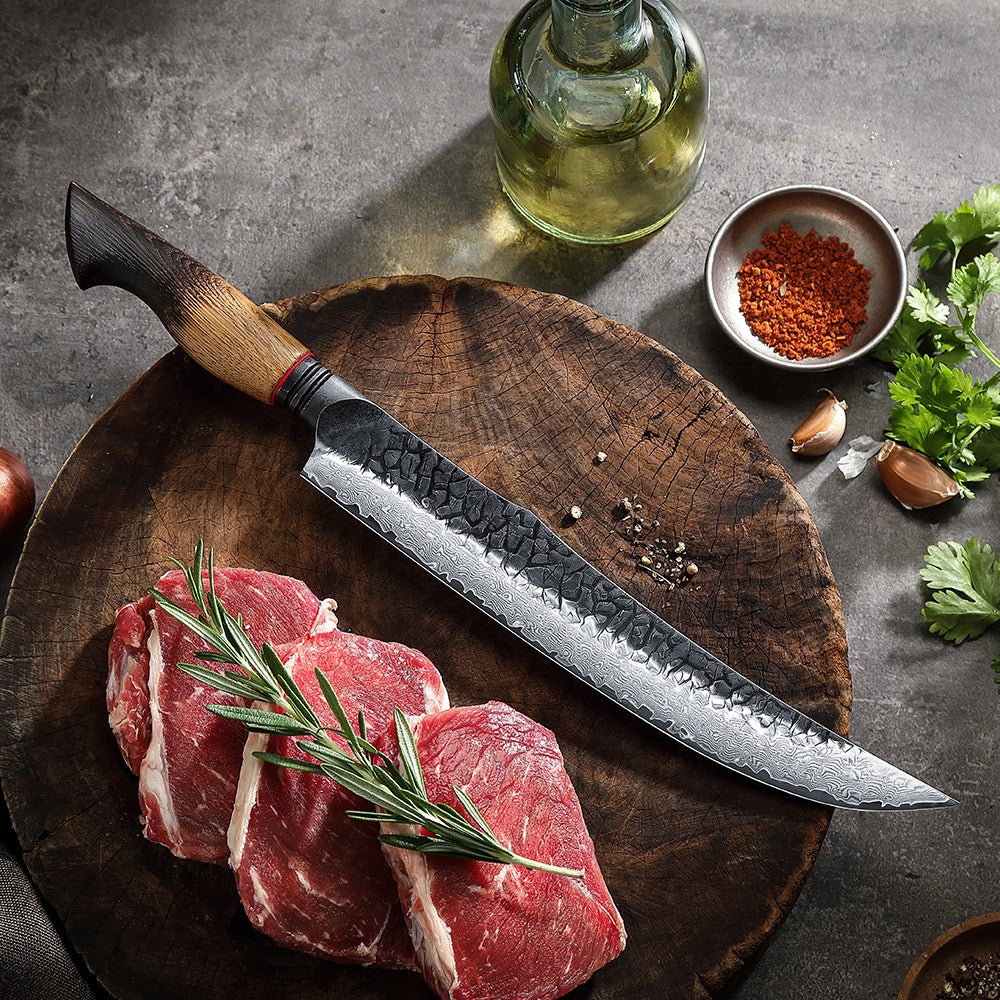
For Sunday roasts, Christmas ham, and the occasional brisket, a 10-inch (250mm) carving knife or sujihiki with moderate flexibility handles everything you'll throw at it. If you carve regularly or you're getting into low-and-slow BBQ, a sujihiki with harder steel and thinner geometry produces noticeably cleaner slices. The difference is visible on the plate.
A carving knife exists for one reason: to turn a large piece of cooked meat into clean, even slices with minimal effort. It does this through length, thinness, and a blade profile that reduces drag. Once you use one properly, going back to muscling through a roast with a 20cm chef knife feels barbaric.
How Does a Carving Knife Compare to a Sujihiki and a Chef Knife?
Three knives can technically carve a roast. Only one was purpose-built for it, and which one depends on whether you're thinking Western or Japanese.
The Western carving knife is the one your parents probably had in the knife block. Long, slightly flexible, rounded tip. German steel that's forgiving and easy to maintain. It works well for traditional roast duty, especially bone-in cuts where a little flex helps you navigate around the bone.
The sujihiki is a Japanese slicing knife. Harder steel means a finer edge angle (typically 12-15 degrees per side vs 18-20 for Western), which translates to less resistance through the meat. The thinner blade geometry means less friction, less sticking, and cleaner cell separation at the cut surface. Meat sliced with a sharp sujihiki has a smoother, almost glossy surface compared to the rougher texture from a thicker blade.
The chef knife works in a pinch but the wider blade creates more drag, and at 8 inches most chef knives are too short for a single-pass cut through anything larger than a small pork loin.
When each makes sense: Western carving knife if you mostly carve bone-in roasts and want low maintenance. Sujihiki if you want the cleanest possible slices and you're comfortable with harder steel. Chef knife if you carve maybe four times a year.
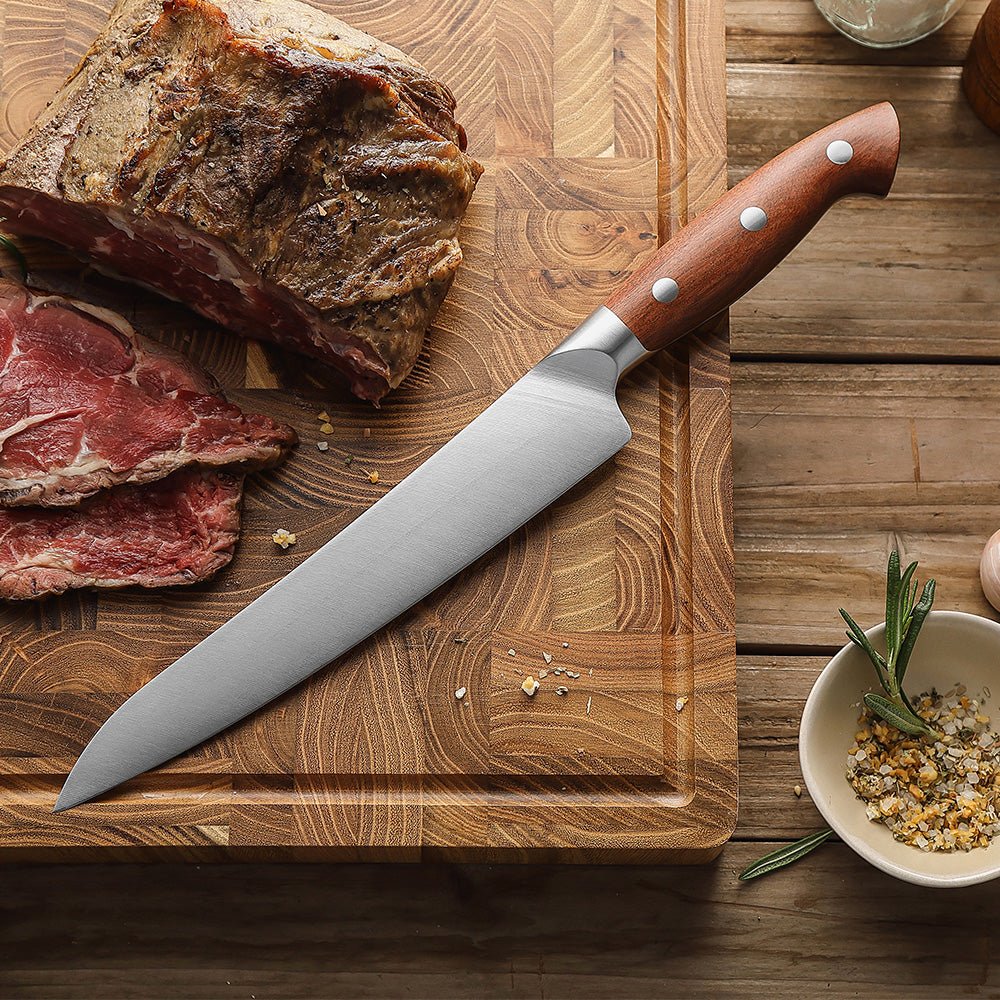
Why Does Blade Length Matter for a Carving Knife?
A clean slice of meat happens when the blade passes through the entire width of the roast in a single, smooth pull-stroke. One continuous motion, heel to tip, and the slice falls away.
When your blade is shorter than the meat is wide, you have to saw. Every direction change creates a ridge in the cut surface. Every ridge tears muscle fibres instead of cutting them cleanly. The result is rougher texture, more juice loss, and slices that look like they were cut with a bread knife.
The rule: your blade should be at least as long as the widest dimension of whatever you're slicing. When in doubt, go longer.
How Flexible Should a Carving Knife Be?
A slightly flexible blade follows contours. It curves around the thigh bone of a turkey leg. It hugs the surface of a ham when you're taking off thin slices at an angle. For bone-in roasts and anything with an irregular shape, some flex helps.
A stiff blade gives you control and consistency. When you're slicing a boneless beef roast or cutting brisket, you want perfectly straight, even slices. A stiff blade doesn't wander or deflect. Sujihiki blades are almost always on the stiffer side.
For most home cooks, moderate flexibility is the most versatile choice.
What Carving Technique Actually Matters Most?
1. Rest the meat first. When you cut into a roast straight off the heat, the proteins haven't relaxed and reabsorbed juices. You'll get a flood of liquid on the board and drier slices. For a standard beef or lamb roast, 10-20 minutes minimum. For brisket, 30-60 minutes.
2. Slice against the grain. The "grain" is the direction of the muscle fibres, visible as parallel lines running through the meat. Cutting perpendicular to those fibres shortens them, which makes each bite tender. This is especially important for tougher cuts like brisket, where grain direction changes between the flat and the point.
3. Use long, single pull-strokes. Start with the heel of the blade near the far side of the roast. Draw the knife toward you in one smooth motion. Don't press down hard. The weight of the knife and the sharpness of the edge should do most of the cutting.
4. Keep your slices consistent. For roast beef: 3-5mm. For ham: as thin as you can manage. For brisket: about the width of a pencil (6-7mm).
On the carving fork
A two-pronged carving fork holds the roast steady while you slice. It keeps your fingers away from the blade on a hot, slippery piece of meat. Tongs work as a substitute, but a proper carving fork gives more stability. If you're carving at the table for guests, the fork makes the whole process look effortless.
When Do You Actually Need a Carving Knife?
If you roast meat once a month or less, your gyuto or chef knife handles it fine. The slices won't be magazine-perfect, but the meat will taste the same.
A dedicated carving knife starts making sense when:
You're doing weekly Sunday roasts. Once carving becomes weekly rather than occasional, the ergonomic advantage of a proper slicer becomes obvious. Less effort per cut, better slices, faster work. Over 52 Sundays, that adds up.
You've gotten into brisket and low-and-slow BBQ. Brisket absolutely requires a long slicing knife. A brisket flat can be 30cm or wider. If you've spent 12-16 hours smoking a brisket, slicing it properly with the right tool is the least you can do.
You carve at the table during holidays. Christmas ham, Easter lamb, a big Saturday roast when friends come over. A long sujihiki gliding through a glazed ham is genuinely satisfying.
For Australian kitchens: if you do a Sunday roast and also fire up the smoker through summer, a 10-inch sujihiki or carving knife will get enough use to justify itself. During December alone, between Christmas ham, Boxing Day leftovers, and New Year's entertaining, it pays for itself in better slices and less frustration.
How Do You Care for a Carving Knife?
Hand wash and dry immediately. Never put it in the dishwasher. The long blade is particularly vulnerable to damage from banging against other items in the rack.
Hone before each use with a ceramic or steel rod. Sharpen on a whetstone every few months. Given that a carving knife gets used less frequently than your daily chef knife, you may only need to sharpen two or three times a year.
Store in a knife block, on a magnetic rack, or in a blade guard. For the full maintenance rundown, see our daily knife maintenance guide.
Related Reading
- Japanese-style Knife Types Explained
- How to Choose a Chef Knife
- Brisket Knife Guide: Long Blades for BBQ
- Steak Carving Knife Buying Guide
- Knife Care: Daily Maintenance Guide
Frequently Asked Questions
What is the difference between a carving knife and a slicing knife?
A carving knife has a slightly flexible blade with a curved edge and rounded or pointed tip, designed for navigating around bones in roasts and poultry. A slicing knife (or sujihiki) has a stiffer, narrower blade with a flatter edge, built for long, clean pull-strokes through boneless meat like brisket or ham. If you mostly carve bone-in roasts, go with a carving knife. For brisket and boneless cuts, a sujihiki produces noticeably cleaner slices.
How long should a carving knife be?
A 10-inch (250mm) blade handles most home carving jobs, from Christmas turkey to Sunday roast lamb. The blade needs to be longer than the widest part of the meat so you can cut in a single pull-stroke without sawing. For large briskets or whole hams, a 12-inch (300mm) blade gives better results. Anything under 8 inches forces you to saw back and forth, which tears muscle fibres instead of cutting them.
Can I use a chef knife instead of a carving knife?
Yes, but the results are noticeably worse. A chef knife's wide blade creates more drag through the meat, and most chef knives at 200 to 210mm are too short for a single-pass cut through anything larger than a small pork loin. The wider blade also pushes slices apart as it passes through, which is why carved meat from a chef knife often looks rougher. If you carve a roast more than a few times a year, a dedicated carving knife is worth owning.
Should a carving knife be flexible or rigid?
It depends on what you carve. A slightly flexible blade is better for bone-in roasts like leg of lamb or whole chicken, because the flex lets you follow the contour of the bone. A rigid blade gives straighter, more uniform slices on boneless cuts like brisket, eye fillet, or ham. Japanese sujihiki knives run rigid with harder steel (58 to 62 HRC), while traditional Western carving knives offer moderate flex in softer steel (54 to 58 HRC).
How do you carve meat properly with a carving knife?
Use long, smooth pull-strokes from heel to tip in a single pass, letting the blade do the work. Avoid pressing down hard or sawing. Slice against the grain for tenderness, and let the roast rest for 15 to 20 minutes before carving so the juices redistribute. Anchor the meat with a carving fork in your other hand, and keep the blade at a consistent angle throughout each stroke.