

Why Are Magnetic Knife Blocks Replacing Traditional Storage?
If you have spent real money on quality kitchen knives, the way you store them matters more than most people think. A drawer full of loose blades banging against each other, a universal block stuffed with crumbs and dust, a magnetic strip mounted crooked above the sink: these are the storage solutions that slowly destroy the knives you worked hard to buy.
Magnetic knife blocks have quietly become the go-to choice for serious home cooks and professional chefs who want their edges to last. The reasons are practical, not trendy. A good magnetic block keeps blades separated, lets air circulate, fits any knife regardless of size or shape, and puts your entire collection on display so you can grab exactly what you need without rummaging.
But not all magnetic storage is created equal, and there are real safety and quality considerations worth understanding before you buy one. This guide covers everything: how they work, what to look for, and how to use them properly with premium knives.
How Do Magnetic Knife Blocks Actually Work?
The core technology is simple: rare earth magnets (usually neodymium) are embedded inside a housing made of wood, acrylic, or another material. These magnets generate a strong, consistent magnetic field that holds steel knife blades firmly in place.
Neodymium magnets are remarkably powerful for their size. A single small neodymium magnet can hold several kilograms of weight, which is why even a thin magnetic strip can securely grip a heavy chef knife. The magnets are arranged so that the pull is distributed evenly across the contact surface, preventing knives from sliding or tipping.
The surface material between the magnets and your blade is important. Bare magnets or hard surfaces like metal or glass will scratch your knives over time. Quality magnetic blocks use wood, rubber, or felt-lined surfaces that cushion the blade during attachment and removal. For Damascus steel knives with polished or etched finishes, this cushioning layer is not optional. It is essential.
Should You Choose Freestanding or Wall-Mounted Magnetic Storage?
Magnetic knife storage comes in two main formats, and each has clear advantages depending on your kitchen layout and preferences.
Freestanding Magnetic Blocks
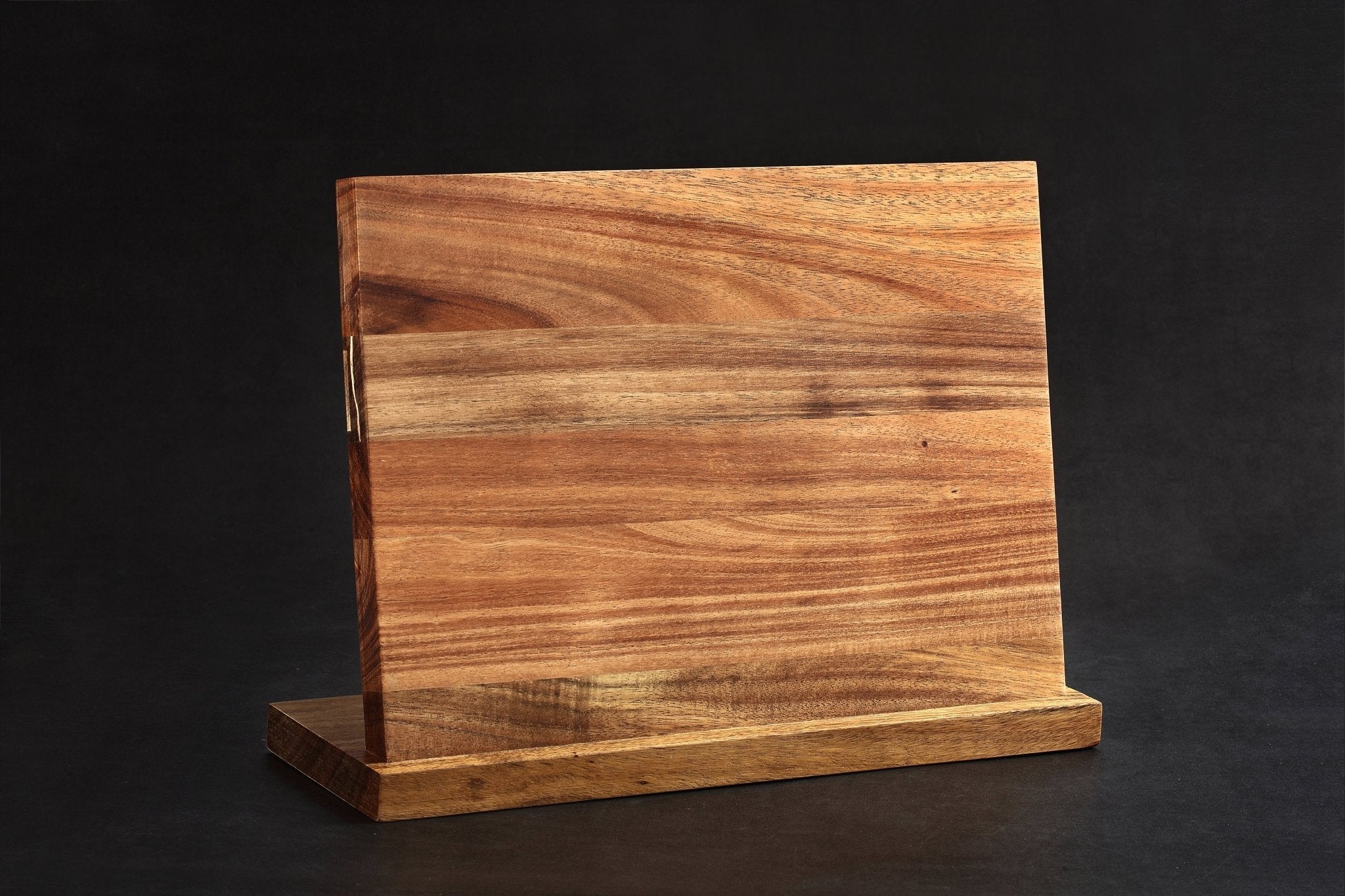
These sit on your countertop and typically hold knives on two or more magnetic faces. They take up bench space (roughly the footprint of a toaster), but they do not require drilling into walls, they are portable, and they tend to hold more knives than wall strips. A freestanding block also keeps knives at a comfortable reaching height and angle.
The best freestanding designs use double-sided magnetic panels with enough space between them to prevent blade-on-blade contact. Look for blocks where the knife edges face inward (away from your hands) when stored.
Wall-Mounted Magnetic Strips
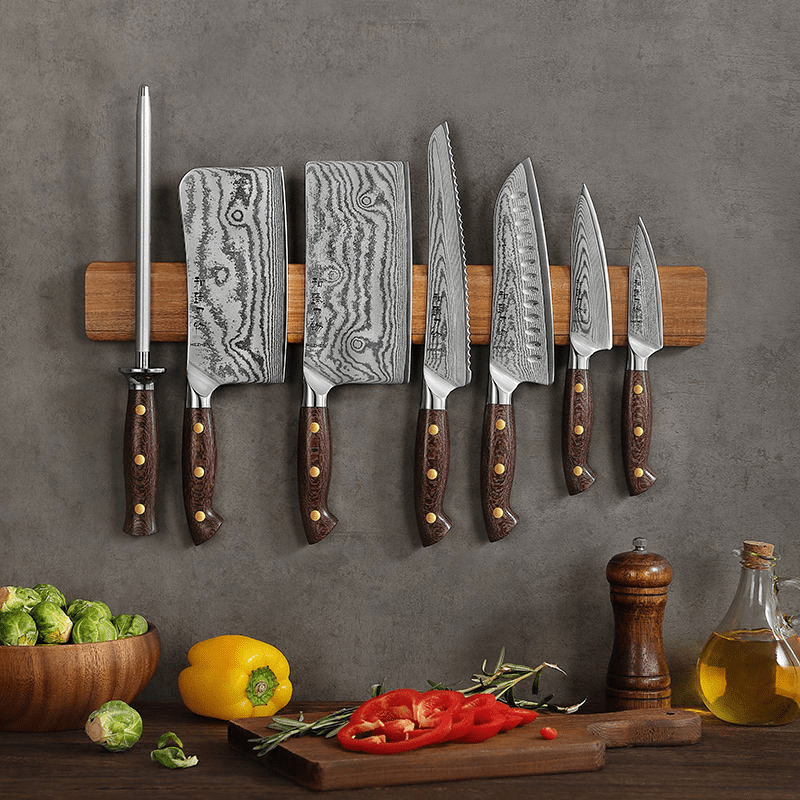
Magnetic knife strips mount directly to your wall, freeing up counter space entirely. They are popular in professional kitchens where bench real estate is valuable and cooks need to grab knives fast. A 50cm strip can typically hold six to eight knives depending on blade width.
Wall strips require proper installation into studs or with appropriate wall anchors. A strip that falls off the wall with six sharp knives attached is a genuine safety hazard, so do not cut corners on mounting hardware.
What Are the Benefits Over Traditional Slotted Knife Blocks?
Traditional wooden knife blocks with slots have been the default for decades, but they have several problems that magnetic storage solves.
| Factor | Slotted Block | Magnetic Block |
|---|---|---|
| Edge Protection | Blade scrapes wood slot edges on insertion and removal | Blade contacts cushioned surface with minimal friction |
| Hygiene | Slots trap moisture, crumbs, and bacteria inside dark crevices | Open-air storage; blades dry completely and surfaces are easy to wipe clean |
| Flexibility | Fixed slot sizes; some knives won't fit, others rattle loosely | Any steel knife of any size or shape attaches anywhere on the surface |
| Visibility | Only handles visible; must pull knives out to identify them | Full blade visible; instant identification and selection |
| Capacity | Limited to the number and size of pre-cut slots | Arrange knives however you like; add more as your collection grows |
| Aesthetics | Bulky, dated appearance | Clean, modern look that showcases beautiful knives |
The edge protection point deserves emphasis. Every time you slide a knife in and out of a tight wooden slot, the cutting edge drags against the interior walls. Over hundreds of insertions, this noticeably dulls the blade. With a magnetic holder, the blade lifts straight off the surface with zero lateral scraping.
For Damascus steel knives especially, where the blade face features intricate layered patterns, the open display of magnetic storage lets you appreciate the craftsmanship instead of hiding it inside a slot.
What Safety Considerations Should You Know About?
The most common objection to magnetic knife storage is safety: the blades are exposed. This is a fair concern, and it requires honest discussion.
Exposed Blades
Yes, knives on a magnetic block or strip are visible and technically accessible. In a household with young children who can reach the counter, this is a real issue. Wall-mounted strips can be installed at a height beyond children's reach, which is one practical advantage over countertop blocks. Freestanding blocks should be placed toward the back of the counter, away from edges.
For households without young children, exposed blades are actually safer in one important way: you can always see exactly where every sharp edge is. No reaching into a drawer and fumbling around sharp steel. No pulling a knife out of a dark slot at the wrong angle.
Proper Knife Removal Technique
There is a right way and a wrong way to remove a knife from a magnetic holder. The wrong way is to grab the handle and pull straight out. This can cause the blade to snap free suddenly and swing toward your other hand or body.
The correct technique: grip the handle, then rotate the knife so the spine (back edge) lifts off the magnet first, pivoting on the blade's back corner. This breaks the magnetic contact gradually and gives you full control of the blade as it comes free. It takes about two days of practice before it becomes automatic.
What Should You Look for When Buying a Magnetic Knife Block?
Not all magnetic knife holders are worth buying. Here are the things that actually matter.
Magnet Strength
The magnets need to be strong enough to hold your heaviest knife securely, even if someone bumps the block or walks past briskly. A quality magnetic block should hold a 250g+ chef knife firmly enough that you could tilt it 45 degrees without the knife sliding. Cheap magnetic strips with weak ferrite magnets instead of neodymium are a safety risk and not worth the savings.
Surface Material
This is where the price difference between a $20 strip and an $80 strip shows up. Bare metal or plastic surfaces will scratch your blades. Wood-faced magnetic holders are the most common quality option: they look good, they protect blades, and they are easy to clean. Some higher-end blocks use rubberised or felt surfaces for even gentler contact.
For Damascus steel knives with polished or etched patterns, a wood or rubber surface is non-negotiable. Scratches on a Damascus blade are far more visible and harder to repair than on a plain stainless blade.
Size and Capacity
Think about how many knives you actually use regularly. Most home cooks actively use between four and eight knives. A 30cm wall strip or a medium freestanding block handles that range comfortably. If your collection is larger, a 50cm strip or a double-sided freestanding block gives you room to grow.
Measure your available space before ordering. For freestanding blocks, check the footprint dimensions. For wall strips, make sure you have a clear wall section at least 10cm wider than the strip itself to allow comfortable knife placement at each end.
Build Quality and Stability
A freestanding block needs a heavy, stable base. It should not tip or wobble when you pull a knife off. Rubber feet on the bottom are a good sign. For wall strips, look for included mounting hardware rated for the weight, and verify that the strip itself is solidly constructed (not thin plastic that flexes).
How Do You Care for Your Magnetic Knife Storage?
Magnetic blocks and strips are low-maintenance, which is part of their appeal. But a few habits will keep them working and looking their best.
- Wipe the surface weekly with a damp cloth to remove dust and kitchen grease. For wood surfaces, use a dry cloth after to prevent moisture absorption.
- Never put wet knives on the holder. Dry blades completely before storage. Trapped moisture between blade and magnet surface promotes rust, especially on high-carbon steel knives.
- Check mounting hardware annually for wall-mounted strips. Kitchen walls take a lot of vibration from range hoods, dishwashers, and foot traffic. Tighten screws if anything feels loose.
- Oil wood surfaces every few months with food-safe mineral oil if the wood starts looking dry. This is the same treatment you would give a wooden cutting board.
- Avoid placing near stovetops where grease splatter and heat can degrade wood finishes and potentially affect magnet strength at extreme temperatures.
What Magnetic Storage Options Does Xinzuo Offer?
Xinzuo offers magnetic storage designed specifically with premium knife care in mind. Whether you prefer a freestanding countertop block or a wall-mounted strip, these options use strong neodymium magnets with blade-friendly surfaces.
The magnetic knife holder range includes wall-mounted strips in multiple sizes, perfect for kitchens where bench space is limited. For those who prefer a countertop solution, the knife stand collection includes freestanding magnetic blocks that double as kitchen display pieces for your Damascus steel knives.
Both options are built to protect the kind of edges and finishes that Xinzuo knives are known for.
Store Your Knives the Right Way
Browse Xinzuo's magnetic knife holders and freestanding blocks, designed to protect premium edges and showcase Damascus steel.
Shop Magnetic Knife HoldersRelated Reading
- Magnetic Knife Holder vs Knife Block
- Knife Block Buying Guide
- Knife Care: Daily Maintenance Guide
- How to Care for Damascus Steel Knives
- Kitchen Knife Sets vs Individual Knives
- How to Choose a Chef Knife: The Complete Buying Guide
- Best Kitchen Knives Under $200
- Knife Steel Hardness Guide
Frequently Asked Questions
Do magnetic knife holders scratch Damascus steel knives?
Only if the holder has a bare metal or hard plastic surface. Wood-faced magnetic holders with embedded neodymium magnets protect the blade finish because the knife contacts soft timber, not metal. When placing or removing a Damascus knife, lay the spine against the surface first and roll the blade flat rather than sliding it sideways. Keeping the holder surface clean also prevents trapped grit from scratching the polished pattern.
How strong does a magnetic knife holder need to be?
Strong enough to hold a 250g+ chef knife at a 45-degree tilt without sliding. Neodymium (rare earth) magnets are the standard for quality holders and maintain their pull strength for decades. Cheap ferrite magnets lose grip over time and may not hold heavier knives at all, which is a genuine safety risk. If a loaded knife falls from a wall strip, it can cause serious injury.
What is the difference between a magnetic knife strip and a magnetic knife block?
A magnetic strip mounts flat to the wall, taking zero counter space and holding knives in a single row. A freestanding magnetic block sits on the countertop like a traditional block but holds knives on its outer magnetic faces instead of inside slots. Wall strips suit kitchens with limited bench space; freestanding blocks suit renters or anyone who cannot drill into walls.
Do magnets lose their strength over time?
Neodymium magnets used in quality knife holders retain their full strength for decades under normal kitchen conditions. They lose less than 1% of their magnetic field over 100 years at room temperature. Ferrite (ceramic) magnets in cheaper holders can weaken, especially if exposed to heat above 80 degrees Celsius from a nearby stovetop. Buy neodymium and you will never need to replace the holder due to weakened magnets.
Where should I mount a magnetic knife strip in my kitchen?
Mount it on a wall near your main prep area, at a comfortable reaching height (roughly 120 to 150cm from the floor for most adults). Keep it away from the stovetop to avoid grease film on blades and heat exposure to the wood surface. Use proper wall anchors rated for the combined weight of the strip and your heaviest knives, and leave at least 10cm of clear wall space on each side so you can comfortably place and remove end knives.