R
Riaan Steenberg Japanese knifes made in China and Over priced.
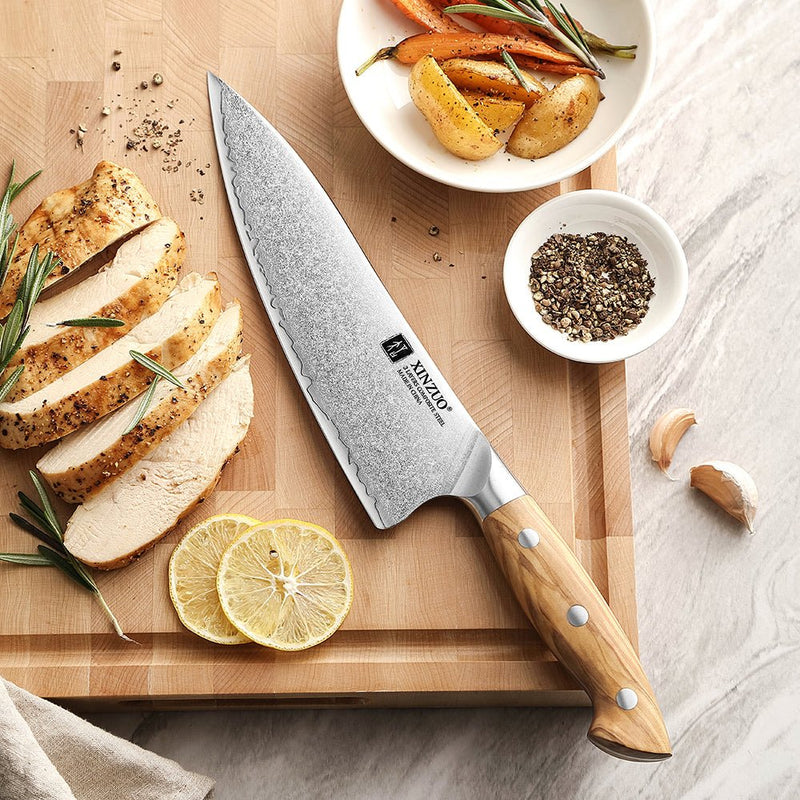
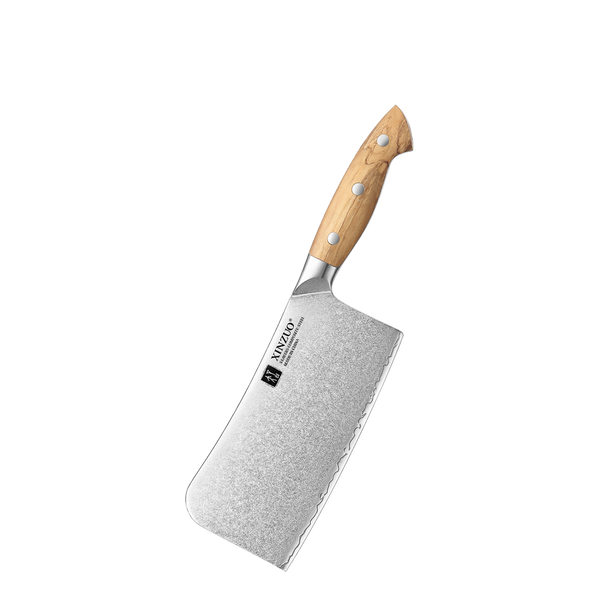
A 7-inch nakiri built for one job: vegetables. The tall, flat blade gives you full edge contact on the board, so a single straight push-cut takes a carrot, daikon or cabbage clean through with no rocking and no last-uncut hinge. The core is 3-layer 10Cr15CoMoV composite steel run to 60±2 HRC, paired with an olive wood handle. Pin Series.
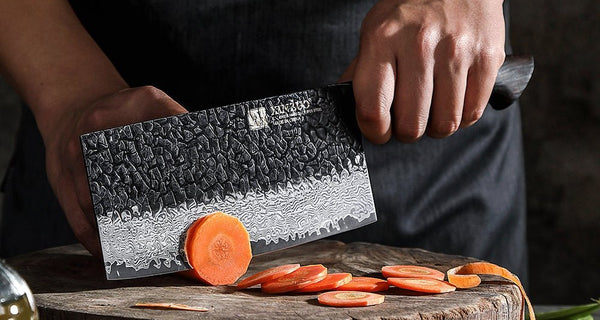
This is the vegetable knife you reach for when you want full board contact on every stroke. The 7-inch Nakiri's flat, rectangular blade doesn't curve up at the tip, so the whole edge lands flush on the cutting board at once. Cabbage into ribbons, carrots julienned in three passes, a whole head of broccoli broken down without the florets flying off.
The Nakiri's geometry gives you something a chef knife can't: zero tip-gap. When the heel goes down, the tip goes down. That means each slice is a clean cut across the full width of the vegetable, not a partial cut that you finish with a forward push. The 10Cr15CoMoV core stays sharp through a long session of hard vegetable work, and three layers of cladding keep the blade rigid on dense produce like raw parsnip or celeriac.
Natural olive wood handles the moisture of a busy prep station without swelling or splitting. The riveted full-tang construction sits the weight forward slightly, which is where you want it on a knife designed for straight-down vertical cuts. It's heavier than the utility knife, lighter than a German cleaver - exactly right for the kind of repetitive chopping this blade is built for.
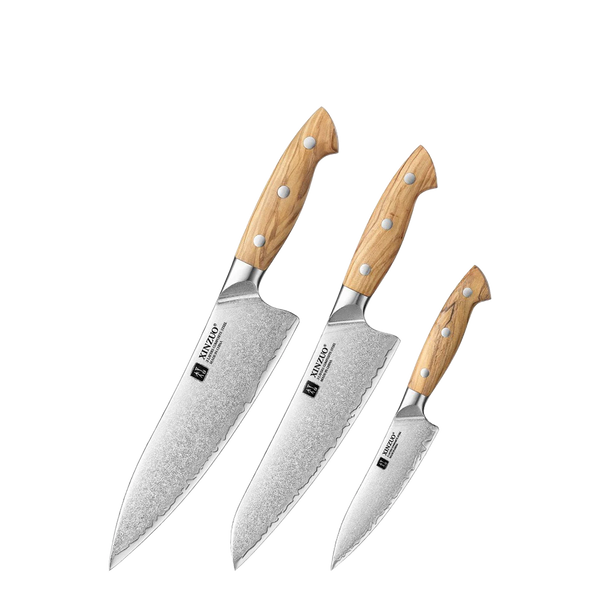
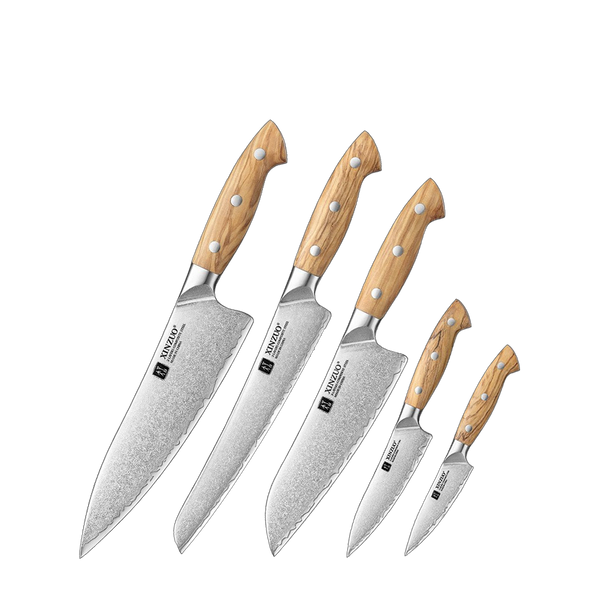
Pair it with the Pin Series 7" Santoku for push-cut slicing, and the 8" Chef Knife for proteins and tasks that need the curved profile.
All our knives arrive in a beautiful, premium gift box that's ready to impress. (Whether it's for a very lucky cook, or just for you.)
PIN SERIES
The nakiri is the knife Japanese home cooks reach for when the board is full of vegetables. No belly, no rocking, no tip work. The edge sits flat against the board so every push-cut goes the full width of the blade, top to bottom. Slice an onion, plank a daikon, ribbon a cabbage, and the cuts land even because the geometry does the work. This is the Pin Series version: a 3-layer 10Cr15CoMoV composite core at 60±2 HRC under an olive wood handle.
In stock. Ships from Australia. Hand-wash only.
WHY A NAKIRI
A chef's knife rocks because its edge is curved. A nakiri does not rock — and that is the point. The flat profile means the whole edge meets the board at once, so a straight downward push severs the vegetable in one pass with nothing left hanging. The tall blade also gives you knuckle clearance and a wide face to scoop and carry prep to the pan.
BLADE
The blade is a 3-layer 10Cr15CoMoV composite — a hard cutting core forged between two stainless cladding layers, the San Mai construction that keeps a fine edge backed by a tougher outer body. It is vacuum heat treated to 60±2 HRC and ground to roughly 15 degrees per side (factory 12-15°), so it takes a keen, thin edge and holds it through a full prep session. Stainless throughout, so it resists the staining that vegetable acids cause.
Specification
Hand-wash only — not dishwasher safe.
IN THE HAND
The handle is olive wood — dense, warm-grained, and no two pieces alike. It runs over a full tang for balance behind the wide blade, so the knife feels planted when you are working through a board of vegetables. Olive wood is hand-wash only and likes an occasional wipe of food-safe oil to keep the grain from drying. The knife weighs about 229g.
The difference
Xinzuo Pin Series Nakiri
Generic stamped vegetable knife
In the box
Arrives ready to gift.
Pin Series
PIN SERIES
Add to cart — $105.95FAQs
A nakiri has a flat edge and a tall, square-tipped blade. It is built for straight push-cuts on vegetables rather than the rocking motion a curved chef's knife uses. The flat profile means the full edge contacts the board, so cuts go clean through in one pass.
It is a 3-layer composite (San Mai) blade — a hard 10Cr15CoMoV core forged between two stainless cladding layers. It is not a many-layer pattern-welded Damascus; the construction is about edge performance, not a decorative pattern.
The blade is run to 60±2 HRC and vacuum heat treated. That is hard enough to take and hold a thin, keen edge through a full session of vegetable prep while staying practical to resharpen at home.
Roughly 15 degrees per side, with a factory range of 12-15° per side. That is a fine, acute edge suited to clean push-cuts through vegetables.
No. Hand wash and dry it. The olive wood handle also likes an occasional wipe of food-safe oil to keep the grain healthy.
Olive wood, fitted over a full tang. The grain varies piece to piece, so each knife looks slightly different.
A nakiri is a vegetable knife. It will slice boneless cuts, but it has no curved belly for rocking or carving and is not meant for bone-in work. For meat, reach for a chef's or carving knife.
More from the range