R
Riaan Steenberg Japanese knifes made in China and Over priced.
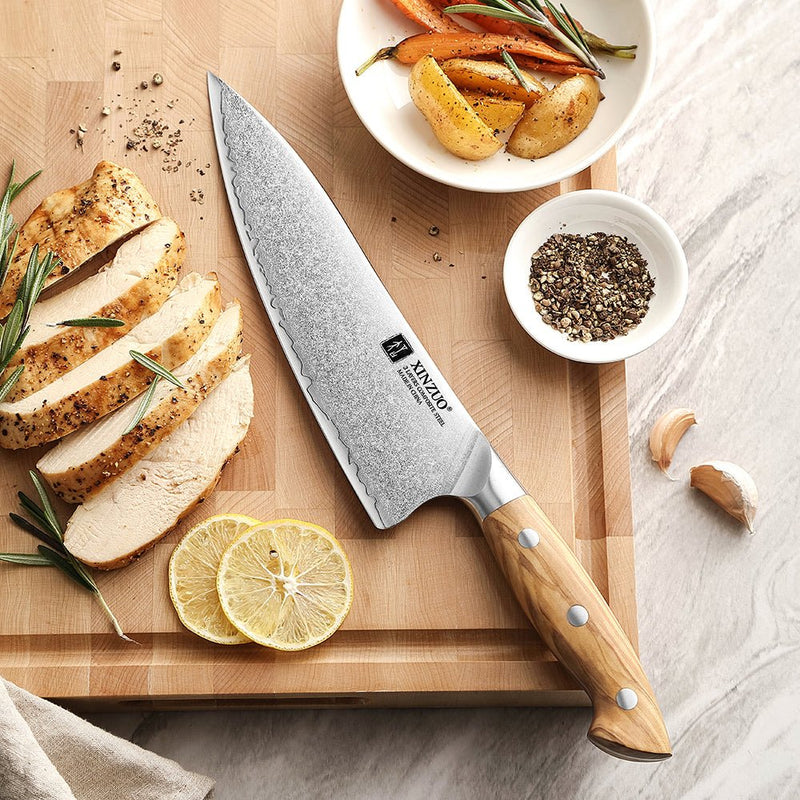
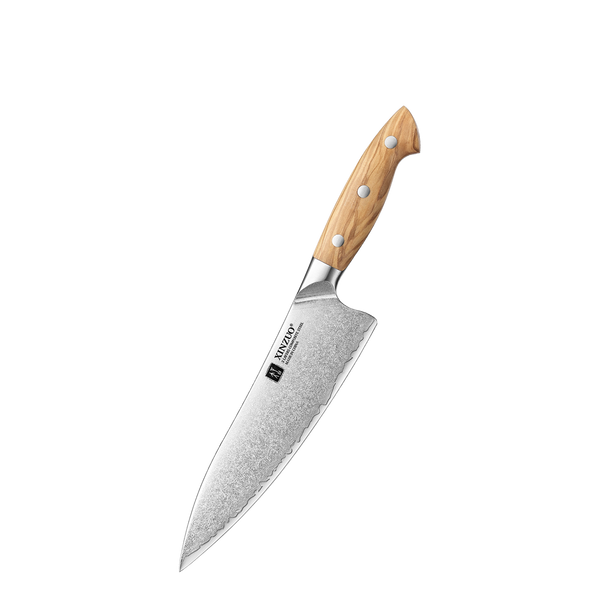
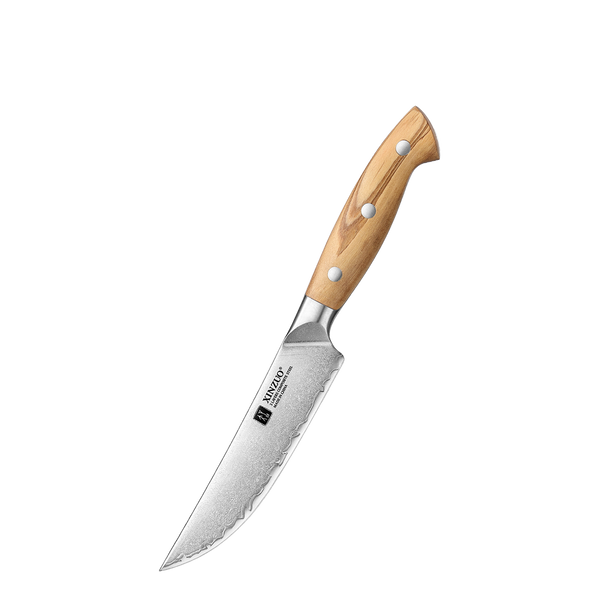
Premium 10Cr15CoMoV core steel in a clean 3-layer composite construction with a warm olive wood handle — the same cutting performance as Damascus without the decorative layers.
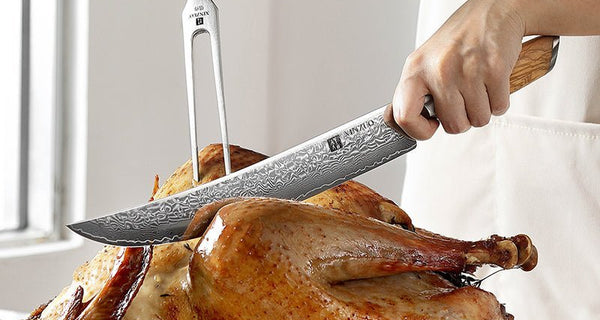
Reach for this when the roast comes out of the oven. A chef knife is too wide and too heavy for slicing a rested leg of lamb into thin, even portions without tearing the meat apart. The 8-inch carving knife's long, narrow blade glides between the fibres in a single smooth stroke, so each slice stays intact and the juices don't flood out onto the board.
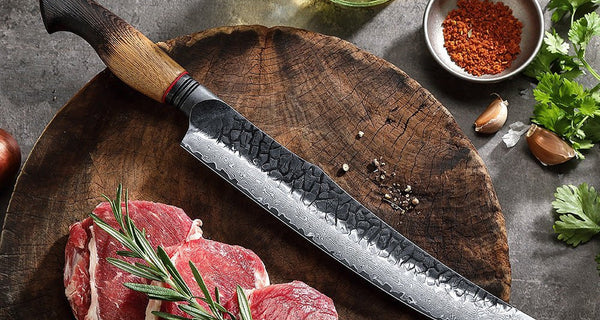
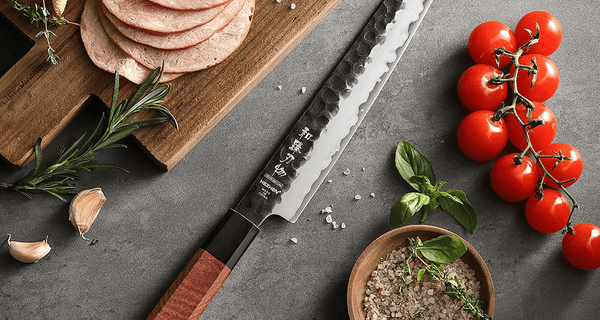
The narrow blade profile is the point. Where a chef knife has to muscle through a thick roast, the carving knife's slender geometry reduces drag, letting you draw the full length of the blade through a brisket, a rolled pork loin, or a roast chicken breast in one clean pull. The 10Cr15CoMoV core is vacuum heat-treated to 60-62 HRC, so the edge stays keen through the full job without needing to hone between the first slice and the last.
Natural olive wood is dense enough to resist moisture and tight-grained enough not to warp after years of kitchen use. The full-tang construction keeps the knife balanced through the full carving stroke, so you're not fighting tip-heaviness when you're pulling the blade back. It sits low in the hand whether you're working a Sunday roast or slicing a whole side of salmon at the table.
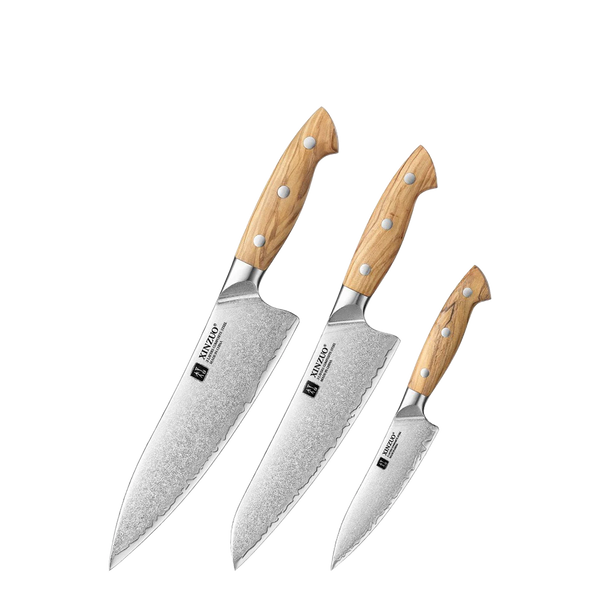
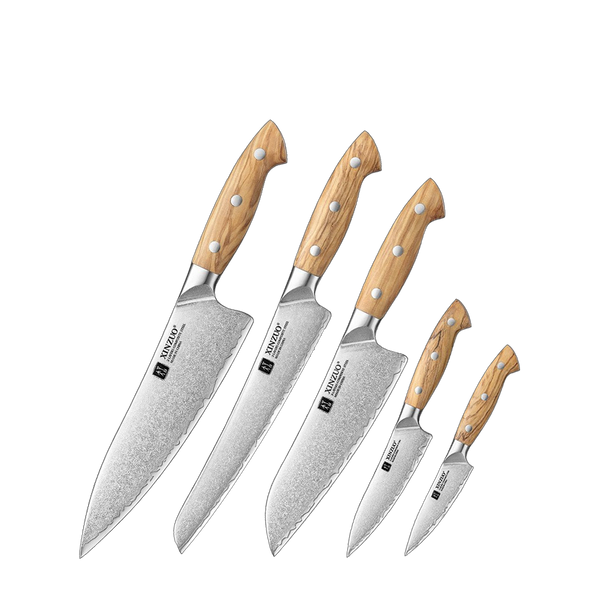
Pair it with the Pin Series 8" Chef Knife for the prep work before the roast goes in, and the 5" Steak Knife for serving at the table once it's sliced.
All our knives arrive in a beautiful, premium gift box that's ready to impress. (Whether it's for a very lucky cook, or just for you.)
Steel Type: 10Cr15CoMoV Core
Hardness: 60 HRC
Construction: 3-Layer Composite
Handle: Olive Wood
Heat Treatment: Vacuum Heat Treated
The Pin Series uses the same 10Cr15CoMoV core steel found in Xinzuo's Damascus lines — equivalent to Japanese VG10 — in a clean 3-layer (san-mai) construction. You get identical cutting performance without the decorative Damascus cladding.
SAME STEEL. CLEAN LINES.
Handle Design
A premium blade is built to last decades when looked after. Here's how to keep yours performing like the day it arrived.
Hand-wash with warm water and mild detergent immediately after use, then dry thoroughly with a soft cloth. Never leave the blade wet, soaking in the sink, or in contact with acidic foods (lemon, tomato) for long periods.
Store in a knife block, magnetic strip, or protective sheath — drawer storage where the edge can knock against other utensils is the fastest way to dull the blade.
No. The combination of heat, harsh detergents and metal-on-metal contact will dull the edge, damage the handle, and risk corrosion to the blade. Hand washing takes ten seconds and protects an investment built to last decades.
For home use, hone the edge weekly with a fine ceramic rod and sharpen on a whetstone every 6 to 12 months — sooner if you cook daily. Our high-carbon Damascus steel holds its edge significantly longer than typical kitchen steel.
Avoid pull-through sharpeners — they grind away too much steel and leave an uneven bevel. A 1000/3000 or 1000/6000 grit whetstone is the right tool. See our whetstone sharpening guide for the technique.
Every Xinzuo knife is covered by a lifetime manufacturing warranty against defects in steel and craftsmanship. Accidental damage from misuse (hitting bone, prying, dishwasher) isn't covered, but we offer a paid re-handle and re-grind service for the life of the knife — get in touch via our contact page with photos and we'll talk you through it.
The Retro Series uses 10Cr15CoMoV steel with Damascus cladding. The 10Cr15CoMoV core is a Chinese-developed alloy that matches VG10 in performance, with added cobalt for hardness and molybdenum for corrosion resistance. It's hardened to 60 HRC for excellent edge retention.
Yes. The Damascus pattern on Retro Series knives is created through actual forge-welding of multiple steel layers, not cosmetic etching. Each blade has a unique pattern formed during the forging process. The layering also adds structural benefits, with softer outer layers absorbing impact while the hard core maintains the cutting edge.
They're very similar in composition and performance. Both achieve 60 HRC hardness, both contain vanadium for wear resistance and cobalt for heat hardness. The main difference is origin: VG10 is made by Takefu Special Steel in Japan, while 10Cr15CoMoV is produced in China. In blind testing, most users cannot distinguish between the two. Read our VG10 vs 10Cr15CoMoV comparison for the full breakdown.
The Retro Series features an ebony wood handle with a classic octagonal shape. The natural wood provides excellent grip, even when wet, and develops a beautiful patina over time. The octagonal profile prevents the knife from rolling on the counter and suits the pinch grip favoured by experienced cooks.
With regular honing, most home cooks can go 4-6 months between whetstone sharpenings. The 60 HRC steel holds an edge well but responds quickly to a 1000/6000 combination stone when it does need attention. See our whetstone sharpening guide for step-by-step instructions.